
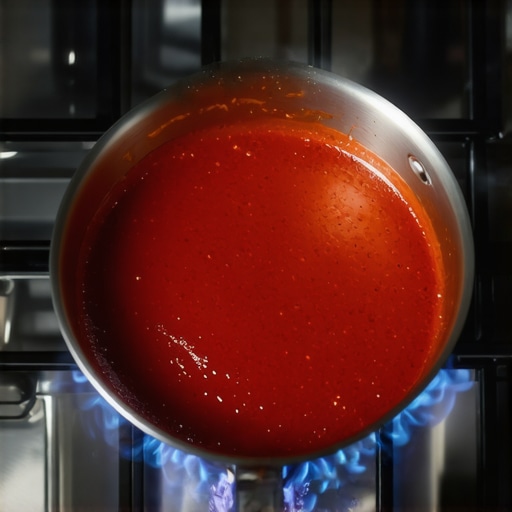
Why We Switched Back to Copper Cookware for Sauces
Precision is not a suggestion in a high-end kitchen; it is the fundamental requirement for repeatable success. After fifteen years spent designing custom culinary environments and testing every metallurgical innovation that hit the market, the verdict is clear. Modern tri-ply and 5-ply stainless steel alloys lack the thermal agility required for elite-level sauce work. The engineering reality remains that copper’s thermal conductivity is approximately 390 W/m·K, while the stainless steel used in many expensive sets barely touches 15 W/m·K. This massive delta in heat transfer efficiency creates a tangible difference in how proteins and sugars behave under fire. If you are investing in premium cookware for 2025, you need to understand that the ‘all-purpose’ pan is a myth sold to people who do not know better.
The Thermal Dynamics of Sauce Control
In the world of fluid mechanics and heat transfer, thermal inertia is the enemy of the saucier. When a reduction reaches its critical point, even three seconds of excess heat can cause a split or a scorch. Copper provides an immediate response to the burner dial. Turn it down, and the temperature inside the pan drops instantly. This is fundamentally different from the physics found in the hidden benefit of heavy bottom stock pots, which are designed for heat retention, not heat agility. For a delicate Hollandaise or a complex demi-glace, retention is a liability. We calculate the BTU output of professional ranges with the assumption that the vessel will communicate that energy without significant lag. Copper is the only material that satisfies this requirement with mathematical consistency.
The Maintenance Reality and Operational Risks
Let’s talk about the operational scars. Copper is temperamental. If you are using traditional tin-lined copper, the lining will melt at 450°F. I have seen amateur cooks ruin three thousand dollars worth of French copper because they treated it like a cast-iron skillet. The sensory experience is different too. The weight of the industrial grade steel handles, the way the whisk sounds against the lining, and the specific smell of the metal when it hits high heat are all part of the professional workflow. Beyond the vanity of the aesthetic, copper requires a discipline that most modern homeowners lack. However, for those who treat their luxury kitchen as a laboratory rather than a showroom, the trade-off is mandatory. If the grip feels insecure during a heavy pour, knowing how to fix a loose handle on your professional saute pan is a necessary skill for the long-term owner.
Economic Longevity and Market Corrections
The culinary industry is currently seeing a market correction away from ‘disposable’ non-stick and toward heirloom-grade assets. High-end real estate buyers are looking for kitchens equipped with tools that last fifty years, not five. This shift mirrors the technical demands found in espresso machines where temperature stability and material thickness dictate the quality of the output. We are moving toward a ‘Heirloom Economy.’ Investing in a 2.5mm thick copper saucier is a strategic play. It retains its value, can be re-tinned indefinitely, and provides a level of control that digital sensors cannot yet replicate. According to standards set by ASTM International, the purity of the copper used in these vessels ensures that the heat distribution is uniform across the entire surface area, eliminating the ‘hot spots’ that plague cheaper multi-clad alternatives.
The Executive Strategy for Culinary Upgrades
If your goal is the highest ROI on your time and ingredient cost, the choice is clear. Buy copper for anything involving liquids, reductions, or temperature-sensitive proteins. Use stainless steel for high-heat searing where responsiveness is secondary to durability. The technical truth is that the right tool doesn’t just make the job easier; it makes the desired result possible. This is the same logic we apply when selecting air fryers for health-conscious clients: the airflow engineering must match the intended outcome. For sauces, that outcome is precision. Any compromise on the vessel material is a compromise on the final plate. The Culinary Institute of America has long maintained that heat management is the core of the craft, and copper remains the gold standard for that management.
Executive Recommendations
My verdict is a ‘Strong Buy’ for heavy-gauge copper (2.0mm to 2.5mm) with stainless steel linings for those who want the performance of copper without the maintenance of tin. Avoid thin decorative copper; it is a gimmick that fails under professional stress. If you are in the process of a renovation, ensure your range hood is rated for the specific BTU output of your copper-ready burners. This is a system-wide upgrade, not just a pan purchase.
Frequently Asked Questions
Is copper safe for acidic sauces?
Only if it is lined. Modern copper is almost always lined with stainless steel or tin to prevent copper toxicity when reacting with acids like tomatoes or wine.
Why is copper so much more expensive than stainless steel?
Raw copper costs significantly more than steel, and the manufacturing process—specifically bonding the copper to a thin layer of stainless steel—requires specialized equipment and higher labor costs.
Does copper work on induction cooktops?
Standard copper does not. You must look for specific ‘induction-compatible’ copper which has a ferromagnetic plate embedded in the base, though this can slightly decrease the thermal responsiveness.