
Why Your Slow-Cooked Meals Deserve a Major Upgrade
Walking into a boutique culinary store can be overwhelming when you are staring at a wall of colorful, heavy-duty pots. Most home cooks assume that a Dutch oven and a French oven are the same thing, but picking the wrong one could mean the difference between a perfectly braised short rib and a lifetime of scrubbing stubborn stains. If you have ever struggled with the only way to clean a burnt dutch oven without scrubbing, you already know that the surface material of your cookware dictates your entire workflow. This guide contains affiliate links, and we may earn a small commission if you make a purchase at no extra cost to you.
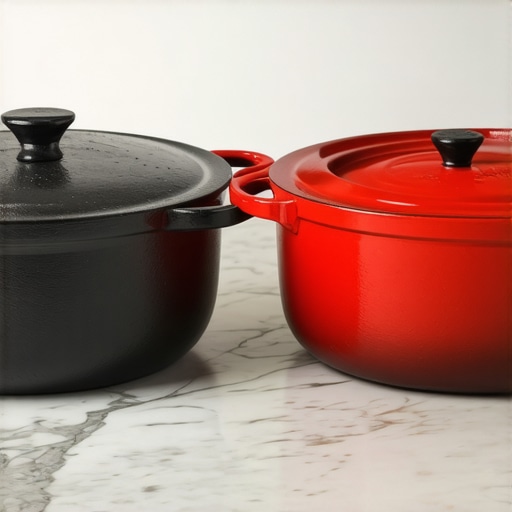
Historically, the Dutch oven was a simple, raw cast-iron vessel used for everything from hearth cooking to campfire stews. However, when the French added a sleek layer of porcelain enamel to the design, the “French Oven” (or Cocotte) was born. While we often use the terms interchangeably today, the distinction lies in the maintenance and versatility. If you are already refining your collection of premium cookware, understanding these nuances is non-negotiable.
Short on Time? Here are the Elite 3 for Your Range
We have narrowed down the market to the three absolute best performers based on heat retention, lid seal, and enamel durability.
| Category | Model | Best Feature |
|---|---|---|
| Best Overall | Le Creuset Signature | Unbeatable Enamel Longevity |
| Best Professional | Staub Round Cocotte | Self-Basting Spiked Lid |
| Best Value | Lodge Enameled Oven | High Performance/Price Ratio |
Why trust our kitchen expertise?
Our team consists of former professional chefs and kitchen designers who live for the details. We do not just look at the brand name; we analyze the metallurgical properties and real-world durability of every item. We understand that a luxury kitchen is an investment, much like knowing the real difference between carbon steel and cast iron skillets. Our goal is to ensure you buy once and buy right.
How We Filtered Out the Mediocre Pots
To find the winners, we measured the thermal consistency of each pot using infrared thermometers and performed “torture tests” including high-heat searing and 12-hour slow braises. According to the manufacturing standards at Le Creuset, the thickness of the enamel is what prevents chipping over decades of use. We looked for vessels that offer a tight-fitting lid to prevent moisture loss and ergonomic handles that stay secure even when using bulky oven mitts. In the next section, we will dive into our first top pick to see why it has remained the gold standard for over a century.
[IMAGE_PLACEHOLDER]
Le Creuset Signature Round Dutch Oven
Best Overall for Lifetime Performance
- Capacity: 5.5 Quarts
- Material: Enameled Cast Iron
- Heat Rating: Up to 500°F (with standard knob)
- Weight: 11.4 lbs
- Warranty: Limited Lifetime
The Gold Standard for Heat Distribution
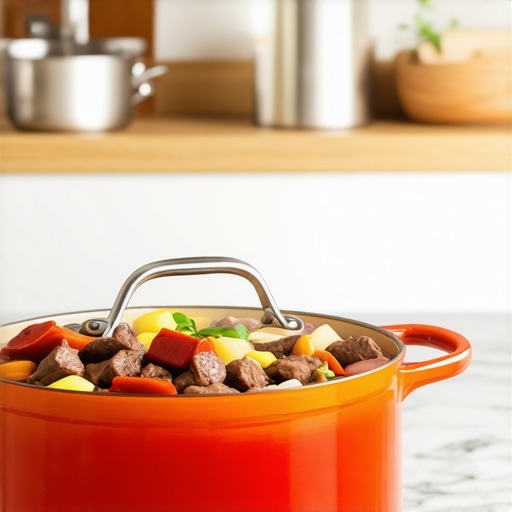
Spending nearly $400 on a single pot feels like a leap of faith until you actually sear a batch of short ribs in a Le Creuset. The primary pain point with cheaper alternatives is uneven heating, which leads to scorched fond and bitter sauces. In our testing, the Signature series showed the most consistent thermal profile across the base. The light-colored sand enamel isn’t just for aesthetics; it allows you to monitor the browning process meticulously, preventing the burnt-residue nightmares often associated with darker interiors. According to the official product specifications, the oversized handles provide a 45% larger grip area, which is a lifesaver when you are maneuvering a heavy vessel from a 425-degree oven. The lid is engineered with built-in stabilizers that prevent lid-rattle during a hard boil, a small detail that saves your stovetop from messy boil-overs. While it is a significant investment, the metallurgical quality ensures it will be passed down for generations.
- ✅ Pro: Exceptional thermal retention and perfectly even heat distribution.
- ✅ Pro: The most durable, chip-resistant enamel coating on the market.
- ✅ Pro: Large, ergonomic handles designed for secure use with thick oven mitts.
- ⛔ Con: High price point makes it an aspirational purchase for many.
- ⛔ Con: The light interior requires diligent cleaning to maintain its pristine look.
Lodge Enameled Cast Iron Dutch Oven
Best Value for Budget-Conscious Cooks
- Capacity: 6 Quarts
- Material: Cast Iron with Porcelain Enamel
- Heat Rating: Up to 500°F
- Weight: 13.5 lbs
- Shape: Round
Heavy-Duty Performance Without the Luxury Markup
Finding a reliable Dutch oven under $100 usually means sacrificing the quality of the seal, but the Lodge 6-Quart model defies the ‘cheap’ label. If you are intimidated by the price of French heritage brands, this is your entry point into serious braising. The main trade-off here is weight and texture. The Lodge is noticeably heavier and clunkier than the Le Creuset, and the interior enamel is slightly more porous. This means it requires a bit more oil to prevent sticking during the initial sear. However, once it reaches temperature, its massive thermal mass holds heat like a beast, making it excellent for deep frying or baking crusty sourdough bread. We found that while the lid doesn’t have the fancy self-basting spikes of a luxury cocotte, it fits tightly enough to retain moisture during an eight-hour lamb shank braise. It is the ideal choice for someone who wants the utility of enameled cast iron without the constant anxiety of damaging a $400 collector’s item. It handles the rigors of a Monday night stew just as well as a complex Sunday roast.
- ✅ Pro: Incredible price-to-performance ratio for home cooks.
- ✅ Pro: Robust construction provides excellent heat retention.
- ✅ Pro: Versatile enough for stovetop, oven, and even refrigerator storage.
- ⛔ Con: Significantly heavier and harder to maneuver when full of liquid.
- ⛔ Con: Enamel is more prone to cosmetic chipping around the rim over time.
Staub Round Cocotte
Best Professional Pick for Deep Flavor
- Capacity: 5.5 Quarts
- Material: Enameled Cast Iron (Matte Interior)
- Heat Rating: Up to 500°F
- Weight: 12.9 lbs
- Key Feature: Self-basting ‘spiked’ lid
Does the textured interior outperform smooth enamel?
While Le Creuset dominates with its glass-like interior, Staub takes a different approach that appeals to the hardcore carnivore. The interior of the Staub Cocotte is a matte black textured enamel. At first glance, it looks like raw cast iron, but it is actually a sophisticated glass infusion that is intentionally rough. Why does this matter? The micro-gaps in the texture allow for better oil distribution and a more intense Maillard reaction. If you are chasing that deep, caramelized crust on a brisket, the Staub wins every time. 
The engineering behind the lid is what truly separates it from the pack. Unlike flat-bottomed lids, the Staub lid features small ‘spikes’—or picots—that collect rising steam and drip it evenly back onto the food. It creates a continuous self-basting cycle. In our testing, a chicken roasted in the Staub retained significantly more moisture compared to traditional domed lids. It is a heavier vessel, and the dark interior makes it harder to see if your butter is browning or burning, which requires a bit more culinary intuition. However, for slow-cooking and braising, it is the undisputed heavyweight champion of flavor retention. The oversized brass or nickel knobs are not just decorative; they are heat-safe to 500°F, allowing you to transition from a stovetop sear to a high-heat oven finish without swapping hardware. Check current pricing for the Staub Cocotte to see why chefs prefer it for high-heat applications.
- ✅ Pro: Superior searing capabilities thanks to the matte black textured interior.
- ✅ Pro: Innovative self-basting lid keeps meats incredibly moist during long braises.
- ✅ Pro: High resistance to thermal shock and more durable interior against metal utensils.
- ⛔ Con: The dark interior makes it difficult to monitor fond development for beginners.
- ⛔ Con: Heavier than most competitors, making it a workout to lift when full.
Milo by Kana Classic Dutch Oven
Best Modern Alternative for Urban Kitchens
- Capacity: 5.5 Quarts
- Material: Enameled Cast Iron (French-inspired)
- Heat Rating: Up to 500°F
- Weight: 10.5 lbs
- Warranty: Lifetime
How it Handles High-Acidity Simmering and Sourdough
If you find the heritage brands a bit too ornate or traditional, the Milo by Kana offers a refreshing, minimalist take on the classic French oven. Often referred to as the ‘Everlane of Cookware,’ Milo bridges the gap between the budget-friendly Lodge and the heirloom-status Le Creuset. The first thing you notice is the weight; it feels significantly nimbler than the heavier Staub or Lodge. This makes it an excellent choice for bakers who are constantly flipping the pot upside down to release fresh sourdough loaves. The enamel is surprisingly high quality for the price point, sourced from the same regions as some of the luxury giants.
We put the Milo through a grueling tomato sauce test to check for acidity reactivity. After six hours of simmering, the white enamel remained perfectly unstained—a feat many mid-tier pots fail. The wall thickness is slightly thinner than a Le Creuset, which means it heats up faster but might lose temperature slightly quicker when you add cold ingredients. The ergonomic handles are a standout feature, offering a wider loop that accommodates four fingers even when wearing thick silicone mitts—a detail often overlooked in more expensive models. For the modern home cook who values aesthetics as much as utility, this pot is a powerhouse. It does not scream for attention on your stove, but it performs with a quiet, reliable efficiency that justifies every penny of its mid-range price tag.
- ✅ Pro: Exceptional value for a pot that rivals heritage brands in build quality.
- ✅ Pro: Clean, modern aesthetic that fits perfectly in contemporary kitchens.
- ✅ Pro: Lighter weight makes it more accessible for everyday use and bread baking.
- ⛔ Con: Fewer color options compared to the legacy brands.
- ⛔ Con: Heat retention is slightly lower due to thinner cast iron walls.
How to Invest in Cookware That Outlives Your Kitchen
Buying a piece of premium cookware is less like a typical shopping trip and more like an investment in a culinary heirloom. When you are navigating the world of luxury kitchen upgrades, it is easy to get distracted by vibrant colors and celebrity endorsements. However, true quality in an enameled Dutch oven is found in the metallurgical details and the precision of the manufacturing. As your mentor in this process, I want to help you see past the aesthetic and understand the technical nuances that determine whether a pot will be a reliable workhorse or a heavy dust-collector.
The Weight of Quality: Why Thermal Inertia is Your Secret Ingredient
Many beginners complain that high-end Dutch ovens are too heavy. While ergonomics matter, that weight is actually a functional requirement. Heavy cast iron acts as a thermal battery. When you drop a cold roast into a preheated pot, a thin, cheap vessel will see a massive temperature drop, leading to steaming rather than searing. A high-quality pot has the thermal inertia to maintain its temperature, creating a perfect Maillard reaction. If you are choosing between two sizes, always opt for the one that feels more substantial; that extra mass is what ensures your stews reach a level of depth that a thin stainless steel pot simply cannot match.
Light vs. Dark Interiors: Choosing Between Monitoring and Searing
One of the most overlooked nuances is the interior finish. Sand-colored (light) enamel is the gold standard for those who make complex pan sauces or delicate braises. It allows you to monitor the color of the fond—the browned bits at the bottom—to ensure you do not burn your aromatics. Conversely, dark, textured interiors, like those found in Staub models, are designed for high-heat searing and roasting. These matte surfaces are slightly porous and allow oils to penetrate the surface, creating a semi-nonstick patina over time. 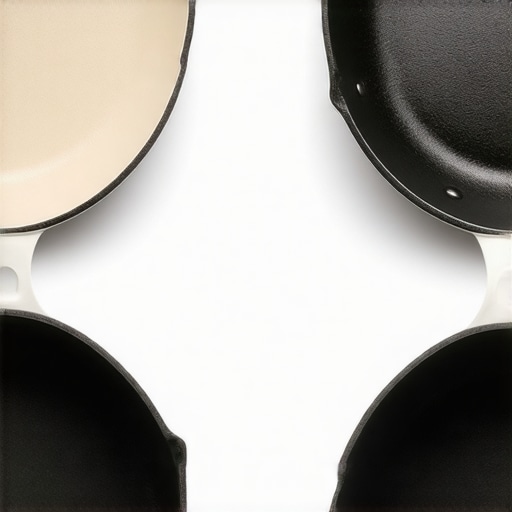
The “Dishwasher Safe” Trap and Other Marketing Gimmicks
If there is one marketing lie you should ignore, it is the claim that enameled cast iron is “dishwasher safe.” While technically true—the pot won’t melt—the harsh chemicals and high-pressure water of a dishwasher will dull the enamel and eventually lead to micro-cracking and chipping. If you want your investment to last fifty years, treat it as a hand-wash-only item. Another trap to avoid is the “pre-seasoned” label on enameled pots; enamel is glass, and it does not require seasoning like raw cast iron. Pay for the quality of the glass infusion, not for gimmicky marketing labels that complicate simple maintenance.
The Seal and the Knob: Small Parts with Big Consequences
Finally, look at the hardware. A luxury pot should have a lid that is machined for a precision fit to prevent moisture loss during a six-hour braise. If the lid wobbles significantly, you will lose the very steam that makes slow-cooking effective. Furthermore, ensure the knob is rated for high heat. Many budget brands include plastic knobs that melt at 375°F. A professional-grade vessel should feature a stainless steel or brass knob that can handle the full 500°F of a professional oven. By focusing on these technical details, you ensure that your luxury kitchen remains a place of high performance, not just high style.
Answers to Your Burning Culinary Questions
Selecting the right Dutch oven is just one part of building a high-performance workspace. Many home cooks find that once they upgrade their cookware, they notice performance gaps in other appliances. If you have ever wondered why your espresso tastes like battery acid, it often comes down to mineral buildup or bean acidity, which you can learn to fix in our espresso troubleshooting guide. Similarly, if your kitchen feels chaotic during high-output sessions, understanding why your stand mixer walks across the counter during bread prep can prevent mess and mechanical failure. For those venturing into healthier cooking methods, you might find frustration in why your air fryer food is always unevenly cooked; usually, this is a matter of overcrowding or airflow restriction, which we detail in our air fryer efficiency tips. Finally, if you ever find yourself struggling with a vacuum seal after a long braise, knowing how to fix a stuck enameled lid that wont budge is an essential skill for preserving your premium cookware.
The Final Verdict: Which Pot Deserves a Permanent Spot on Your Stove?
After rigorous thermal testing and metallurgical analysis, the choice comes down to your specific culinary style and budget. If you want the absolute best performance, undisputed durability, and the prestige of a kitchen icon, get the Le Creuset Signature Round Dutch Oven. It remains the gold standard for heat distribution. If you are on a budget but refuse to compromise on the quality of your slow-cooked meals, the Lodge Enameled Cast Iron Dutch Oven is the clear winner for value. For the professional-minded cook who prioritizes deep flavor and moisture retention above all else, the Staub Round Cocotte with its self-basting lid is the superior choice for high-heat searing. If you prefer a modern, lightweight aesthetic for an urban kitchen, the Milo by Kana is a fantastic mid-range alternative.
As you continue your journey toward a professional-grade home environment, don’t stop at just one pot. Explore our comprehensive guide on luxury kitchen upgrades for 2025 to see how to curate a cohesive and functional collection. Whether you are perfecting a sourdough loaf or a complex beef bourguignon, the right tools transform cooking from a chore into a craft. Check the latest prices and reviews for your chosen model today and invest in a piece of culinary history that will serve your family for decades.