
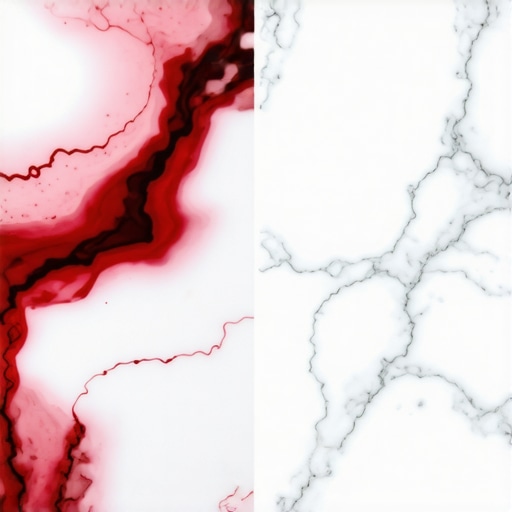
The Hidden Costs of Choosing Marble Over Quartz
Marble is a financial liability masquerading as a luxury asset. After managing kitchen renovations for fifteen years, I have seen the pattern repeat: a homeowner falls for the sweeping grey veins of Carrara, only to realize six months later they have installed a giant, white sponge. The stake here is not just aesthetic. It is the immediate depreciation of your kitchen’s functional value. If you treat your kitchen like a laboratory for premium cookware and espresso machines, marble will fail you. It is not a matter of if, but when. The result? Permanent scarring on an investment that should have lasted decades. This is the cold reality that showroom sales reps ignore while they push high-margin slabs on unsuspecting buyers who just want a luxury kitchen.
The Porosity Trap
Marble is fundamentally calcium carbonate. In technical terms, it is a metamorphic rock that remains highly reactive to acids. Quartz, conversely, is an engineered stone comprising roughly 93% ground quartz and 7% polyester resins. This engineering creates a non-porous surface. When you use air fryers or heavy stand mixers, the vibration and heat can cause micro-fissures in natural stone. Marble absorbs liquids. A spilled glass of red wine or a drop of lemon juice from a morning prep session does not just sit on the surface. It migrates into the stone’s pores. You can find more details on how these materials react in the Natural Stone Institute technical manuals. If you are in the planning stages, you must understand how to prep your countertops before a major kitchen reno to avoid structural issues later. The weight of marble requires reinforced cabinetry that quartz often does not demand, adding another layer of hidden labor costs.
The Chemical Reality of Etching
Most homeowners confuse staining with etching. Staining is a pigment issue; etching is a chemical burn. Because marble is alkaline, any acidic substance—vinegar, citrus, or even carbonated water—dissolves the surface on contact. The result is a dull, matte spot that stands out against the polished finish. You can’t scrub this out. It requires professional diamond-honing to fix. Quartz is inert. It shrugs off the acidity that ruins a marble slab in seconds. I have watched clients spend thousands on professional-grade premium cookware only to be afraid to use it because a hot pan might leave a thermal shock mark on their marble. For those who demand high-heat performance, I often suggest looking into why quartzite is better than quartz for high heat cooking areas, as it offers a middle ground that marble simply cannot occupy.
The ROI of Durability
From a strategic consulting perspective, the ROI on marble is negative in a high-traffic home. Property appraisers in 2025 are increasingly penalizing homes with etched or cracked natural stone. Modern buyers want the look of marble without the ‘operational scars’ of a 19th-century pastry shop. Quartz provides that. It offers the visual depth of natural stone with zero maintenance. No sealing. No special pH-neutral cleaners. Just a damp cloth. This efficiency extends to the ergonomics of the space. Choosing the countertop height that prevents back pain while prepping is a much better use of your budget than paying for annual stone resealing services. According to reports from the International Surface Fabricators Association, the market shift toward engineered surfaces is driven by this exact need for long-term reliability over short-term prestige.
The 2025 Market Shift
The industry is moving toward ‘functional luxury.’ We are seeing a massive uptick in the use of high-definition quartz that mimics rare Calcatta marble so effectively that even trade professionals have to look twice. As environmental regulations tighten on quarrying, the cost of top-tier marble is skyrocketing while its practical utility remains stagnant. Over the next 24 months, expect to see marble relegated to ‘show kitchens’ while the working areas of the home adopt high-performance composites. This is a market correction. The era of the high-maintenance home is ending. We see this in the demand for integrated espresso machines and built-in stand mixers that require surfaces capable of withstanding industrial-grade cleaning agents.
Technical Verdict
If you are a ‘weekend warrior’ who rarely cooks, buy marble for the vanity. If you actually use your kitchen, buy quartz. The hidden costs of marble—resealing, etching repair, and specialized cleaning products—will exceed the initial price gap within three years. My recommendation is a ‘Buy’ on high-grade quartz and a ‘Sell’ on marble for any primary residence. Focus your budget on high-quality appliances like air fryers or premium cookware that actually improve your culinary output rather than a stone that forces you to walk on eggshells in your own home.
Frequently Asked Questions
Does sealing marble prevent etching? No. Sealing only buys you time against stains. It does nothing to stop the chemical reaction between acid and the stone that causes etching. Can quartz handle hot pans directly? While quartz is heat resistant, the resin can discolor at extreme temperatures. Always use a trivet. Which material is better for resale value? In today’s market, quartz is superior because it signals ‘low maintenance’ to potential buyers. Is there a way to fix an etched marble surface? Only through professional regrinding and polishing, which is expensive and creates significant dust in your home.