
How to Pick a Range Hood That Actually Sucks Up Smoke
Most luxury kitchens are designed for the eyes, not the lungs. After fifteen years of diagnosing poor indoor air quality in high-end builds, I have seen six-figure renovations ruined by a thin film of atomized grease. If your range hood sounds like a jet engine but the smell of seared ribeye lingers in your curtains for three days, you bought a decorative shroud, not a ventilation system. The failure isn’t just annoying; it is a fundamental breakdown in fluid dynamics. Choosing the right unit requires moving past the shiny stainless steel and looking at the static pressure and capture area. Getting this wrong means your premium cookware and luxury kitchen cabinets will eventually become magnets for sticky dust that no microfiber cloth can easily remove.
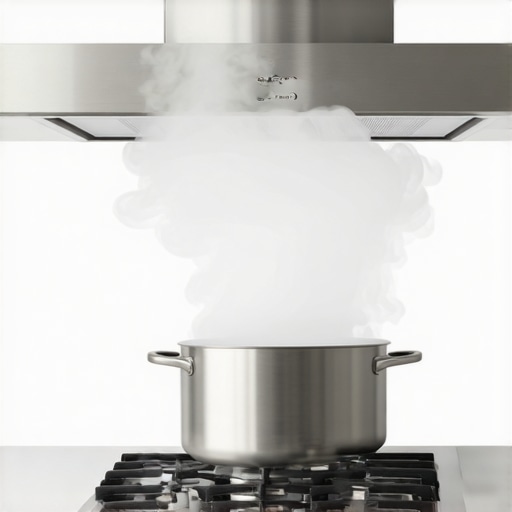
The physics of smoke extraction depends on three pillars: capture, containment, and exhaustion. Most homeowners obsess over CFM—Cubic Feet per Minute—but CFM is a vanity metric if the hood lacks a sufficient sump. A flat-bottomed hood is an engineering disaster. Smoke is chaotic; it rises in a plume that expands as it climbs. If the hood doesn’t have a deep recessed cavity to ‘trap’ that burst of steam before the fan can pull it through, the smoke simply rolls off the edges and into your living room. When you are using air fryers on the counter or searing in carbon steel, the volume of particulate matter released is staggering. You need a hood that overhangs the cooking surface by at least three inches on each side to account for this expansion. It is the same logic used in the real cost of upgrading to professional kitchen appliances where performance must match the output capacity.
The Engineering Reality of Airflow
Static pressure is the silent killer of ventilation. You can have a 1,200 CFM motor, but if your contractor ran a 6-inch flex duct with three 90-degree elbows, that motor is effectively strangled. The resistance—the static pressure—scales exponentially with every bend. I always insist on rigid, smooth-walled galvanized ducting. If you hear a rattling, metallic vibration, it is usually a sign of turbulence caused by poor duct sizing. This becomes even more critical if you have a designated coffee station nearby where espresso machines release localized steam that needs to be managed to prevent cabinet warping. According to the Home Ventilating Institute (HVI), proper ducting is as vital as the fan itself for maintaining the integrity of the air exchange rate.
The Makeup Air Mandate
Modern homes are airtight envelopes. When you turn on a high-powered range hood, you are vacuuming air out of the house. If that air isn’t replaced, your house goes into negative pressure. The result? The hood stops pulling smoke, or worse, it starts sucking carbon monoxide down your fireplace chimney. This is the ‘Backdrafting’ nightmare. Any hood exceeding 400 CFM now requires a Makeup Air System (MUA) by most local building codes. This is an motorized damper that opens to let fresh air in whenever the hood is active. It adds cost, but it is the only way to ensure your stand mixers don’t get coated in a layer of fine soot from a struggling ventilation cycle. Efficiency is about balance. You can read more about integrating these systems into a cabinet layout that fixes your workflow bottlenecks to ensure the air paths are unobstructed.
The Noise vs Power Paradox
I often hear clients complain that they don’t use their hood because it is too loud. This is a failure of design. High-quality ventilation uses large-diameter blowers that move high volumes of air at low RPMs. Cheap hoods use small fans spinning at high speeds, creating that high-pitched whine. Look for hoods with ‘Inline Blowers’ or ‘Remote Blowers.’ By moving the actual motor to the attic or the exterior wall, you eliminate the mechanical noise from the kitchen. All you hear is the soft rush of air. It is a strategic investment in the long-term usability of the space. Without it, you will find yourself avoiding high-heat cooking altogether, rendered useless despite your investment in professional-grade tools. Even your luxury kitchen island stability won’t matter if the room is a haze of blue smoke.
My executive verdict is simple: Prioritize the ‘sump’ depth and the duct diameter over the aesthetic trim. Buy a hood with baffle filters—those slanted stainless steel slats—rather than mesh filters. Baffle filters force the air to change direction rapidly, slinging the heavy grease particles into a tray rather than letting them clog the mesh and kill your airflow. If you are building a new home or doing a major renovation, specify an 8-inch or 10-inch rigid duct from the start. The market is moving toward smart, sensor-driven ventilation that adjusts based on heat signatures, but no sensor can fix a bad pipe. Focus on the plumbing of the air first.
Frequently Asked Questions
Why does smoke still escape even when my hood is on high?
This usually happens because of cross-drafts from nearby windows or HVAC vents, or because the hood is mounted too high above the cooktop. Most residential hoods should be between 30 and 36 inches above the surface.
Do recirculating hoods actually work?
In a word: No. They are charcoal filters that scrub some odors but do nothing for heat or moisture. They are a last resort for apartments where exterior venting is prohibited by code.
How often should I clean my baffle filters?
For a kitchen using professional techniques, once every two to four weeks. Most high-end baffles are dishwasher safe, making this a five-minute maintenance task that preserves the motor’s lifespan.
Is a 1200 CFM hood overkill for a home kitchen?
Not if you use a 36-inch or 48-inch gas range with high BTU output. However, remember that without a makeup air system, that 1200 CFM will barely perform at half its rated capacity due to house vacuuming.