
The Hidden Reason Your Stand Mixer Is Leaking Oil
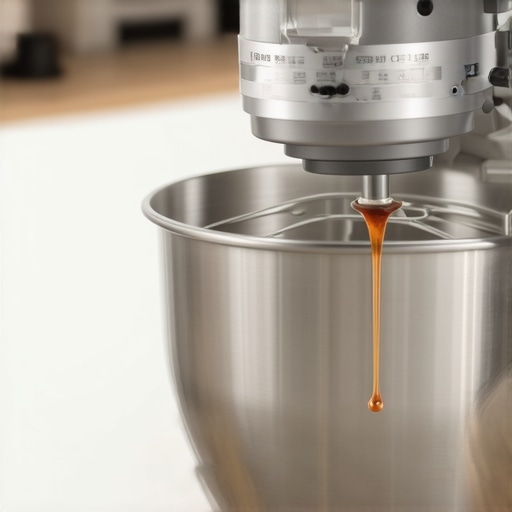
Finding a pool of amber liquid at the bottom of your stand mixer bowl isn’t a sign of a catastrophic mechanical failure. It is a sign of neglect. After fifteen years of tearing down planetary gearboxes and analyzing the duty cycles of luxury kitchen appliances, I can tell you that oil leaks are rarely caused by a ‘broken’ part. The culprit is almost always syneresis—the chemical separation of oil from the thickening agent in food-grade grease. When you let a high-performance machine sit idle, gravity and temperature fluctuations conspire to degrade the lubricant. This isn’t just an aesthetic annoyance; it is a warning that the internal gears are losing their protective coating. If you ignore it, you aren’t just cleaning up a mess; you are shortening the lifespan of an expensive investment. I’ve seen hundred-dollar gear sets ground to dust because a homeowner thought the occasional drip was ‘normal’ for a luxury machine. It isn’t. It’s a symptom of a storage and usage error.
The Engineering Reality of Planetary Gearboxes
Stand mixers operate on a planetary mixing principle. A central gear drives an offset gear that rotates while orbiting the bowl’s center. To manage the immense torque required for heavy bread doughs, manufacturers pack these gear housings with high-viscosity, food-grade grease. Unlike the oil in your car, which is liquid and circulated by a pump, this grease is designed to stay put. It is a sponge-like matrix of thickeners holding lubricant in suspension. Heat is the enemy here. When you push a machine through three consecutive batches of high-hydration sourdough, the friction generates significant thermal energy. This heat thins the lubricant. If the machine then sits in a cold pantry for three months, the oil bleeds out of the matrix. This is why you see oil dripping down the beater shaft. You can learn more about the difference between planetary and stationary mixing action to understand how these forces interact. The cost of this separation isn’t just the oil on your counter; it’s the increased friction on the worm gear, which is often made of sacrificial brass or high-strength plastic to prevent the motor from burning out during a stall.
Why Standard Maintenance Fails
Most owners think the solution is to simply wipe the oil away and keep going. This is a strategic error. Once the oil has separated, the remaining grease in the gearbox becomes ‘cakey’ and loses its ability to flow into the gear teeth. I’ve opened machines where the grease was the consistency of dried clay, leaving the gears to run bone-dry despite the housing being technically ‘full.’ You can’t just add more oil. The entire gearbox needs a thermal reset. This is why I always emphasize how to store your stand mixer so it lasts decades. The messy reality is that most modern luxury kitchens are too warm for long-term appliance storage. Placing your mixer next to a pro-style range or under a sun-drenched window accelerates the breakdown of the grease. I remember a client in the local hills whose $800 mixer leaked every July. The reason? Her pantry shared a wall with the outdoor HVAC compressor. The constant vibration and localized heat were literally shaking the oil out of the grease matrix. The result? A messy counter and a noisy gear train that sounded like a gravel crusher. You can try to quiet a noisy stand mixer without voiding the warranty, but once the grease has separated, your options are limited to a full repack.
The Shift Toward Brushless Power
The industry is moving toward a solution, but it’s not what most expect. We are seeing a transition from traditional AC motors to high-torque DC motors. These newer units generate less internal heat and often use different lubrication strategies. However, for the millions of classic tilt-head and bowl-lift models currently in luxury kitchens, the problem remains. Regulatory standards for food-grade lubricants, governed by organizations like NSF International, strictly limit the additives that can be used to prevent syneresis. These ‘clean’ lubricants are simply less stable than industrial-grade greases used in non-food applications. Over the next 24 months, I expect to see more manufacturers moving toward sealed, modular gearboxes that are replaced rather than serviced. This is a win for convenience but a loss for the longevity-minded consumer who values repairability. To avoid these issues, you must select the right tool for the job; for instance, knowing how to pick a stand mixer that won’t stall on pizza dough can save your gears from the heat-related grease breakdown that leads to leaks.
The Executive Verdict
If your mixer is leaking oil, do not panic, but do not ignore it. My recommendation is a ‘Run and Inspect’ strategy. If the leak is minor, run the mixer on high speed for two minutes with no load. This redistributes the lubricant and can sometimes re-incorporate the oil into the thickener. If the leak persists or if the machine develops a high-pitched whine, the grease has failed. You have two choices: pay for a professional repack or risk a gear failure that will cost three times as much to fix. If you are a casual baker, move your mixer to a cool, dry location and run it for five minutes once a month to keep the lubricant stable. If you are a high-volume professional, consider upgrading to a DC-motor model with a sealed drivetrain. Maintenance is cheaper than replacement. Always.
Why does my mixer leak more in the summer?
Higher ambient temperatures lower the viscosity of the oil within the grease, making it easier for it to seep past the gaskets and down the planetary shaft.
Is the oil dripping into my food dangerous?
Most premium mixers use USP-grade, food-safe mineral oil. While it won’t hurt you, it can ruin the texture of delicate meringues or icings.
Can I fix the leak by just tightening the screws?
No. The leak is a chemical separation issue, not a mechanical loose-fit issue. Tightening screws won’t stop the oil from bypassing the internal felt washers.
How often should I have the grease replaced?
For heavy users, a gearbox inspection every five years is standard. For occasional users, the grease can last ten to fifteen years if stored in a climate-controlled environment.
Does using the dough hook cause more leaks?
Yes, indirectly. Dough hooks create the most friction and heat, which is the primary driver of grease separation. Always use the lowest recommended speed for heavy doughs.