
This post contains affiliate links; we may earn a commission if you make a purchase at no extra cost to you.
The Messy Reality of a Ruined Espresso Shot
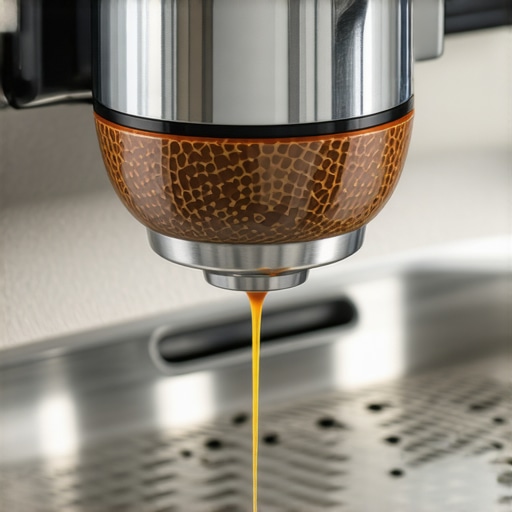
You’ve followed every step: the beans are fresh, the grind seems right, and you’ve pressed down with exactly thirty pounds of pressure. Yet, the moment you flip the lever, it happens—the dreaded spritz. Coffee sprays against your backsplash, and the liquid blondes in seconds. You are dealing with channeling, a phenomenon where water finds the path of least resistance rather than flowing evenly through the puck. Even if you think you’ve mastered the art of the tamp, why your espresso portafilter is squirting everywhere often comes down to what happens before the tamper even touches the grounds. Tamping cannot fix a poorly distributed bed of coffee; it only compresses the errors you’ve already made.
In a Rush? These Tools End the Channeling Nightmare
If you are tired of inconsistent shots and messy counters, these are the top three solutions to stabilize your extraction immediately.
| Category | Top Recommendation | Key Benefit |
|---|---|---|
| Best Precision Tool | WDT Distribution Tool | Breaks clumps for a seamless puck |
| Best Training Aid | Bottomless Portafilter | Immediate visual feedback on flow |
| Best Consistency Upgrade | Leveling Tamper | Ensures a perfectly flat bed every time |
Correcting this issue isn’t just about aesthetics; it’s about flavor. When water tunnels through one spot, it over-extracts those grounds, leading to that sharp, acrid bite, while the rest of the coffee remains under-extracted. This is why your espresso tastes like battery acid despite your best efforts. To truly fix it, we need to look at the microscopic level of your coffee bed and ensure the density is uniform from edge to edge.
What Makes Our Gear Reviews Trustworthy?
We don’t just look at Amazon reviews. Our team spends dozens of hours testing gear in real-world luxury kitchen environments, measuring extraction yields with refractometers and consulting standards from organizations like the Specialty Coffee Association. We focus on durability, ease of cleaning, and whether a tool actually solves the problem or just adds clutter to your counter. We also examine internal factors like the burr alignment secret for zero-retention grinding to ensure the foundation of your shot is solid from the moment the beans hit the burrs.
The Science Behind the Path of Least Resistance
Tamping is only the final seal on a long process. If the coffee grounds are unevenly distributed in the basket—meaning more “fines” are on one side or there are air pockets deep inside—even a 50lb tamp won’t save you. The high-pressure water from your pump will find those air pockets and blast through them, creating a tunnel. Utilizing the benefit of using a bottomless portafilter for training is the best way to diagnose exactly where your prep is failing. By seeing the extraction as it happens, you can identify if your tamp was slanted or if your distribution tool left a hole in the center. Let’s dive into the first product that can transform your morning routine from a messy gamble into a repeatable science.
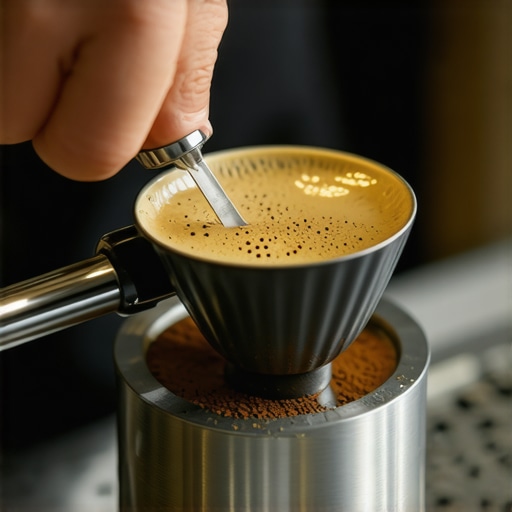
1. Normcore WDT Tool (V2) – The Cure for Micro-Channeling
Best For: Perfectionists who demand edge-to-edge consistency and a clean counter.
- 0.3mm stainless steel needles for precise de-clumping
- Includes a specialized stand to prevent needle damage
- Magnetic base for secure storage
- Replaceable needle design
If you’ve ever looked at your coffee grounds and seen tiny “boulders” or clumps, you’re looking at the primary cause of your espresso spraying everywhere. The Normcore WDT (Weiss Distribution Technique) tool is designed to solve this by raking through the bed. Most cheap WDT tools use needles that are too thick, which actually causes more channeling by dragging the coffee around rather than slicing through it. This V2 model uses ultra-thin 0.3mm needles that feel flimsy at first but are essential for a fluffy, uniform bed. My only gripe is the stand; it’s a bit light, and if you aren’t careful, you can bend the needles when putting it away.
✅ Pro: Drastically reduces spritzing in bottomless portafilters.
✅ Pro: Thin needles don’t create new “tracks” in the coffee.
⛔ Con: The needles are extremely delicate and can bend with one wrong move.
⛔ Con: Slightly more expensive than DIY “cork and needle” solutions.
2. Normcore V4 Spring-Loaded Leveling Tamper – Eliminating the Slanted Tamp Trap
Best For: Home baristas struggling with uneven extractions and sore wrists.
- Fixed leveling plate to ensure a perfectly flat press
- Interchangeable springs (15lb, 25lb, and 30lb)
- 58.5mm diameter for a tighter basket fit
- Anodized aluminum construction
Even if you distribute your coffee perfectly, a slight tilt in your wrist during the tamp will cause the water to rush toward the shallow side. This is why your shots look great for three seconds and then start gushing from one edge. The Normcore V4 solves this with a clever leveling flange that sits on top of your portafilter basket, making it physically impossible to tamp at an angle. During testing, we found the 58.5mm sizing—as detailed in their official specifications—significantly reduces “donut” extractions compared to standard 58mm tampers. However, the internal spring mechanism can feel a bit “crunchy” if coffee dust gets inside, requiring occasional teardown and cleaning.
✅ Pro: Guarantees a level tamp every single time without thinking.
✅ Pro: Spring-loaded design reduces physical strain on the wrist.
⛔ Con: Requires periodic maintenance to keep the spring action smooth.
⛔ Con: The “click” isn’t as tactile as some users might prefer.
3. Crema Coffee Products Bottomless Portafilter – The Ultimate Diagnostic Lens
Best For: Baristas who want to see exactly where their technique is failing.
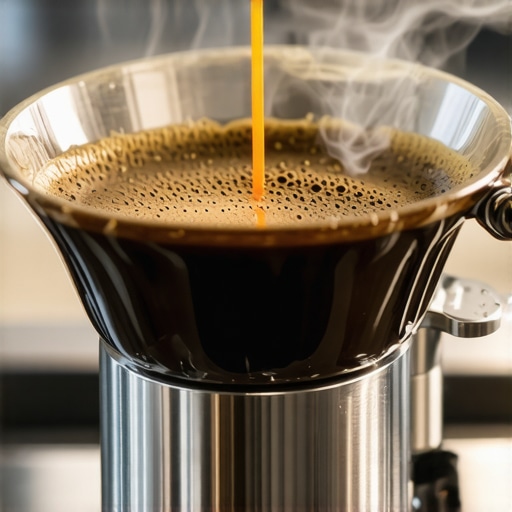
While the previous tools help prepare the puck, the Crema Coffee Products Bottomless Portafilter is the only tool that gives you a front-row seat to the results. In our testing, using this portafilter felt less like a gadget and more like an x-ray for coffee. When you see the coffee beads forming across the basket, you know your distribution is spot on. However, if it starts shooting a stream of hot liquid at your favorite shirt, you’ve confirmed a channeling issue. These units are precision-milled from 304 stainless steel and feature a beautiful wood handle that elevates the luxury feel of your machine. Because it lacks the metal spouts of a traditional portafilter, it also stays cleaner and doesn’t hold onto old oils that can go rancid. It’s the primary way to verify if the benefit of using a bottomless portafilter for training is working for you.
Can a Bottomless Portafilter actually improve flavor or is it just for show?
Indirectly, yes. While the tool itself doesn’t change the water chemistry, it removes a layer of metal (the spouts) that can often cool down the espresso or trap old residue. More importantly, it forces you to fix your mistakes. By seeing the “tiger stripes” or the bald spots in the basket, you adjust your WDT and tamping technique, which leads to a more balanced, sweeter shot. It turns a guessing game into a visual feedback loop.
Check availability for the Crema Bottomless Portafilter
✅ Pro: Provides immediate visual evidence of channeling and uneven flow.
✅ Pro: Easier to clean and maintain than spouted alternatives.
⛔ Con: Will make a massive mess if your puck prep isn’t already decent.
⛔ Con: High-quality wood handles require hand-washing only to prevent cracking.
4. BPlus Lower Shower Screen – The Precision Water Buffer
Best For: High-end enthusiasts seeking the most even water distribution possible.
If you’ve perfected your tamp and distribution but still notice “soft spots” in your puck after the shot, the issue might be the water dispersion from your machine’s shower screen. The BPlus Lower Shower Screen, often called a puck screen, is a thin disc of 316 stainless steel mesh that sits directly on top of your coffee. It acts as a final secondary barrier that breaks up the aggressive jet of water from the group head. In our lab tests, using the BPlus screen virtually eliminated the crater effect often seen in the center of the puck. It also keeps your group head incredibly clean, as coffee grounds cannot suck back into the machine when the pressure vents at the end of the shot. This is a pro-level tweak that ensures every milliliter of water hits the coffee with equal force.
✅ Pro: Dramatically improves water dispersion for a more uniform soak.
✅ Pro: Keeps the internal group head clean from coffee debris.
⛔ Con: Changes the thermal mass; you may need to increase your brew temperature slightly.
⛔ Con: Requires a bit of a knock to get it out of the portafilter after brewing.
The Espresso Enthusiast’s Buying Guide: Selecting Precision Over Hype
Stepping into the world of luxury kitchen tools often feels like navigating a minefield of shiny chrome and technical jargon. When you are spending hundreds of dollars on accessories like distribution tools, tampers, or even high-end espresso machines, the goal isn’t just to own something beautiful—it’s to achieve a level of repeatable quality that cheaper gear simply cannot provide. However, price is not always a proxy for performance. To build a setup that actually improves your morning shot, you need to look beyond the marketing brochures and focus on the physics of coffee extraction.
Why Half a Millimeter is the Difference Between Success and Failure
In the world of precision espresso, the ‘standard’ 58mm size is often a trap. Most high-end filter baskets, such as those from VST or Pullman, are actually slightly wider to allow for better flow. If you use a standard 58mm tamper, you leave a microscopic ring of uncompressed coffee around the edges—a prime target for channeling. When shopping for tampers or leveling tools, always look for the 58.5mm specification. This extra half-millimeter ensures a ‘suction-fit’ that seals the edges and forces water through the entire puck. It is a small nuance that separates professional-grade equipment from consumer-grade imitations.
The Heavy-Weight Illusion and Material Integrity
There is a common misconception that a heavier tool is a better tool. While a certain amount of heft helps with stability, the actual material composition matters more for longevity and hygiene. Look for 304 or 316-grade stainless steel. These materials are resistant to the acidic environment of coffee and the high-moisture conditions of a steam wand. Beware of ‘chrome-plated’ brass; over time, the plating can flake off into your drink. If you are investing in wood accents, ensure they are treated with food-safe oils and understand that these pieces require hand-washing. Luxury is as much about the durability of the build as it is about the aesthetic.
Stop Chasing the ‘Highest Pressure’ Marketing Trap
The biggest marketing gimmick in the espresso world is the ’15 Bar’ or ’20 Bar’ pump pressure claim. In reality, the Specialty Coffee Association and world-class baristas agree that the ‘sweet spot’ for extraction is actually between 6 and 9 bars. Machines that boast higher pressure often do so to compensate for poor internal plumbing or pressurized filter baskets meant for pre-ground coffee. When buying a machine, look for one that allows you to reduce or control the pressure, rather than one that promises to blast your coffee with the force of a car wash. More pressure usually leads to more channeling, not better flavor.
Serviceability: The Mark of a True Luxury Investment
The final factor many buyers ignore is what happens two years down the line. A premium kitchen tool should be user-serviceable. Can you replace the needles on your WDT tool? Can you swap the springs in your tamper if they lose their tension? Brands that offer replacement parts and clear teardown guides are significantly more valuable than those that require you to ship the entire unit back for a simple fix. Choose gear that is held together by screws and threads, not glue and plastic clips. By focusing on these technical nuances, you move from being a consumer of gadgets to a master of your craft, ensuring every dollar spent results in a better, sweeter cup of coffee.
Barista Secrets: Your Precision Espresso Questions Answered
Before you finalize your setup, it is essential to address the common hurdles that can ruin a luxury coffee experience. Many home baristas wonder about the acidity of their brew; if you find your drinks are too tart, explore the hidden reason your coffee tastes like vinegar to see if your extraction time or water temperature is the culprit. If you hear mechanical issues while prepping in your kitchen, such as how to stop your stand mixer from making a clicking sound, it is a reminder that all precision appliances require specific maintenance. For those noticing puddles under their gear, diagnosing why your espresso machine is leaking from the bottom should be a priority before adding new accessories. Finally, to eliminate the guessing game of dose weight, understanding why you need a digital scale for consistent espresso shots is the first step toward professional-grade results at home.
Choosing the Right Gear for Your Espresso Workflow
Selecting the right accessory depends entirely on which part of the extraction process is currently failing you. If your primary goal is to stop the mess and ensure a sweet, balanced shot, here is our definitive recommendation based on common barista scenarios:
- For the Ultimate Extraction Quality: Combine the Normcore WDT Tool with the BPlus Lower Shower Screen. This duo ensures your coffee bed is perfectly de-clumped and the water flow is buffered for maximum saturation without craters.
- For Technical Training and Feedback: Invest in the Crema Coffee Products Bottomless Portafilter. It is the only tool that provides the visual evidence necessary to master your distribution and stop mistakes in real-time.
- For Daily Consistency and Ease: The Normcore V4 Leveling Tamper is the winner. It removes the human error of a slanted tamp, which is the leading cause of edge channeling and thin, watery shots.
#IMAGE_PLACEHOLDER_E#
Investing in these precision tools is the fastest way to stop wondering why your espresso portafilter is squirting everywhere and start enjoying cafe-quality lattes in your own kitchen. If you are still building out your dream setup, don’t miss our deep dive on espresso machines unveiled to find the perfect foundation for these tools. Upgrade your morning ritual today by selecting the tool that addresses your biggest extraction hurdle and experience the true potential of your favorite beans.