
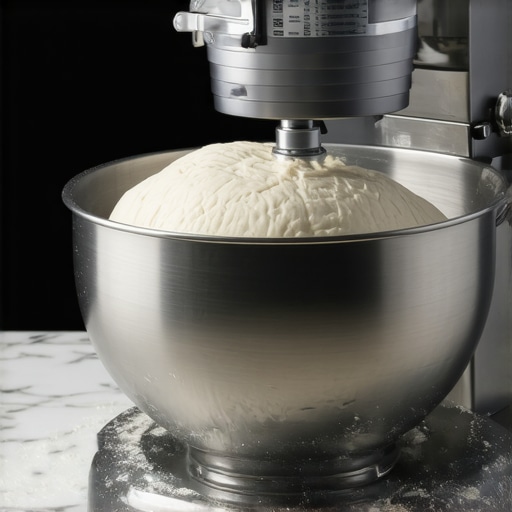
How to Pick a Stand Mixer That Won’t Stall on Pizza Dough
Wattage is a marketing lie. Most homeowners shopping for a luxury kitchen believe a higher number on the box translates to more power at the dough hook. It doesn’t. After fifteen years of tearing down appliances and consulting for high-end culinary builds, I can tell you that a 1000-watt AC motor often has less functional torque than a 300-watt DC motor. If you value your investment, stop looking at the power consumption and start looking at the transmission. Getting this wrong means a dead capacitor and a kitchen that smells like ozone and regret right when your guests are expecting Neapolitan crust.
The Engineering Reality of Torque
The core problem with pizza dough—specifically low-hydration, high-protein flour mixes—is resistance. This isn’t cake batter. It’s a dense, elastic mass that fights back. A standard consumer mixer uses an AC motor that needs to spin fast to generate power. When the dough resists, the motor slows down, draws more current to maintain speed, and heats up. This is the reason your stand mixer is getting too hot to touch during a ten-minute knead. By contrast, prosumer machines utilize DC motors. These units provide maximum torque at the lowest speeds, which is exactly where dough development happens. Understanding why heavy duty stand mixers use DC motors instead of AC is the first step toward a machine that won’t stall. You want a motor that doesn’t scream; you want one that grunts.
The Mechanical Failure Points
Gears are the second point of failure. Modern mid-range mixers often hide a nylon sacrificial gear inside the housing. Manufacturers claim this is to protect the motor from burning out if the machine jams. I call it planned obsolescence. In a high-torque scenario, those plastic teeth shear off. You want all-metal gear construction. But there is a catch. All-metal gears require specific lubricants that stay viscous at high temperatures. If the grease thins out, you get metal-on-metal grinding. Pay attention to the housing material too. A die-cast zinc or aluminum body acts as a heat sink, pulling thermal energy away from the internal components. Plastic housings trap heat, cooking the electronics from the inside out. If the machine feels light, it is a toy, not a tool.
The Stress Test of Real-World Use
I’ve stood in kitchens where a $500 mixer literally walked itself off the counter while trying to handle a 65% hydration dough. The vibration is a symptom of poor internal balancing and a lack of mass. You should check how to stop your stand mixer from vibrating off the counter before you commit to a brand that prioritizes aesthetics over ballast. I remember a specific client in the hills who insisted on a designer-color model with a tilt-head. Three weeks later, I was back in her kitchen. The locking pin had sheared because the upward force of the dough spiral was more than the hinge could bear. For pizza and bread, a bowl-lift design is non-negotiable. It provides a rigid triangular support structure that keeps the dough hook centered under extreme load. Sometimes, minor tweaks are needed; for instance, knowing the screw adjustment that stops your mixer from hitting the bowl can prevent permanent damage to the stainless steel during these high-stress sessions.
Market Corrections and Strategic Foresight
The industry is shifting. We are seeing a move away from ‘appliance as fashion’ and back toward ‘appliance as infrastructure.’ Over the next 24 months, I expect more luxury brands to integrate sensors that monitor motor winding temperatures in real-time, automatically down-shifting the gear ratio to prevent burnout. We are also seeing a resurgence in repairability. The European ‘Right to Repair’ movement is forcing global manufacturers to stop using permanent adhesives in motor housings. For the local buyer, this means a higher upfront cost but a lower 10-year total cost of ownership. Buy the machine you can fix, not the one you have to replace.
The Executive Verdict
If you are serious about baking, ignore the entry-level lines. Buy a bowl-lift model with a DC motor and a minimum weight of 25 pounds. If the manufacturer doesn’t list the gear material, assume it’s plastic and walk away. Look for machines certified by the National Sanitation Foundation (NSF) for commercial use; those standards are built on durability, not just hygiene. My final strategy: buy one tier above what you think you need. The headroom in the motor will ensure it never runs at 100% capacity, extending the lifespan by a decade. Check the latest standards from the Association of Home Appliance Manufacturers (AHAM) to verify performance claims before swiping your card.
Frequently Asked Questions
Can I use a tilt-head mixer for pizza dough?
You can, but it is risky. The hinge point is a mechanical weakness. For frequent heavy dough, the bowl-lift design is superior for structural integrity.
Why does my mixer smell like it is burning?
This is usually the carbon brushes in the motor or the start capacitor failing due to excessive heat. It happens when the motor is forced to run at low speeds under high resistance without enough torque.
Are all metal gears better?
Generally, yes. They handle the heat and physical stress of kneading far better than nylon, provided they are properly lubricated from the factory.
How much hydration can a prosumer mixer handle?
Most high-end units handle 60-70% hydration doughs with ease, but the speed should never exceed the lowest setting during the first five minutes of gluten development.