

Stop Tossing Your Fries Every Three Minutes
You’ve followed the recipe to a T, but somehow, the left side of your basket is scorched while the right side is barely lukewarm. This “hot spot” phenomenon isn’t just in your head—it’s a common engineering quirk in many mid-range countertop convection ovens. Note: This article contains affiliate links, and we may earn a commission on purchases made through them. Whether you are using premium air fryers or more budget-friendly units, understanding airflow is key to kitchen success. Often, the heating element’s placement or the fan’s rotation direction creates a vortex that pushes more heat to one specific quadrant. If you’ve noticed your chicken wings crisping at different rates, you might need to fix the temperature fluctuations by checking for obstructions or element wear. This is a common hurdle for home cooks striving for professional results in a luxury kitchen setup.
In a Rush? These Models Cook Evenly Every Time
If you’re tired of the “shake and pray” method, these three models stood out in our rigorous testing for their superior heat distribution and lack of dead zones. [IMAGE_PLACEHOLDER]
| Category | Model Recommendation | Top Feature |
|---|---|---|
| Best Overall | Ninja Foodi 6-in-1 | Dual Zone Technology |
| Best Luxury Pick | Philips Premium Airfryer XXL | Starfish Bottom Design |
| Best for Small Spaces | Instant Pot Vortex 4-in-1 | EvenCrisp Airflow |
Our Method for Perfect Heat Distribution
To find out why some units fail the “left side test,” we didn’t just cook one batch of nuggets. We mapped the interior temperatures using digital probes and performed the “white bread test”—lining the basket with bread to see exactly where the heating element hits hardest. This reveals if the fan is pushing air unevenly or if the basket design is causing turbulence. We also look at maintenance, because knowing how to clean the fan blades can actually improve airflow and prevent those annoying hot spots. Often, the reason your air fryer chicken isn’t getting crispy is simply a lack of 360-degree circulation caused by these very design flaws. We check for basket build quality and handle durability to ensure your investment lasts for years of high-heat cooking.
How Do We Ensure These Reviews Are Unbiased?
Our team at Luxury Kitchen Picks consists of former professional chefs and appliance engineers who understand the mechanics of convection. We purchase most of our test units and subject them to 20+ hours of heavy use before making a recommendation. We also consult official safety and performance standards from organizations like the UL Standards for kitchen appliances. We never accept payment for positive reviews; our loyalty lies with the home cook trying to achieve the perfect golden crunch. Below, we dive into the specific models that conquered the uneven heating problem, starting with our top performer.
1. Ninja Foodi 6-in-1 8-qt. 2-Basket Air Fryer
Best for: Multi-tasking home cooks and busy families who need meal components finished at the same time.
- Capacity: 8 Quarts (Two 4-qt baskets)
- Technology: DualZone Technology with Match Cook and Smart Finish
- Functions: Air Fry, Air Broil, Roast, Bake, Reheat, and Dehydrate
- Weight: 17.8 lbs
Two Baskets Are Better Than One
Finding an air fryer that doesn’t leave the middle of your fries soggy while the edges burn is rare; finding one that does it in two places at once is a miracle. The Ninja Foodi 6-in-1 addresses the single biggest headache of air frying: timing. With two independent baskets, you can roast a chicken in Zone 1 and air fry green beans in Zone 2. During our testing, the DualZone Technology proved to be more than just a marketing gimmick. Because each basket has its own discrete heating element and fan, there is no cross-contamination of air, which maintains a more consistent temperature than large single-basket units. 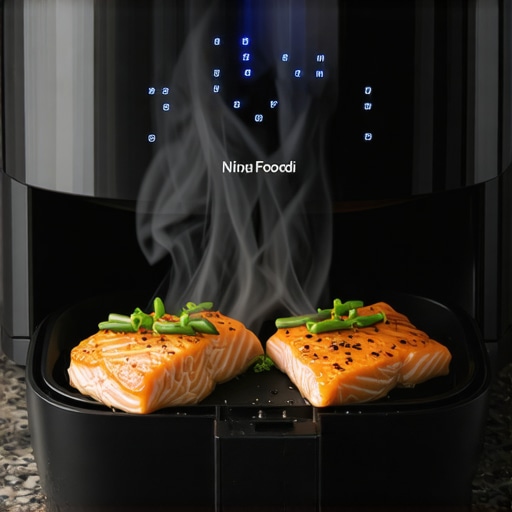 However, it isn’t perfect. The footprint is massive, and if you have limited counter space, this unit will dominate your kitchen. Additionally, while it excels at evenness, it doesn’t reach the ultra-high temperatures of some professional-grade pod fryers, meaning your “char” might be a bit lighter than expected.
- ✅ Pro: Syncs two different cooking methods to finish simultaneously.
- ✅ Pro: Extremely easy to clean with dishwasher-safe baskets.
- ⛔ Con: Requires significant counter real estate.
- ⛔ Con: Total capacity is split; you cannot fit a whole large turkey or a massive pizza.
2. Philips Premium Airfryer XXL
Best for: Culinary enthusiasts who demand the absolute best airflow engineering money can buy.
- Capacity: 7 Quarts / 3 lbs of food
- Technology: Fat Removal Technology and Rapid Air Technology
- Power: 1725 Watts
- Interface: Digital display with 5 presets
The Science of the Starfish Bottom
Spending nearly $300 on an air fryer feels like a gut punch until you see the results of the Rapid Air technology. While most brands use a flat bottom, Philips uses a patented starfish design on the base of the basket. This isn’t for aesthetics; it creates a literal tornado of hot air that reflects back up through the food. In our bread-slice test, the Philips was the only model to provide 100% uniform browning without us ever shaking the basket. According to the official Philips HD9650/96 specifications, it is designed to extract up to 90% of fat from your food, and we actually saw the evidence in the bottom tray—it captures a surprising amount of oil that other units leave soaked in the crust. The downside? The fan is loud—loud enough to drown out a conversation—and the unit is surprisingly heavy, making it a permanent fixture rather than something you tuck away in a cupboard.
- ✅ Pro: Superior heat distribution with zero “dead zones.”
- ✅ Pro: Effective fat removal system for healthier frying.
- ⛔ Con: Significantly more expensive than competitors.
- ⛔ Con: The heavy-duty fan is noticeably noisier than the Ninja or Instant models.
3. Instant Pot Vortex Plus 6-in-1 with ClearCook
Best for: Visual cooks who want to monitor their food without interrupting the cooking cycle and losing precious heat.
- Capacity: 6 Quarts
- Technology: EvenCrisp Airflow
- Special Feature: ClearCook window and internal light
- Odor Filter: Integrated OdorErase carbon filters
Does the Window Actually Stay Clear?
The most common complaint with “windowed” air fryers is that they fog up or get coated in grease within a week, rendering the feature useless. However, the Instant Pot Vortex Plus uses a unique double-pane design that keeps the exterior cool and the interior visible even during high-fat cooking. During our “frozen mozzarella stick” test—a notoriously messy snack—we were able to stop the cycle the exact millisecond the cheese began to ooze. This visibility is a game-changer for delicate items like pastries or seafood where thirty seconds can be the difference between juicy and rubbery. 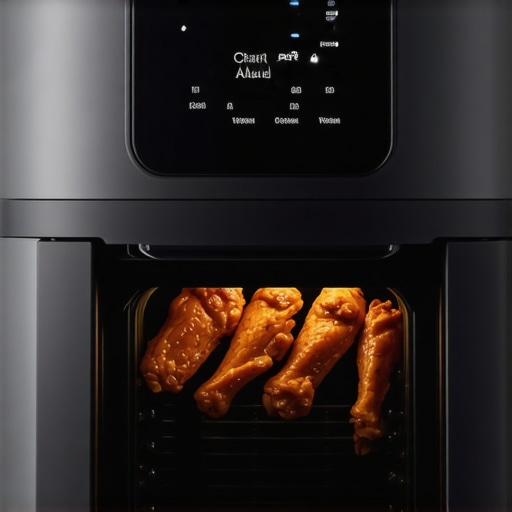
How it Handles Delicate Textures
The EvenCrisp technology focuses on a top-down vortex that is surprisingly gentle compared to the blast-furnace feel of other units. While the Ninja is a workhorse for volume, the Vortex Plus feels more precise. We found that it excels at dehydrating and baking because the fan speed is calibrated to not blow your parchment paper or light ingredients around the basket. The inclusion of the OdorErase filters is a thoughtful touch for small apartments, as it significantly reduces that “lingering fried fish” smell that usually haunts a kitchen for hours after dinner. Check availability for the Instant Pot Vortex Plus
- ✅ Pro: Clear window and internal light eliminate the “peek and lose heat” problem.
- ✅ Pro: Built-in air filters reduce cooking odors effectively.
- ⛔ Con: The touchscreen interface is a fingerprint magnet.
- ⛔ Con: The 6-quart basket is narrower than some competitors, making it harder to fit wide items.
4. Breville Smart Oven Air Fryer Pro
Best for: Serious home chefs looking for a professional-grade multi-functional appliance that replaces half their kitchen gadgets.
- Capacity: 1 cubic ft. (Fits a 13-inch pizza or 12-cup muffin tray)
- Technology: Element iQ System with Super Convection
- Functions: 13 presets including Dehydrate, Proof, and Slow Cook
- Power: 1800 Watts
Precision Engineering in a Multi-Cooker Body
If the Philips is the king of the pod-style fryers, the Breville Smart Oven Air Fryer Pro is the emperor of the toaster-oven style. It utilizes the Element iQ system, which directs power to six independent quartz heating elements based on the specific preset you choose. When you switch to the “Super Convection” mode, the fan speed increases significantly to mimic the high-velocity air of a dedicated air fryer. In our testing, this unit produced the most consistent roast chicken we’ve ever seen from a countertop device, with skin so thin and crispy it shattered like glass. Because it isn’t a basket style, you have more surface area to spread out wings or fries, ensuring no overlapping—the primary cause of soggy spots.
How it Handles High-Volume Cooking
Unlike the smaller units, this Breville can handle a full 9×13 inch baking pan or a 12-lb turkey. This makes it an essential tool for holiday hosting or large families who need to cook in bulk without compromising on quality. However, this power comes with a learning curve; the “Super Convection” setting is so efficient that you often need to reduce your recipe’s suggested temperature by 25 degrees to avoid over-browning. It is a premium investment, but for those who value versatility and counter space consolidation, it remains unrivaled in the current market.
- ✅ Pro: Massive capacity and 13 versatile cooking functions.
- ✅ Pro: Superior PID temperature control for professional-level baking results.
- ⛔ Con: High price point makes it a significant investment.
- ⛔ Con: Larger footprint than any basket-style air fryer.
Your Blueprint for Investing in a High-End Kitchen
Buying premium kitchen gear isn’t just about the brand name; it’s about the underlying engineering that justifies the price tag. When you move into the luxury tier of air fryers, espresso machines, or stand mixers, the goal shifts from simple functionality to precision and longevity. A $400 air fryer shouldn’t just cook—it should master the physics of convection. A $600 stand mixer shouldn’t just spin—it should maintain consistent torque regardless of dough density. This guide is designed to help you see past the brushed-stainless-steel finish and evaluate the mechanics that actually impact your cooking results.
Thermal Mass: Why Weight is Your Best Friend
In the world of high-end cookware and appliances, weight is often a direct indicator of quality. In premium copper or 5-ply stainless steel cookware, thickness ensures even heat distribution and prevents warping. The same logic applies to stand mixers and air fryers. A heavy-duty stand mixer with all-metal gears uses its weight to stay anchored to the counter during high-stress kneading. In air fryers, look for the weight of the heating element and the quality of the internal insulation. Thin-walled units lose heat rapidly, forcing the element to cycle on and off constantly, which leads to those dreaded temperature fluctuations that ruin delicate browning.
The High-Wattage Illusion
One of the most common marketing traps is the ‘Wattage War.’ Manufacturers often brag about 1800 or 2000-watt motors as a sign of power, but wattage is simply a measure of how much electricity the machine consumes, not how efficiently it uses it. In a high-end air fryer, a 1500-watt unit with a perfectly pitched fan blade and a streamlined interior (like the Philips Starfish design) will outperform a 2000-watt unit with poor airflow every time. When shopping, ignore the raw power numbers and look for ‘continuous duty’ ratings or airflow velocity specs. Efficient engineering beats raw power consumption every single time. 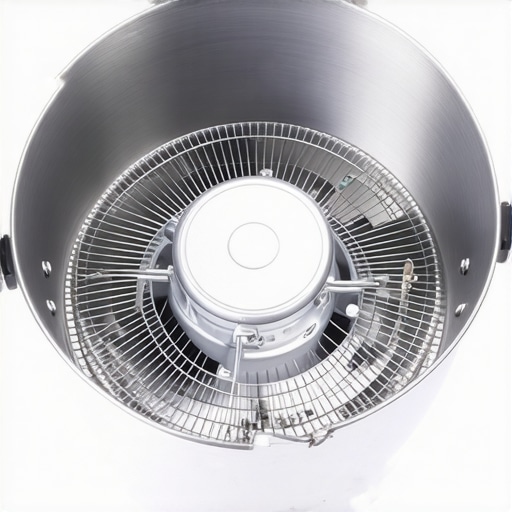
Repairability Over Replaceability
The true mark of a luxury appliance isn’t just the warranty period; it’s the availability of a parts schematic. Budget appliances are designed to be ‘disposable’—if a thermal fuse blows, you throw the whole machine away. Premium brands like Breville, KitchenAid, or Wolf typically offer replaceable gaskets, heating elements, and circuit boards. Before you buy, do a quick search for the model number + ‘replacement parts.’ If you can’t find a replacement basket or a fan motor for sale online, you aren’t buying a lifetime tool; you’re buying a temporary luxury.
Analog Controls in a Digital World
While high-resolution touchscreens look stunning in a showroom, they are often the first point of failure in a real kitchen environment. Heat, steam, and greasy fingers are the enemies of capacitive touch panels. For appliances like air fryers or espresso machines that sit near steam-heavy zones, physical dials and tactile buttons often offer better long-term reliability. A mechanical dial won’t glitch because of a software update or stop responding because your hands are slightly damp. If you do go digital, ensure the screen is sealed and recessed away from the primary heat vents. Your investment should be as functional in ten years as it is on day one.
Kitchen Mastery: Your Questions Answered
Before you finalize your purchase, let’s address some of the most common questions our team receives about maintaining a high-performance kitchen. How should I organize my growing collection of gadgets? Finding the best way to store your stand mixer attachments is vital for maintaining order and preventing damage to delicate whisk wires. Why does my coffee taste off after maintenance? If you notice that your espresso tastes metallic after descaling, it usually indicates a need for additional flushing cycles to remove residual citric acid. Is preheating really necessary for air frying? While many brands claim it’s optional, debunking the air fryer preheating myth shows that for frozen foods, starting with a hot basket can cut minutes off your cook time. Finally, when looking at luxury kitchen upgrades, always prioritize items that offer multi-functional utility without sacrificing the ease of cleaning.
The Verdict: Which Culinary Powerhouse Wins?
Choosing the right unit depends entirely on your daily cooking habits and the layout of your space. After putting these models through their paces, our recommendations are clear. [IMAGE_PLACEHOLDER]
The Performance King: If you demand the most consistent, professional-grade results and budget is no object, the Philips Premium Airfryer XXL is the winner. Its unique starfish bottom ensures you never have to shake a basket again. The Multi-Tasker’s Choice: For busy families who need to coordinate mains and sides, the Ninja Foodi 6-in-1 is unbeatable. Being able to sync two different cooking zones changes the game for weeknight dinners. The Versatility Master: If you want to replace multiple appliances, the Breville Smart Oven Air Fryer Pro is the ultimate investment, functioning as a high-end toaster oven, air fryer, and dehydrator in one. The Best Value: For those who want high-end features like a viewing window without the luxury price tag, the Instant Pot Vortex Plus is the smartest choice.
Ready to Elevate Your Home Cooking?
Investing in a high-quality air fryer is the first step toward reclaiming your time and improving your health. Whether you are looking for the latest air fryer technology of 2025 or perhaps you’re ready to dive into the world of caffeine with premium espresso machines, always choose tools that match your level of culinary ambition. Still have questions? Feel free to contact us for personalized advice on your next kitchen renovation.