
The Reason Your Espresso Tastes Metallic After Descaling
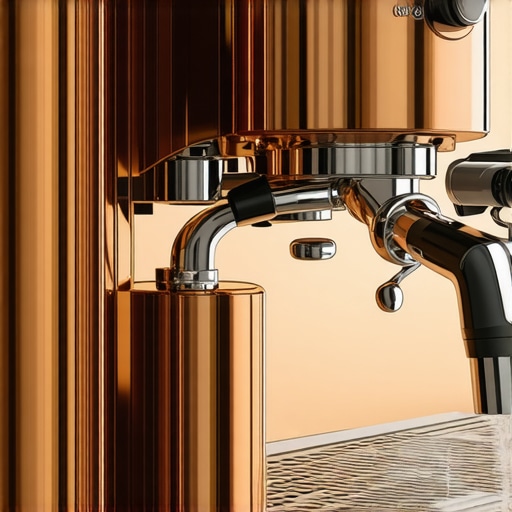
If your morning double-shot suddenly tastes like you are sucking on a handful of pennies after a maintenance cycle, you have stripped more than just calcium. After fifteen years in the technical trenches of luxury kitchen equipment, I have seen hundreds of prosumer machines suffer from what I call ‘Fresh Copper Syndrome.’ The metallic tang is not a ghost in the machine; it is a measurable chemical reaction occurring inside your boiler. Most owners assume they just need to rinse more. They are often wrong. The metallic flavor signifies that you have aggressively stripped the protective oxide layer from the internal copper or brass surfaces, leaving raw metal exposed to the acidity of the water. Getting this wrong does not just ruin your palate; it accelerates galvanic corrosion and can lead to pinhole leaks in a five-thousand-dollar machine. [IMAGE_PLACEHOLDER]
The Science of Surface Passivation
High-end espresso machines, particularly those with copper boilers or brass heat exchangers, rely on a thin, stable layer of oxidation called a patina. This patina acts as a barrier between the water and the metal. When you use an overly aggressive descaling agent—especially high-concentration citric acid—you don’t just dissolve the lime scale. You dissolve the barrier. The result? Ion leaching. The water, often slightly acidic if you are using R.O. water without proper remineralization, begins to pull metal ions directly into the flow. This is why following the correct way to descale a dual-boiler espresso machine is fundamental to the longevity of the unit. Standard grocery store descalers are often too concentrated for the delicate internals of a prosumer machine.
The ROI of Chemical Precision
In the world of high-end espresso, your choice of chemical is a strategic financial decision. Citric acid is the common ‘cheap’ choice, but it is prone to forming calcium citrate precipitates if not flushed perfectly, which can clog your gicleur or solenoid valves. Sulfamic acid, however, is the industry gold standard. It is more effective at lower temperatures and less aggressive on the base metal. Think of it as a scalpels-versus-sledgehammers scenario. I have witnessed the internal destruction caused by ‘all-natural’ vinegar descaling—a process that is actually more corrosive to rubber seals and copper than professional-grade solutions. Understanding the best type of water for a prosumer espresso machine is the only way to avoid the aggressive descaling cycles that lead to this metallic taint in the first place.
When the Heating Element Fails
The smell of burnt minerals and the sharp tang of copper usually precede a more expensive failure. If the metallic taste persists after twenty liters of flushing, you likely have a ‘perched’ scale fragment. This happens when a piece of scale breaks loose but does not dissolve, trapping acid against the boiler wall or the heating element. This creates a localized pocket of high acidity. It is a technical truth that many home baristas ignore: a poorly executed descaling is more dangerous than no descaling at all. I recall a client in a high-mineral area who used a hardware-store descaler; the acid was so potent it pitted the heating element, causing a ground fault that fried the main logic board. These are the operational scars of corner-cutting.
Strategic Foresight for 2025
The industry is moving toward ‘lead-free’ brass alloys and stainless steel boilers to satisfy evolving health regulations and consumer demand for purity. According to the Specialty Coffee Association (SCA) standards, water chemistry is the single most important variable in machine maintenance. In the next 12 to 24 months, expect to see ‘smart’ descaling systems that use sensors to measure the conductivity of the effluent, telling you exactly when the acid is gone. Until then, you must rely on manual precision. If you are experiencing fluctuations in flavor, it might be tied to how your machine handles thermal mass. Often, the coffee extraction secret why water temperature fluctuates is linked to scale buildup on the probe itself, leading to ‘false’ readings and overheating.
The Executive Verdict
If your espresso currently tastes like metal, stop pulling shots. The immediate strategy is a high-volume flush with water containing a high alkalinity (KH) to neutralize the residual acid and encourage the re-formation of the oxide layer. If you are in a situation where the taste persists for more than three days, you have likely damaged the heating element or the chrome plating on the group head. My recommendation: Hold off on further acid treatments. Buy a pH testing kit. If your flush water is coming out with a pH below 7.0, you haven’t finished the job. Moving forward, invest in a BWT or Mavea filtration system to prevent scale altogether. Prevention is a profit center; repair is an expense. For those with luxury setups, ensuring your power delivery is stable is also key, as seen in how the voltage mistake that shortens your espresso machines lifespan often coincides with component failure during heavy cleaning cycles.
Frequently Asked Questions
How many flushes does it take to remove the metallic taste?
Typically, it requires three to five full boiler displacements. For a standard dual-boiler machine, this can mean flushing 6 to 10 liters of water through the hot water wand and the group head.
Is the metallic taste dangerous to drink?
While a single cup won’t harm you, chronic consumption of water with high copper or lead concentrations is a health risk. According to NSF International standards, lead-free components are mandatory, but older or cheaper machines may still leach metals during acid exposure.
Can I use vinegar to descale my premium machine?
Absolutely not. Vinegar is an acetic acid that is far too aggressive on the elastomers and gaskets. It also leaves a lingering smell and taste that is much harder to remove than professional sulfamic or citric-based cleaners.
Why does the taste only appear after descaling?
Because the scale was acting as a physical insulator. Once the scale is gone, the water is in direct contact with ‘naked’ metal. The taste disappears once the metal passivates (re-oxidizes) or once all residual acid is neutralized.
Does water hardness affect the metallic taste?
Yes. Very soft water is ‘hungry’ and more corrosive to metal. If your water is too soft (low TDS), it will strip the boiler’s protective layer faster, making the metallic taste more prominent after a cleaning cycle.