
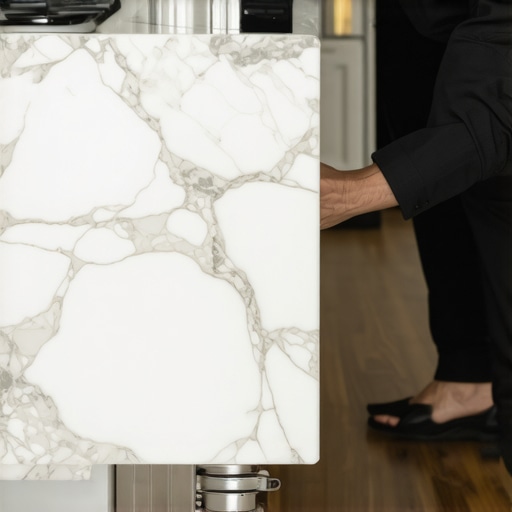
How to Fix the Wobble in Your Luxury Kitchen Island
A wobbly kitchen island is not merely an annoyance; it is a structural liability. When you have invested in six-centimeter mitered edges and heavy pro-grade appliances, any lateral movement threatens the integrity of your stone seams. After managing high-end kitchen builds for two decades, I have seen $20,000 quartzite slabs crack because a base cabinet shifted just three millimeters during a dinner party. The stake here is simple: stability equals longevity. If your island moves when you are pulling a shot on espresso machines, you are looking at a ticking time bomb for your grout lines and plumbing connections.
The Structural Reality of Island Instability
The primary reason luxury islands fail is the sheer weight-to-fastener ratio. Most standard cabinetry is designed to be anchored to a wall. An island stands alone. Without the lateral support of a stud wall, it relies entirely on the floor connection. If your installer used a few dabs of construction adhesive and a couple of finish nails through the toe-kick, the island will eventually break free. This is especially true if you have chosen quartzite over quartz for its heat resistance, as the added density puts immense pressure on the base. The weight of the stone creates a high center of gravity. When you lean against the counter, you are applying a lever effect to the base fasteners. The result? Total failure of the bond.
Technical truth: the floor is rarely the problem. The deflection usually occurs in the subfloor joists or the internal cabinet frame itself. In many modern open-concept homes, the long spans of floor joists are not braced for the concentrated load of an 800-pound island. You feel a wobble, but it is actually the floor dipping under the weight. This is why mechanical fastening to the joists is mandatory, not optional. According to standards from the National Kitchen & Bath Association (NKBA.org), islands require specific anchoring protocols to prevent tipping and shifting under load.
The Fix: Mechanical Fastening and Cleat Systems
To fix a wobble, you must look beneath the surface. Forget more glue. You need a 2×4 internal cleat system. First, remove the toe-kick skin to access the base. If the island is floating on top of a hardwood or tile floor, you must determine if it was anchored into the subfloor. The correct method involves lag-bolting a wooden frame to the floor joists and then sliding the cabinet over this frame. If this was skipped, you must retroactively install L-brackets. Use heavy-duty steel brackets, fastening one side to the floor joist and the other to the solid wood frame of the cabinet. Avoid the particle board; it will crumble under the stress of a heavy kitchen island charging station or a high-capacity stand mixer.
If the wobble persists, check the level. An unlevel island creates uneven weight distribution. Use composite shims—never wood, as they compress and rot over time—to fill the gaps. Once level, the island should sit dead-still. I often tell clients that if I can jump next to the island and the water in their glass ripples, the anchoring is insufficient. We look for zero movement. The smell of fresh sawdust during a retrofit is a small price to pay for a rock-solid workspace.
Risk Management and Second-Order Effects
Ignoring a loose island leads to plumbing catastrophes. If your island has a sink, the drain lines are typically PVC or PEX. These materials have some flexibility, but the threaded joints do not. Constant micro-vibrations from a wobbly base will eventually stress the p-trap or the supply lines. I once saw a luxury penthouse flooded because a wobbly island slowly unscrewed a compression fitting on an under-counter chiller. Furthermore, the warranty on your premium stone often hinges on the cabinets being level and stable. Moving cabinets can void these protections, leaving you with a costly repair bill if the stone cracks at its narrowest point, usually around the cooktop or sink cutout.
Market Corrections and Future Trends
Looking ahead into the next 18 months, I see a shift toward “Integrated Sub-Bases” in luxury design. As homeowners demand larger islands with more features—like built-in air fryers and heavy copper cookware storage—the industry is moving away from standard plywood bases. We are starting to see steel-frame skeletons for islands that are bolted directly to the foundation. This prevents the “creep” associated with timber settling. If you are planning a renovation, insist on a structural steel or doubled-up LVL (Laminated Veneer Lumber) base. This ensures that no matter how much you utilize your ideal countertop height for heavy-duty tasks, the surface remains stationary.
The Executive Verdict
My recommendation is clear: do not settle for a “gravity-held” island. If your island has more than one millimeter of play when pushed, it requires immediate mechanical intervention. If you are in the middle of a build, demand a 2×4 internal cleat system bolted to the joists. If you are retrofitting, use structural L-brackets through the toe-kick. Secure the base, shim for level, and protect your stone investment. It is about engineering, not just aesthetics.
Frequently Asked Questions
Will fixing the wobble damage my heated floors?
This is a major risk. If you have radiant heating, you cannot drill into the floor. In this case, you must use high-strength epoxy on a wider surface area or anchor the island to a nearby wall or structural column if possible.
Can I fix the wobble myself?
If you are comfortable removing toe-kicks and using a hammer drill, yes. However, if the island houses a gas cooktop or complex plumbing, call a professional to ensure you do not sever a utility line while anchoring.
How much movement is acceptable?
Zero. In a luxury kitchen, any movement is a sign of poor installation. A properly anchored island should feel like a permanent part of the house’s foundation.
Why did my island start wobbling after three years?
Wood is an organic material. It shrinks and expands with humidity. Over time, the initial fasteners can loosen as the house settles. A quick tightening of the internal brackets usually solves this.