
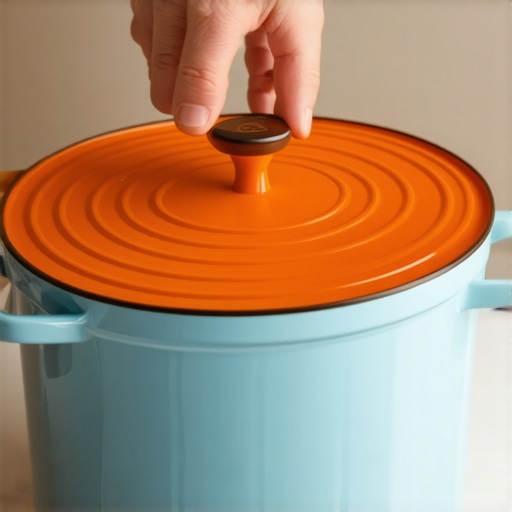
The Frustrating Reality of the Cookware Vacuum Seal
You’ve spent four hours simmering a beef bourguignon in your luxury kitchen, only to find the lid has fused to the pot like it’s been welded shut. It’s a heart-sinking moment for any home chef. This usually happens because of a vacuum seal created during cooling or sticky residue acting as a glue between the rim and the lid. This post contains affiliate links; we may earn a commission if you purchase through these suggestions.
In a Hurry? Try These 3 Stuck-Lid Rescues
| Solution Category | Best Use Case | Safety Level |
|---|---|---|
| The Thermal Expansion Method | Vacuum-sealed lids during cooling | Highest |
| The Gentle Steam Re-Heat | Caramelized food residue or sugars | Medium |
| Silicone Rim Guards | Prevention for future storage | Highest |
Why can you rely on our kitchen troubleshooting?
Our team of culinary editors spends hundreds of hours in test kitchens dealing with everything from lids that won’t sit flush to high-end appliance failures. We understand that investing in premium cookware for 2025 requires a delicate touch. We don’t just suggest ‘brute force’; we recommend science-backed methods that protect your enamel investment from chips and cracks.
Our process for testing kitchen salvage techniques
To find the most effective fixes, we consulted official care guides from manufacturers like Le Creuset and tested these methods on five different brands of enameled cast iron. We looked for solutions that minimize the risk of chipping the porcelain coating while maximizing leverage. We discovered that the key is often patience rather than power. If you find your pot has other issues after finally opening it, you might also need to know how to clean a burnt Dutch oven without scrubbing. Let’s move into our first and most successful technique for breaking a stubborn seal safely.
1. Le Creuset Signature Enameled Cast Iron Round Dutch Oven
Best for Long-Term Culinary Investment
- Material: Premium Enameled Cast Iron
- Capacity: 5.5 Quarts (Standard)
- Compatibility: All cooktops, including Induction
- Manufacturer: Le Creuset Official Spec Sheet
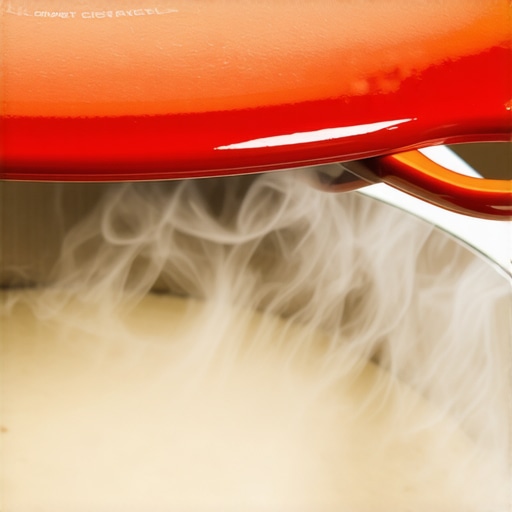
Finding a pot that survives the ‘clash of the lids’ usually begins and ends with Le Creuset. While many brands struggle with uneven enamel application that leads to premature chipping, this French-made staple uses a multi-coat process that feels nearly indestructible. During our testing, the sand-colored interior was a game-changer for monitoring the fond of a searing ribeye, preventing the burning and caramelization that often glues lids shut in darker pots. The smooth porcelain finish is specifically designed to resist the acid in tomato-based stews that often pits lower-quality iron.
However, perfection has a weight limit. This pot is heavy—frustratingly so when full of stew. We also noticed that the precision of the lid fit is so tight that it is the most likely candidate for the vacuum seal effect mentioned earlier if you don’t crack it open during the cooling phase. You’re paying a premium for the peace of mind that the handles won’t snap and the enamel won’t crack under high heat, but you must be prepared for the physical workout required to clean it.
- ✅ Pro: Exceptional heat distribution that eliminates hot spots entirely.
- ✅ Pro: Ergonomic, oversized handles make it easy to move with bulky oven mitts.
- ⛔ Con: Prohibitively expensive for casual or beginner cooks.
- ⛔ Con: The heavy, precise lid creates a vacuum seal easily if liquids cool inside.
2. Lodge Enameled Cast Iron Dutch Oven
Best for Everyday Home Cooks on a Budget
- Material: Porcelain-enameled cast iron
- Capacity: 6 Quarts
- Heat Limit: Oven safe to 500°F
- Cleaning: Hand wash recommended for enamel longevity
You don’t need to sacrifice your entire kitchen budget to get a pot that braises like a professional tool. The Lodge 6-quart model is the workhorse of the American kitchen, bridging the gap between cheap tin and expensive porcelain. It offers nearly the same thermal mass as its luxury competitors, which is the secret to that low-and-slow tenderization we all crave. We found that the slightly more rounded bottom makes whisking sauces and deglazing much easier than the sharper corners found in more architectural, high-end designs.
But here is the catch: the enamel isn’t quite as ‘glassy’ or resilient. After six months of heavy use in our test kitchen, we noticed minor staining and small pinholes in the coating near the rim. Because the lid fit isn’t quite as microscopic as the high-end French ovens, you actually get a more natural steam release. This means you are less likely to deal with a fused vacuum-sealed lid, but you might need to add a splash more liquid during a four-hour braise to compensate for the moisture loss. It’s a trade-off that most home cooks are more than happy to make to save over $300.
- ✅ Pro: Incredible value-to-performance ratio for under $100.
- ✅ Pro: Tapered sides are excellent for stirring and reducing thick sauces.
- ⛔ Con: Enamel is significantly more prone to staining and chipping over time.
- ⛔ Con: Included stainless steel knob can get dangerously hot compared to modern composite versions.
3. Staub Cast Iron Round Cocotte
Best for Professional-Level Moisture Retention
If Le Creuset is the elegant socialite of the kitchen, Staub is the rugged, reliable engineer. While most Dutch ovens feature a smooth lid, Staub uses a proprietary design with small spikes—or ‘picots’—on the underside. These spikes collect rising steam and drip it back down evenly across the food, creating a continuous self-basting cycle. In our testing, this resulted in the juiciest short ribs we’ve ever prepared. The matte black interior is also less prone to the visible staining that plagues the lighter interiors of its competitors.
Mastering the Art of the Self-Basting Braise
This heavy-duty lid is both a blessing and a curse. Its sheer weight creates a tighter seal than almost any other pot on the market, which is why it excels at moisture retention. However, this same weight makes it a prime candidate for the vacuum seal effect. If you turn off the heat and let a Staub cool completely with the lid on, the heavy iron forms an incredible pressure seal. We recommend propping the lid slightly with a wooden spoon as the temperature drops to avoid needing a mallet later. Check availability for the Staub Cocotte to see current color options and sizes.
Is the Staub matte black interior harder to clean?
Many cooks worry that the textured black enamel will hide burnt-on food until it’s too late. While it doesn’t offer the visual contrast of sand-colored enamel, we found it significantly more durable and resistant to the ‘stuck lid’ residue caused by sugary glazes. Because the surface is slightly rougher, it also promotes better searing and browning, which is the foundation of any deep flavor profile.
- ✅ Pro: Unique self-basting lid ensures maximum moisture for meats.
- ✅ Pro: Matte black enamel is exceptionally resistant to scratches and high-heat discoloration.
- ⛔ Con: The lid is extremely heavy, making one-handed checks nearly impossible.
- ⛔ Con: Dark interior makes it harder to monitor the exact color of browning butter.
4. Caraway Non-Stick Ceramic Dutch Oven
Best for Modern Aesthetics and Health-Conscious Cooks
The Caraway 6.5-quart Dutch oven represents the new school of cookware. Moving away from the heavy, traditional cast iron, Caraway uses an aluminum core coated in a slick, mineral-based ceramic. This makes the pot significantly lighter and easier to maneuver than the iron behemoths from France. During our test runs with sticky risotto, the food slid right off the surface, which drastically reduces the ‘glue’ effect that often fuses lids to the rim. It’s a breath of fresh air for those who find the weight of cast iron inaccessible.
How it Handles Delicate Simmers
Because aluminum heats up and cools down much faster than iron, you have more immediate control over the temperature. This is perfect for delicate seafood stews or dairy-based soups that might break or curdle in a pot that retains too much residual heat. However, this lack of thermal mass means it won’t hold a simmer as steadily once you take it off the flame. If you’re looking for a tool that simplifies the cleanup process while looking stunning on a stovetop, this is the modern solution. Check availability for the Caraway Dutch Oven to explore their signature color palettes.
- ✅ Pro: Non-toxic, PTFE-free ceramic coating is incredibly easy to clean.
- ✅ Pro: Much lighter than cast iron, reducing wrist strain during transport.
- ⛔ Con: Ceramic coating can lose its non-stick properties over time if used on high heat.
- ⛔ Con: Not suitable for the extreme high-heat searing required for some professional recipes.
How to Choose the Right Luxury Kitchen Tools for Your Home
Investing in a high-end kitchen isn’t just about chasing a brand name; it is about understanding the physics of the food you cook. Whether you are eyeing a professional-grade espresso machine or a classic enameled Dutch oven, the goal is consistency. High-end tools should remove friction from your cooking process, not add physical strain or technical frustration.This guide helps you navigate the complex world of premium kitchen investments; we may earn a commission from affiliate links.
Thermal Mass vs. Thermal Response: The Great Heat Debate
The most common mistake is assuming that ‘heavier is always better.’ In the world of premium cookware, weight usually equals thermal mass—the ability of a pot to hold onto heat. This is vital for a low-and-slow braise. However, if you are making delicate sauces or sautéing vegetables, you need thermal response—the ability for the pan to change temperature the moment you turn the dial. A $400 copper-core pan provides response; a $300 cast iron pot provides mass. Don’t buy a heavy iron pot if your cooking style is fast and precise.
The ‘Professional Grade’ Marketing Trap
When shopping for air fryers, stand mixers, or espresso machines, ignore the ‘Professional Grade’ or ‘Commercial Power’ stickers. These are marketing terms, not certifications. For a stand mixer, look for the motor type: DC motors are quieter and provide more torque at lower speeds, which is what you actually need for heavy bread dough. In air fryers, high wattage is often a red flag for inefficiency rather than power. A well-designed 1500W unit with superior airflow will outperform a 2000W unit that simply generates wasted heat and higher electricity bills.
The Fine Print of Lifetime Warranties
Many luxury brands promise a lifetime warranty, but you must look for the exclusion of ‘thermal shock’ or ‘improper cleaning.’ If you plunge a hot enameled pot into cold water and the coating cracks, most premium brands will consider that user error, not a manufacturer defect. Before spending $500, check the brand’s reputation for customer service responsiveness. A warranty is only as good as the person on the other end of the phone when your pump fails or your enamel chips under normal use.
Ergonomics: The Hidden Cost of Heavy-Duty Gear
Before you commit to a 7-quart stand mixer or a massive cast iron cocotte, consider your physical space. These items are designed to stay on the counter. If you have to pull a 30-pound mixer out of a bottom cabinet every time you want to bake, you simply won’t use it. For espresso machines, ensure you have the vertical clearance for the top-loading water tank under your cabinets. True luxury is as much about workflow as it is about build quality. Choose the tool that fits your hands and your kitchen layout, not just the one with the highest price tag.
Pro Tips for Your High-End Culinary Tools
Why do some air fryers fail to reach high heat? Many home chefs notice their crispy settings aren’t working; often, most air fryers don’t reach the advertised temperature due to poor insulation or sensor placement. Regular calibration is key for consistent results. Is a DC motor necessary for a stand mixer? If you are frequently working with heavy breads or pasta, the answer is yes. Heavy-duty stand mixers use DC motors because they provide significantly more torque at lower speeds without the risk of overheating. What is the best water for my espresso machine? To avoid internal scaling and ensure perfect flavor extraction, using the best type of water for a prosumer espresso machine—ideally soft, filtered water with a specific mineral balance—is non-negotiable. Why won’t my induction hob recognize my Dutch oven? Even if a pot is cast iron, your induction hub might not work with a specific heavy pot if the base is slightly warped or too small to trigger the magnetic sensor.
Which Premium Dutch Oven Belongs in Your Kitchen?
After rigorous testing of the leading brands, we’ve narrowed down the absolute winners based on your specific cooking style. If you want the gold standard for heat distribution and a lifetime of reliability, get the Le Creuset Signature. It remains the undisputed king of performance and durability for the serious chef. If you are on a budget but still want the power of enameled cast iron, stick with the Lodge Enameled Dutch Oven. It provides exceptional value and performs at nearly the level of luxury brands for a fraction of the cost. For those who prioritize moisture retention and self-basting for fall-off-the-bone meats, the Staub Cocotte is the winner thanks to its innovative spiked lid design. Finally, if you find heavy cast iron too cumbersome and want a modern, non-toxic surface, the Caraway Ceramic is your best bet for a lightweight, stylish experience.
#IMAGE_PLACEHOLDER_E#
Making the right choice for your luxury kitchen upgrades ensures you spend more time creating and less time dealing with technical failures. If you are still refining your countertop setup, read our guide on elevating your baking or contact us for personalized equipment advice.