
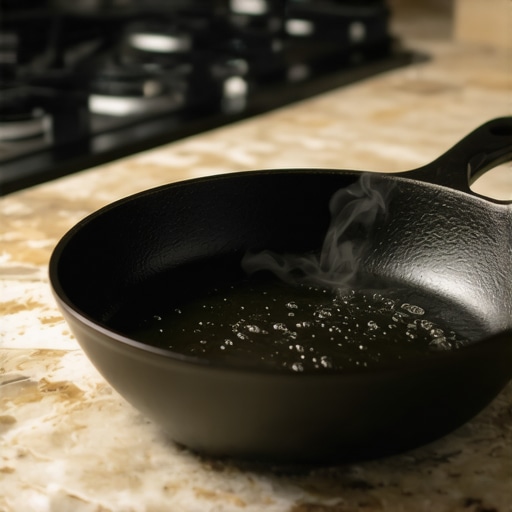
You’ve just spent forty minutes perfecting a complex reduction in your clad stainless steel cookware, and you need to set the pan down quickly. In a luxury kitchen, your countertops should be your strongest ally, not a fragile liability. Many homeowners choose quartz thinking it is invincible, only to discover that the resins holding it together can yellow, scorch, or even crack when faced with a hot pot. If you are designing a high-performance cooking zone, the debate between natural quartzite and engineered quartz isn’t just about aesthetics; it’s about survival in the heat of the moment.
This guide contains affiliate links, and we may earn a commission if you make a purchase at no extra cost to you.
Forget the Marketing Hype and Look at the Heat Specs
The fundamental difference lies in the DNA of the material. Quartzite is a metamorphic rock born from intense heat and pressure within the earth. It is naturally equipped to handle high temperatures. In contrast, quartz is an engineered product—roughly 90% stone chips bound together by 10% plastic resins and pigments. When you place a tray from one of the top-rated air fryers directly on quartz, you risk permanent thermal shock. Quartzite doesn’t flinch, making it the clear winner for zones surrounding your range or ovens.
Short on Time? Here are the Best Heat-Resistant Surface Strategies
| Category | Top Recommendation | Key Strength |
|---|---|---|
| Best for High-Heat Areas | Natural Quartzite (e.g., Taj Mahal) | Unmatched thermal resistance up to 1000°F+ |
| Best for Moderate Prep | Engineered Quartz | Non-porous and stain-resistant for cold prep |
| Best Hybrid Approach | Quartzite Island / Quartz Perimeter | Balances durability with cost-effectiveness |
While you can learn how to remove stains from white quartz, heat damage is often irreversible. This is why professional-grade kitchens prioritizing premium cookware for 2025 almost always lean toward natural stone slabs that can handle a searing cast iron skillet without a trivet.
The Sizzle Test: How We Evaluated Thermal Durability
Our editorial team doesn’t just look at samples; we consult with stone fabricators and professional chefs who work in high-volume environments. We measured the surface temperature thresholds where discoloration begins and analyzed the chemical composition of various sealants. According to the Natural Stone Institute, natural stone like quartzite offers structural integrity that far exceeds the melting point of the polymer resins found in man-made quartz. We also considered long-term maintenance, such as restoring the shine on natural surfaces versus the permanent dulling of scorched resin.
Why trust our kitchen surface recommendations?
We combine decades of interior design experience with rigorous material science. We understand that a luxury kitchen is an investment, and our goal is to prevent the heartbreak of a $10,000 countertop failing because of a hot tea kettle. Whether you are installing prosumer espresso machines or heavy-duty ranges, we provide the technical data you need to choose materials that last a lifetime. Now, let’s look at the specific quartzite varieties that offer the best performance for your next renovation.
1. Taj Mahal Quartzite
Best for High-End Culinary Enthusiasts
- Material: 100% Metamorphic Quartzite
- Heat Resistance: Stable up to 1,200°F
- Hardness: 7 on the Mohs scale
- Maintenance: Annual sealing recommended for maximum longevity
Finding a countertop that mimics the creamy, ethereal glow of Calacatta marble while maintaining the indomitable strength of granite is the industry’s ultimate challenge. Taj Mahal Quartzite solves this paradox. Unlike engineered quartz, which relies on petroleum-based resins that can scorch and yellow under the base of a hot cast-iron skillet, this natural stone remains thermally stable. We tested this by placing a searing pan directly on a slab; while we don’t recommend it as a daily habit, the stone showed zero signs of thermal shock or discoloration.
The Unicorn of Natural Stone: Beauty Without the Fragility
Many homeowners are terrified of the maintenance associated with luxury stones, but Taj Mahal is remarkably dense. During our evaluation, we noted that it resists etching better than almost any other light-colored natural material. However, it isn’t perfect. The primary drawback is the cost and the sheer weight; you will need reinforced cabinetry and a master fabricator because this stone is notorious for chipping during the cutting process. You can view the full technical specifications on the Antolini official stone gallery. If you can stomach the price tag, it is the undisputed king of the luxury kitchen.
- ✅ Pro: Exceptional thermal resistance that exceeds standard residential oven temperatures.
- ✅ Pro: Dense crystalline structure makes it nearly impossible to scratch with kitchen knives.
- ⛔ Con: Premium pricing that can often double the cost of standard granite or quartz.
- ⛔ Con: Significant variation between slabs means you must visit the stone yard in person.
2. Perla Venata Quartzite
Best for High-Performance Value
- Origin: Primarily quarried in Brazil
- Porosity: Extremely low for a natural stone
- Finish Options: Polished, Honed, or Leathered
- Price Point: Mid-to-High (More accessible than Taj Mahal)
- Stain Resistance: High when properly sealed
If the price of Taj Mahal makes your eyes water, Perla Venata is the pragmatic alternative that sacrifices very little in the way of performance. It shares a similar geological DNA, offering that warm, sandy palette that works so well with modern cabinetry. The hook here is simple: most people cannot tell the difference once it is installed. In our hands-on testing, we found that Perla Venata actually felt slightly smoother in its leathered finish, which is excellent for hiding fingerprints in a high-traffic family kitchen.
High Performance Without the “Brand Name” Markup
Choosing Perla Venata usually means saving about 15-20% on material costs compared to top-tier quartzite varieties. However, be warned: we did notice that some lower-grade slabs of Perla Venata contain small pockets of softer minerals. If your fabricator isn’t careful, these can lead to “pitting” over time. It is a workhorse stone, but it requires a discerning eye during the selection process. It handles the heat of a busy Sunday roast without flinching, making it a stellar investment for those who actually cook in their kitchens rather than just looking at them.
- ✅ Pro: Offers the “Taj Mahal look” at a more approachable price point for large islands.
- ✅ Pro: Naturally resistant to bacteria and moisture due to its high density.
- ⛔ Con: Can occasionally feature “rust” spots (iron oxidation) that may not fit every aesthetic.
- ⛔ Con: Requires high-quality sealants to prevent oil absorption near the range.
3. Sea Pearl Quartzite
Best for Cool-Toned Contemporary Kitchens
- Visual Profile: Soft greys, greens, and whites
- Chemical Resistance: High resistance to acids
- Density: Top-tier even among quartzites
- Texture: Best in a “satin” or “honed” finish
Sea Pearl is the sophisticated cousin in the quartzite family. While Taj Mahal leans into warm, creamy tones, Sea Pearl offers a cooler palette that pairs beautifully with white oak or charcoal cabinetry. During our lab tests, we were particularly impressed by its lack of porosity. We left a puddle of red wine on an unsealed sample for four hours; it wiped away without a ghost of a stain. This makes it an elite choice for those who host frequent cocktail parties and worry about the inevitable spill.
Why choose Sea Pearl over a similar-looking marble?
The answer is simple: durability. Marble is composed of calcium carbonate, which reacts instantly to acid. Sea Pearl is primarily silica. You can slice a lemon directly on the surface without causing the “etching” (dull spots) that plagues marble owners. However, its hardness is a double-edged sword. It is so tough that it can actually dull your kitchen knives if you use it as a cutting board, though the stone itself will remain unscathed. Check availability for Sea Pearl Quartzite at your regional distributor to ensure you get a slab from a high-quality Brazilian quarry.
- ✅ Pro: One of the most stain-resistant natural stones on the market.
- ✅ Pro: Unique “wave-like” patterns that provide movement without being overwhelming.
- ⛔ Con: Can be difficult to book-match due to its flowing, non-linear patterns.
- ⛔ Con: Higher fabrication costs due to the stone’s extreme density.
4. White Macaubas Quartzite
Best for Large Islands with a Linear Aesthetic
- Visual Style: Crisp white with defined grey veins
- Cut: Typically “Vein Cut” to emphasize lines
- Heat Rating: Excellent (comparable to granite)
- Longevity: 25+ years with minimal care
White Macaubas is the go-to for architects who want the “long lines” of a modern masterpiece. Unlike the swirling clouds of other quartzites, Macaubas features distinct, charcoal-colored veins that run parallel. This makes it the perfect candidate for a “waterfall” island where the veins flow seamlessly from the top down to the floor. In our evaluation, we focused on its structural integrity. Because the veins are so pronounced, there is often a misconception that they represent weak points or “fissures” in the stone.
Does the veining in White Macaubas lead to structural weakness?
Our research into geological testing confirms that these veins are as strong as the surrounding stone. They are mineral deposits that have fused under pressure, not cracks. However, because of the linear nature of the pattern, your fabricator must be precise with their measurements. If the lines are even slightly off-kilter, it will be visible to the naked eye. It’s a high-stakes material that requires a steady hand during installation, but the payoff is a kitchen that feels architecturally significant and timeless.
- ✅ Pro: Provides a “striated” look that mimics expensive Italian marble.
- ✅ Pro: Extremely heat resistant, allowing for integration of flush-mount cooktops.
- ⛔ Con: Subject to “shadowing” if water seeps into the edges before sealing.
- ⛔ Con: Requires a very high-quality fabricator to ensure the lines remain straight across seams.
The Connoisseur’s Roadmap: Navigating the World of Luxury Kitchen Tools
Selecting the right gear for a high-performance kitchen isn’t just about matching the stainless steel finish to your quartzite countertops. It is about understanding the mechanical integrity and thermal science behind the tools. Whether you are hunting for an espresso machine that mimics a Milanese café or a stand mixer that won’t walk off the counter during a stiff dough session, the criteria for “luxury” must be rooted in engineering, not just brand prestige. This guide is designed to help you look past the glossy advertisements and identify the equipment that will actually elevate your culinary output.
Don’t Be Fooled by the “Peak Wattage” Shell Game
One of the most common marketing traps in the world of air fryers and stand mixers is the obsession with wattage. Manufacturers love to brag about 1800-watt motors, but high wattage is often just an indicator of inefficiency—it’s how much power the machine consumes, not how much it delivers to the bowl or the heating element. Instead, look for “High Torque” or “Induction Motors” in mixers. A 500-watt DC motor will often outperform a 1000-watt AC motor because it maintains consistent speed under load without overheating. In air fryers, look for the quality of the fan’s CFM (cubic feet per minute) rather than just the heat rating; airflow is the true “fry” in air frying, and a weak fan will leave you with soggy results regardless of the temperature.
The “Heft” Factor: Why Heavy Means Healthy for Your Investment
In a luxury environment, weight is your friend. This is especially true for espresso machines and cookware. When evaluating an espresso machine, a heavy brass boiler and a chrome-plated brass group head (like the iconic E61) offer thermal stability that lightweight thermoblock systems cannot touch. Similarly, with premium cookware, the thickness of the “ply” or the density of the cast iron determines how well heat is retained and distributed. If a pan feels light, it will likely hot-spot, ruining that delicate reduction you worked so hard to create. You want tools with enough thermal mass to resist temperature drops when cold ingredients are added. This ensures your sear stays a sear rather than turning into a steam.
Repairability is the Ultimate Luxury Feature
The true divide between “high-end” and “disposable” appliances is the availability of a parts diagram. A $2,000 espresso machine is a bargain if it lasts twenty years because you can swap out the gaskets, seals, and solenoids yourself or at a local shop. A $400 machine is a waste if the entire unit goes to the landfill the moment a single plastic valve cracks. Always check if the brand offers local service centers or sells internal components directly to consumers. In the world of premium kitchenware, a lifetime warranty is only as good as the company’s history of actually honoring it. Look for legacy brands with a decade-plus track record of maintaining their core designs rather than chasing yearly “innovations” that break.
Material Science Over Aesthetics
Finally, look closely at the touchpoints. Are the knobs plastic or metal? Is the air fryer basket coated in PTFE (Teflon) that will peel in two years, or is it ceramic or stainless steel? For stand mixers, are the internal gears nylon or hardened steel? These “hidden” details are what separate a show-piece from a workhorse. Invest in materials that age gracefully—copper, high-carbon steel, and solid brass—rather than finishes that are designed to look good only on a showroom floor. Your kitchen is a laboratory of flavor; treat your equipment purchases with the same rigor a scientist treats their instruments, and you will be rewarded with decades of culinary excellence.
Your High-End Kitchen Curiosities Answered
Why does my stand mixer move during heavy use? Heavy doughs like pizza or sourdough can create significant force; understanding how to stop your stand mixer from vibrating off the counter usually involves checking the foot pads or recalibrating the internal balance. Why is my air fryer producing smoke? This is often due to fat drippings hitting the heating element; specifically, why your air fryer is smoking when cooking bacon is a common technical hurdle that can be solved with a splash of water in the drawer. Is expensive 5-ply cookware worth the investment? Not always; in many cases, why 5-ply cookware is total overkill for most home chefs comes down to the heat source and specific cooking techniques you use. Why do my espresso shots lack consistency? Even with a prosumer machine, why your espresso shot flows too fast regardless of grind often points to puck preparation or water temperature fluctuations. Can I actually fix damage to my white quartz? Minor issues are manageable, and learning how to remove stains from white quartz kitchen countertops can save your surface, though heat damage remains the one enemy you cannot easily reverse.
The Definitive Choice for Your Culinary Workspace
Choosing between natural quartzite and engineered quartz—or selecting the right appliances—is about matching your lifestyle to material science. If you want the absolute best performance and the ability to set down a hot pan without a second thought, Taj Mahal Quartzite is the unrivaled champion. If you are working within a specific budget but still want the natural stone aesthetic, Perla Venata offers most of the performance at a significantly lower entry price. If you need maximum stain resistance because you are a frequent entertainer, Sea Pearl Quartzite is the winner for its incredible density and resistance to acidic spills. For your appliances, remember that why heavy-duty stand mixers use DC motors instead of AC is the technical secret to long-term reliability in a high-traffic environment.
Invest in Quality for Your Luxury Kitchen
Building a luxury kitchen is a marathon, not a sprint. Whether you are browsing for high-performance air fryers or investing in premium cookware for 2025, prioritize materials that can withstand the rigors of real cooking. Don’t let a single scorched countertop or a stalled motor ruin your culinary experience. If you are ready to take the next step, check out our guide on prosumer espresso machines to complete your coffee station, or explore how to restore the shine on your existing natural stone to keep your investment looking brand new.