
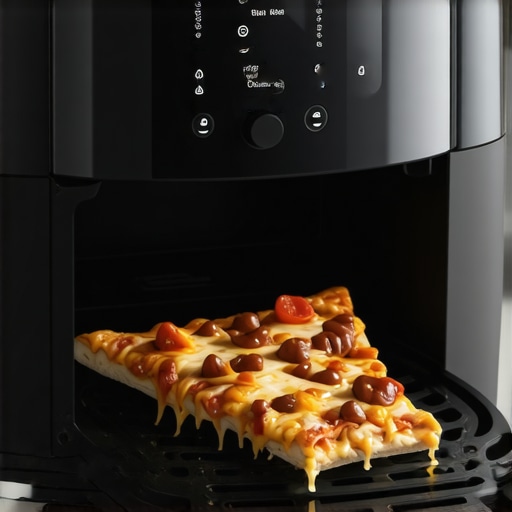
Reheating pizza is not a kitchen chore; it is an exercise in thermodynamics. Most people treat their luxury kitchen appliances like blunt instruments. The microwave is the primary offender, vibrating water molecules until the crust undergoes a structural collapse into a rubbery mess. After twenty years in the premium kitchen hardware sector, I have diagnosed thousands of equipment failures and culinary disappointments. The air fryer is the only consumer-grade tool capable of reversing starch retrogradation. To get this wrong is to waste high-quality ingredients and the labor of a master pizzaiolo. The result? Avoidable failure.
The Best Air Fryer Settings for Reheating Pizza Without Getting it Soggy
The core mechanism of an air fryer is high-velocity convection. Unlike a standard oven where heat lingers, an air fryer forces hot air around the food, stripping away the moisture barrier that forms during refrigeration. For a standard New York-style slice, the objective is to hit a target temperature of 350°F (177°C). Why 350? It is the threshold where the Maillard reaction continues without immediately carbonizing the sugars in the dough. Before you start, remember the air fryer preheating rule most people ignore; a cold basket is the quickest way to end up with a lukewarm, greasy bottom. Preheating the unit for three minutes creates a thermal shock that instantly starts crisping the base.
The Thermal Dynamics of Crust Rehydration
When pizza cools, the wheat starches undergo a process called recrystallization. Water moves from the crust into the proteins, making the bread stale and tough. To fix this, you must introduce heat fast enough to release that water back into the air while the fats in the cheese liquify. A common error is setting the temperature too high, say 400°F. This chars the pepperoni and singes the cheese before the interior of the crust reaches 145°F, the safety zone for texture. A stable, medium heat allows for moisture migration without ruining the structural integrity of the slice. If your unit is struggling with airflow, it might be time to learn the best way to deep-clean an air fryer heating element to ensure the fan is moving air efficiently.
[IMAGE_PLACEHOLDER]
Standard Convection Faults in Rapid Reheating
Operational risks abound when you crowd the basket. If you overlap slices, you create a humidity trap. Steam gets caught between the layers, ensuring a soggy middle that no amount of heat can save. It is better to run two three-minute cycles than one crowded six-minute cycle. Efficiency here is measured by the quality of the bite, not the speed of the service. I have seen clients complain about their air fryers when the reality was a lack of airflow management. Additionally, residues from previous cooks can ruin the flavor profile. If your device smells like last night’s fish, check out the trick to getting odors out of your air fryer basket before attempting to save a delicate Margherita.
The Engineering Reality of Different Dough Styles
Thick-crust Sicilian or Chicago-style pizzas require a different tactical approach. These dense doughs act as thermal insulators. If you blast them at 350°F, the top will burn while the center remains a cold, doughy block. For deep dish, drop the temperature to 325°F and extend the time to 6 or 8 minutes. This lower heat gradient allows for deep penetration without surface-level destruction. According to the National Kitchen & Bath Association (NKBA), the trend toward high-performance convection in small footprints is dominating the 2025 market environment, specifically because of this versatility. We are moving away from appliances that do one thing and toward those that can manage complex heat transfer coefficients.
Regulatory Changes and Modern Hardware Safety
Looking at the next 12 to 24 months, we expect tighter regulations on the non-stick coatings used in air fryer baskets, similar to the standards set by the American Society of Heating, Refrigerating and Air-Conditioning Engineers (ASHRAE) for industrial ventilation. As a business owner, I advise clients to invest in stainless steel or ceramic-lined baskets now to stay ahead of these health-conscious shifts. These materials also hold heat better, which contributes to a more consistent reheating cycle. If your current unit is making strange noises during these high-heat cycles, investigate why your air fryer fan is making a loud vibrating sound before a mechanical failure occurs mid-meal.
The Executive Verdict
If you are holding a cold slice and want it to taste like it just left the deck oven, use the 350°F for 3 minutes strategy. It is the gold standard for thin to medium crusts. For specialty doughs, lower the heat and increase the time. Do not use oil sprays; the pizza already has enough fat to fry its own crust in a convection environment. Hold your equipment to a high standard, keep the airflow paths clear, and never, ever stack your slices. This is the strategy for those who value technical precision over convenience.
Frequently Asked Questions
Should I add water to the air fryer when reheating pizza? No. Unlike an oven where a small ramekin of water can prevent drying, the high airflow of an air fryer will simply blow the moisture around, potentially leading to a soggy crust or interfering with the fan motor.
Can I use parchment paper in the basket? You can, but it is a trade-off. It makes cleanup easier but blocks the bottom holes, which are vital for a crisp base. If you must use it, poke extra holes in the paper or use a perforated version.
How do I know when the pizza is done? Look for the “edge sizzle.” When the oils in the cheese start to bubble at the perimeter and the crust feels firm when tapped with a pair of tongs, the structural rehydration is complete.
Does the type of cheese affect reheating time? Yes. High-moisture cheeses like fresh mozzarella take longer to set and can release more liquid, requiring an extra 30-45 seconds of cook time compared to low-moisture part-skim mozzarella.