
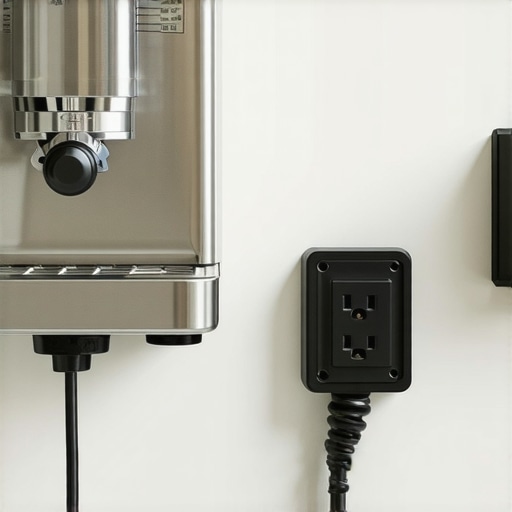
Why You Need a Dedicated Circuit for Commercial-Grade Espresso Machines
Plugging a professional espresso machine into a standard shared kitchen outlet is an invitation to mechanical suicide. After two decades diagnosing fried logic boards and scorched wiring harnesses, I’ve seen the same pattern repeat: a $10,000 Italian-built machine crippled by a $0.50 residential breaker. The stakes are simple—protect your investment or prepare for expensive, recurring repairs. Most luxury kitchens are wired for convenience, not industrial load profiles. When a commercial-grade machine cycles its massive heating element while your refrigerator kicks on, the resulting voltage sag creates a silent killer for your machine’s electronics. This isn’t just about avoiding a tripped breaker; it’s about the integrity of the extraction itself. If the voltage drops, the temperature of the boiler fluctuates. The result? Inconsistent coffee and a hardware lifespan cut in half.
The Engineering Reality
Commercial-grade equipment operates on a different thermal curve than a toaster or a blender. Most high-end machines, especially when we look at the real difference between single and double boiler machines, require a steady, unyielding stream of current. A standard 15-amp kitchen circuit is often shared with four or five other outlets. If your fridge compressor starts up—the same kind of motor load that causes luxury fridges to make a clicking noise—the transient voltage dip can be as high as 15%. Sensitive PID (Proportional-Integral-Derivative) controllers, which manage your water temperature to within 0.1 degrees, hate this instability. They eventually burn out. It is a slow, agonizing death for the machine’s brain. The copper in your walls has a specific resistance; when you pull 14 amps through a wire rated for 15 over a long period, that wire heats up. This heat is energy you are paying for that never reaches your espresso machine’s heating element.
The Hidden Risk of Shared Loads
Thermal stress is the enemy of longevity. I remember a client in a high-rise who couldn’t understand why her shots tasted sour every Tuesday morning. We tracked it down to her neighbor’s shared utility line and her own wine cooler cycling at the same time. This is why crafting perfect coffee in your luxury kitchen requires more than just high-end beans. It requires stable electricity. If you are serious about your barista setup, you need a dedicated 20-amp circuit using 12-gauge wire. Standard 14-gauge wire used in most homes is too thin for the sustained 20-minute heat-up cycles required by E61 group heads. You can actually smell the ozone when a poorly wired outlet begins to fail. The smell of fresh adhesive and scorched plastic near an outlet is a final warning before a potential fire or a total board failure. Using a dedicated line eliminates the ‘noise’ from other appliances, ensuring your pump maintains the 9 bars of pressure needed for a proper crema.
Real World Implementation Failures
What breaks first? Usually, it’s the solid-state relay or the pressure stat. These components are designed to click on and off thousands of times, but they expect clean power. When the power is ‘dirty’ or fluctuating, the contacts inside these parts arc. That arcing creates carbon buildup, which increases resistance, which creates more heat. It’s a vicious cycle. I’ve seen portafilters leak not because of a bad gasket, but because the heater stayed on too long due to a confused sensor, warping the group head assembly. If you’ve ever had to fix a leaky portafilter, you know how frustrating mechanical downtime can be. The National Electrical Code (NEC) frequently updates standards for kitchen small-appliance branch circuits, but they focus on safety, not the performance of specialized Italian machinery. Following NEMA standards for 20-amp receptacles (the ones with the ‘T’ shaped slot) is the only way to ensure your machine is getting the ‘fuel’ it needs.
Future Proofing Your Luxury Kitchen
The market is shifting. In the next 12 to 24 months, we expect more local jurisdictions to mandate dedicated circuits for any appliance drawing over 1,500 watts. This is a response to the rise of ‘prosumer’ kitchen tech. If you are renovating now, pulling an extra 20-amp line to your coffee station is a $500 investment that adds $2,000 in perceived value to a home buyer who understands luxury. It’s about strategic property value and operational efficiency. Don’t let an electrician tell you that ‘it’s fine on the general circuit.’ They aren’t the ones paying the $1,200 repair bill for your La Marzocco or Slayer. Demand a dedicated home run back to the breaker panel. No junctions. No daisy-chaining.
The Executive Verdict
If you own a machine with a boiler larger than 2 liters, or any dual-boiler setup, you must install a dedicated 20-amp circuit. My recommendation? Buy the copper now. If you are currently experiencing erratic temperature swings or hearing a buzzing sound from your machine’s power cord, stop using it immediately and call an electrician. The risk of board failure is too high. Actionable Strategy: Contact a licensed electrician and specify a ‘Dedicated 20A circuit, 12AWG wire, with a high-quality NEMA 5-20R outlet.’ This is the only way to guarantee your machine performs as the engineers intended.
Common Questions Regarding Espresso Power
Q: Can I use a heavy-duty surge protector instead?
A: No. A surge protector does not prevent voltage sag. In fact, many low-quality surge protectors add resistance to the line, making the problem worse.
Q: My machine has a standard plug; why do I need 20 amps?
A: Many commercial-grade machines come with a 15-amp plug for compatibility, but they pull very close to that limit. A 15-amp circuit is only designed to handle 12 amps of continuous load. Espresso machines are a continuous load during heat-up.
Q: Does a dedicated circuit improve the taste of the coffee?
A: Indirectly, yes. By ensuring the PID controller has stable power, your thermal stability is maximized, which prevents the sour or bitter notes caused by temperature fluctuations.