
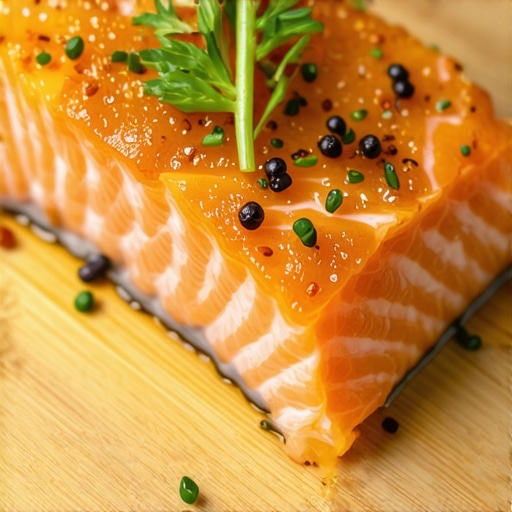
The Perfect Air Fryer Salmon Hack for Crispy Skin
Most home cooks treat salmon like a delicate flower. They are wrong. If your air-fried salmon lacks a glass-shatter snap on the skin, you have failed the most basic test of convection thermodynamics. After fifteen years of managing high-end appliance installs and troubleshooting thermal consistency issues in commercial-grade residential kitchens, I have seen every soggy failure imaginable. The stake is high: a wasted $30-per-pound king salmon fillet. The culprit? Excess surface moisture and timid temperature settings. To get the result you want, you must treat the air fryer not as an oven, but as a high-velocity lipid-rendering chamber. You must master the interface between heat and protein.
The Engineering of the Maillard Response
To achieve culinary perfection, you have to understand the boundary layer of air. In a standard air fryer, the fan speed creates a high-pressure environment that should, in theory, strip away moisture instantly. However, salmon skin is an insulator. If you don’t prep it, the subcutaneous fat stays trapped, steaming the skin from the inside out. This explains why your air fryer fries always come out soft instead of crispy; the moisture creates a localized humidity dome. The technical truth is simple: you need a dry brine and an oil-based heat conductor to breach that barrier. Use a paper towel to press the skin until the fibers are visible. Then, apply a microscopic layer of high-smoke-point oil. This increases the thermal conductivity of the skin surface, allowing the heat to penetrate the scales before the meat overcooks. It’s about managing the delta between the surface temperature and the internal core. Most people ignore the preheat cycle, but that is a fatal error for proteins. You need the basket at full thermal mass before the fish touches it.
The Technical Reality of Heat Distribution
Airflow in these machines is often impeded by the very food we want to cook. If the fillet is too large, the vortex is broken. I often recommend the foil trick for better air fryer heat distribution to ensure the bottom of the skin doesn’t sit in its own juices. You want the salmon suspended in a 400-degree hurricane. When the fat begins to render, you will hear a sharp, rhythmic sizzle—this is the sound of moisture escaping the cellular structure of the skin. If that sound is muffled or ‘wet,’ your temp is too low or your basket is crowded. I have seen countless $5,000 built-in air fryer units underperform because the owner didn’t understand the cubic-feet-per-minute (CFM) requirements for proper browning. It is not about the brand; it is about the physics of the fan. For those using portable luxury models, the strategy remains identical: maximize the air-to-surface-area ratio.
The Operational Risks of High-Heat Convection
When you push a machine to its thermal limits, things can break. I remember a client in a penthouse who tried this at 450 degrees with a sugar-heavy marinade. The resulting smoke was so thick it triggered the building-wide suppression system. The smell of scorched amino acids and charred sugar is hard to remove from high-end cabinetry. You must know how to stop your air fryer from setting off the smoke alarm before you attempt a true high-heat skin sear. The risk isn’t just a burnt dinner; it’s the degradation of the non-stick coating or the heating element itself. If you see white spots forming on the fillet, that’s albumin—a sign of aggressive heat forcing moisture out of the muscle fibers. It looks like a failure, but it’s actually a signal that you’ve reached the peak temperature. You have about ninety seconds from that point before the fish becomes a brick. The tactile feedback when you tap the skin with a metal spoon should be a distinct ‘clink,’ not a ‘thud.’
Market Trajectory and Precision Appliances
We are seeing a shift in the luxury kitchen market toward induction-integrated air fryers and precision steam-convection hybrids. Over the next 24 months, expects to see sensors that measure the humidity levels inside the basket in real-time. This will take the guesswork out of the ‘crispy skin’ equation. For now, we rely on manual expertise. The industry is moving away from simple timers toward probe-based logic. Regulatory changes regarding energy efficiency are also forcing manufacturers to use smaller, more efficient motors with higher RPMs. This means faster airflow but also less margin for error. If you don’t adjust your technique to these higher speeds, you will end up with salmon that is charred on the outside and raw in the center. The second-order effect of this tech is a reduction in the need for heavy oils, which is a major driver in the air fryers revolution we see in modern healthy cooking.
The Executive Strategy for Success
If you want the best salmon of your life, follow this protocol. Buy center-cut fillets with the skin on. Dry brine with salt for 20 minutes to draw out deep-seated moisture. Preheat your machine to its maximum setting. Use a thin coat of avocado oil—never olive oil for this. Place the fish skin-side up for the last 3 minutes of the cook to maximize air exposure. My verdict? Stop using the ‘Fish’ preset on your machine. Those presets are designed for the lowest common denominator and almost always result in overcooked protein and rubbery skin. Manual control is the only path to a professional result. If you are serious about your kitchen output, treat your air fryer like the high-precision tool it is.
Frequently Asked Questions
Why does my salmon skin stick to the basket?
You aren’t preheating. The cold metal bonds with the proteins before the oils can create a barrier. Heat the basket first.
Should I use parchment paper?
No. Parchment blocks the airflow. If you must use it, poke holes in it to allow the vortex to reach the bottom of the fillet.
How do I know when it’s done without a thermometer?
Pressure test it. The meat should yield slightly to a finger press but spring back. If it’s hard, it’s overdone. If it’s mushy, it’s raw.
Does the type of air fryer matter for this hack?
Basket-style fryers generally outperform toaster-oven hybrids for salmon because the vertical airflow is more concentrated on the skin surface.