
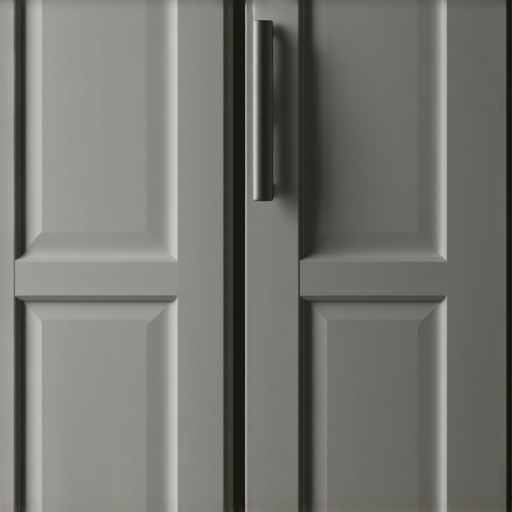
Why Your Cabinet Doors Won’t Close Flush and How to Adjust Them
A luxury kitchen is a machine. Every component must function with the same precision you expect from high-end espresso machines or professional-grade stand mixers. When a cabinet door hangs even two millimeters out of alignment, the visual symmetry of the entire room breaks. It’s a technical failure. After twenty years in high-end millwork, I can tell you that most ‘warped’ doors are actually just victims of gravity and hardware vibration. You don’t need a carpenter. You need a screwdriver and an understanding of three-dimensional geometry.
The Engineering Reality of Modern Hinges
Most premium cabinetry utilizes European-style concealed hinges. These are marvels of engineering, designed to be adjusted along three specific axes: height, depth, and side-to-side positioning. The weight of heavy premium cookware stored on pull-out trays or the constant vibration of air fryers on the counter can slowly loosen the seating of these components. The result? Avoidable failure. If your doors are overlapping or dragging against the frame, the hinge has simply ‘walked’ out of its factory setting. This is a common issue seen when homeowners fall for the most common mistake when installing shaker cabinets. Structural integrity depends on hardware tension.
Technical truth: The screws don’t just hold the door up; they manage the tension against the wood’s natural expansion. According to standards from the National Kitchen & Bath Association (NKBA), tolerances for high-end cabinetry should be within 1/32 of an inch. Anything beyond that is a sign of mechanical drift.
The Three-Axis Correction Method
To fix the alignment, you must isolate the axis that has failed. Start with the side-to-side screw. This is usually the screw located closest to the door panel. Turning it clockwise pulls the door closer to the cabinet edge. If the gap between a pair of doors is too wide, this is your primary target. Next, look at the depth adjustment. This screw moves the door closer to or further from the cabinet face. If the door isn’t closing flush or is bouncing back, the depth is too tight. Finally, the vertical adjustment. Most hinges have a mounting plate with elongated holes. Loosening these screws allows the entire door to slide up or down. If your handles don’t line up, this is where you win the game. This level of precision is exactly what separates a the kitchen cabinet hardware that will make your kitchen look dated from a timeless, functional masterpiece.
Operational Risks and Material Stress
Wood is a living material. It breathes. In a luxury kitchen, humidity fluctuations from high-heat cooking or steam from espresso machines cause the stiles and rails to expand. I have seen million-dollar installs where the doors bound up because the installer didn’t account for seasonal humidity. You might feel a slight resistance or hear a faint ‘tick’ when the door closes. That’s the sound of metal-on-wood friction. Left unchecked, this grinds down the finish and eventually strips the screw holes. It’s the same logic as maintaining a high-end appliance; you wouldn’t ignore a how to adjust the door tension on an integrated dishwasher, so don’t ignore your hinges. The weight of the door itself acts as a lever, constantly trying to pull the top hinge out of the carcass.
Future Proofing the Modern Kitchen
The industry is moving toward push-to-open mechanisms and heavy integrated panels. These systems have zero margin for error. As we integrate more tech into the workspace, the physical shell—the cabinetry—must be more stable than ever. We are seeing a shift toward soft-close dampers with integrated tension regulators. Within the next 24 months, expect to see more self-compensating hinges that use spring tension to counteract wood movement. For now, manual calibration is the only way to ensure your luxury kitchen remains a high-performance environment. Proper alignment also improves the performance of your lighting; it avoids the shadows caused by uneven door depths. This is often overlooked, much like the lighting trick that makes small kitchen look massive.
The Executive Verdict
If your doors are sagging, do not wait. Physical friction leads to permanent damage. Buy a high-quality Pozi-drive screwdriver—not a standard Phillips—to avoid stripping the heads of European screws. Set a reminder to check your hinge tension twice a year, ideally during the change of seasons. If you are building new, insist on hinges rated for high-cycle counts (100,000+ openings). Quality hardware is the cheapest insurance policy for a $100,000 kitchen investment.
Frequently Asked Questions
Why do my cabinet doors keep coming loose even after I tighten them?
The screw holes might be stripped. This happens when the wood fibers are crushed by over-tightening. A common fix is using a hardwood dowel and wood glue to reset the hole, providing fresh material for the screw to bite into.
Can humidity really make my doors not close?
Yes. Wood expands across the grain. In high humidity, a door can grow wide enough to strike its neighbor or the frame. Adjusting the lateral screws can provide the necessary clearance during wet months.
Do I need to replace the whole hinge if one screw is stuck?
Often, yes. Modern hinges are precision-stamped assemblies. If the internal threads for the adjustment screws are stripped, the hinge loses its ability to hold a setting. It’s a $15 part to save a $500 door.