
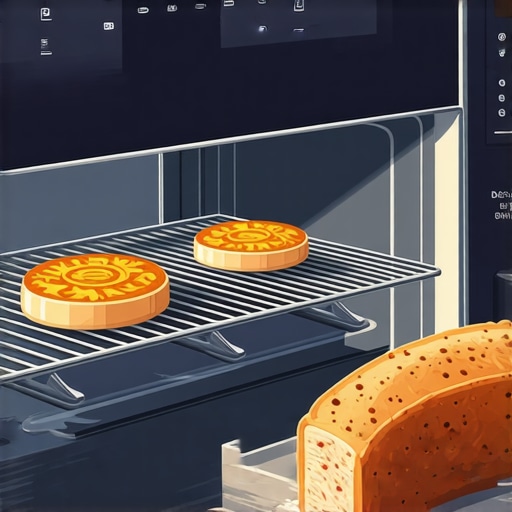
The Reason Your Smart Oven is Cooking Unevenly
Buying a $4,000 smart oven only to find your sourdough scorched on the left and raw on the right is an insult to modern engineering. After fifteen years in the luxury kitchen space, I have seen every ‘innovation’ meant to solve thermodynamics, yet the same issues persist. The stake is not just a ruined meal; it is the degradation of high-end components due to localized heat stress. Most owners assume a software glitch. They are usually wrong. The failure is almost always mechanical, related to airflow dynamics or sensor calibration. I have diagnosed hundreds of these units, and the patterns are as predictable as they are frustrating.
The Thermodynamic Reality
Smart ovens rely on PID (Proportional-Integral-Derivative) loops to maintain temperature. In theory, this allows for precision. In reality, if your range is not perfectly level, the convection fan may suffer from axial imbalance. This creates erratic air current patterns. Hot spots are not random; they are the result of stagnant air pockets where the convection cycle breaks down. Furthermore, many smart ovens utilize thin-gauge internal baffles that vibrate and warp. This shifting metal alters the path of the heat. According to the Association of Home Appliance Manufacturers (AHAM), even a five percent deviation in airflow can result in a twenty-degree temperature variance across a standard rack. You might think the software is ‘learning’ your habits, but it cannot override the laws of physics when a fan motor is struggling with friction.
The Engineering Failure of Modern Baffles
Airflow is everything. In premium cookware environments, we often see that 3-ply pans warp when exposed to the uneven pulsing of a smart oven’s broil element. The heat is not a steady stream; it is a series of aggressive bursts. When the internal sensors detect a cold spot, the logic board overcompensates by red-lining the heating elements. The result? Thermal shock. This is the ‘Operational Risk’ the brochures forget to mention. The proximity of the sensors to the heating elements often leads to ‘short-cycling,’ where the oven thinks it has reached the target temperature when the actual air mass is still cold. It is a feedback loop from hell.
The Stress Test and Operational Risks
I remember a client in a high-rise luxury loft who couldn’t get a roast right. The oven was top-of-the-line. The issue? The ‘clank’ of a slightly misaligned fan housing. Every time the convection kicked in, the vibration caused the heat shielding to sag by three millimeters. It sounds like nothing, but it blocked the return vent. The kitchen smelled of scorched insulation—a sensory anchor for anyone who has seen a motor burn out. If you are hearing a high-pitched whine or a rhythmic thumping, your smart oven is already failing the stress test. You can check for hidden switches or connectivity issues, but those rarely fix a physical blockage in the rear plenum. Mechanical failure is an inevitability if you ignore the auditory warnings.
Strategic Foresight for 2025
The industry is moving toward ‘solid-state heating’ and away from traditional resistive coils. Over the next 24 months, expect to see more infrared integration. However, this creates a new problem: emissivity. Different materials—copper, stainless, ceramic—absorb infrared heat at different rates. If your oven’s AI isn’t calibrated for the specific cookware you use, the unevenness will only get worse. We are also seeing a push from the National Fire Protection Association (NFPA) for stricter thermal cutoff standards. This means ovens will shut down or throttle heat faster than before to prevent cabinet scorching. This throttling often happens mid-cycle, leading to the ‘sunken cake’ syndrome many blame on the recipe. It is not the flour; it is the safety logic.
The Executive Verdict
If your smart oven is failing you, do not wait for a firmware update. Start with a physical audit. Check the door seals for heat leaks using a thermal camera or a simple paper-strip test. Verify the oven is level to within 0.1 degrees. If the airflow is obstructed, even the best AI in the world is useless. My recommendation? If you are in a situation where consistency is non-negotiable, bypass the ‘Auto-Chef’ settings and use manual convection with a verified external probe. High-end tech is a tool, not a replacement for fundamental physics. Often, the actual temperature is vastly different from what the digital display claims. Calibrate or compensate.
Frequently Asked Questions
Q: Can a software update fix uneven heating?
A: Rarely. While it can tweak the PID loop, it cannot fix a warped fan or a blocked vent. Software is the brain, but the oven is the body; both must function.
Q: Does the type of rack I use matter?
A: Yes. Heavy-gauge stainless steel racks retain more thermal mass, which can help stabilize air temp, whereas thin, chrome-plated racks offer little to no help against fluctuations.
Q: Why is the back of my oven always hotter?
A: This is usually due to the heating element’s proximity to the convection fan intake. If the baffle isn’t designed correctly, the air doesn’t have time to mix before it hits your food.
Q: How often should I calibrate the temperature?
A: At least once a year. Sensors drift due to repeated heat cycles. Use a high-quality thermocouple, not a cheap grocery store thermometer.