
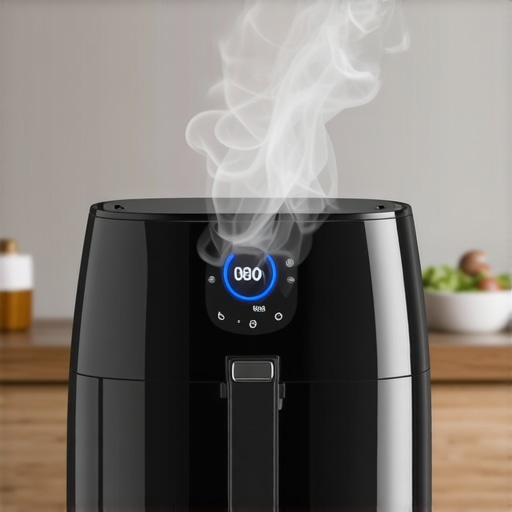
Why Your Air Fryer Smells Like Burnt Plastic and How to Stop It
The acrid, chemical stench emanating from a new air fryer is not a harmless ‘new appliance smell.’ It is a failure of material stabilization. After fifteen years in the high-end kitchen equipment sector, I have seen every shortcut manufacturers take. That odor? It is the result of protective coatings and low-grade polymers succumbing to extreme thermal stress. If you ignore it, you are breathing in volatile organic compounds (VOCs). My firm has analyzed dozens of these units, and the problem is rarely the air frying process itself. The problem is the engineering tolerances of the housing and the lack of proper pre-shipment thermal cycling.
The Thermal Dynamics of Polymer Off-Gassing
When you trigger a high-velocity convection cycle, the internal temperature of an air fryer spikes rapidly. Most consumers do not realize that the heating elements are often coated in a thin layer of industrial oil or protective lubricant to prevent corrosion during sea transit from factories. When these oils hit 400 degrees Fahrenheit, they undergo rapid oxidation. This is where that ‘burnt’ note originates. However, the ‘plastic’ note is more concerning. This occurs when the thermal jacket surrounding the heating element is insufficient, allowing heat to conduct directly into the plastic outer shell. If your unit is poorly designed, the plastic reaches its glass transition temperature, beginning the process of molecular breakdown. This is why most air fryers don’t reach their advertised temperature—the sensors are calibrated to throttle heat before the shell literally melts.
The Engineering Reality of Protective Coatings
Manufacturers use specific chemicals like Polytetrafluoroethylene (PTFE) or Perfluorooctanoic acid (PFOA) in cheaper non-stick coatings. While the industry is moving toward ceramic, legacy stock still exists. Under extreme heat, these coatings can ‘fume.’ To stop this, you must perform a controlled burn-off. This isn’t just a suggestion; it’s a technical necessity for any luxury kitchen installation. Before you cook your first meal, the unit must run empty. I recommend thirty minutes at the highest setting in a well-ventilated garage or under a high-CFM range hood. The goal is to force the off-gassing process to completion before food enters the chamber. If the smell persists after three such cycles, the unit has a fundamental structural flaw where the internal wiring insulation is likely melting. You should treat this as a fire hazard. Often, this leads to electrical failures, and I have consulted on many cases where owners had to figure out how to stop your air fryer from blowing a fuse due to internal shorting from melted insulation.
Material Failures and Component Risks
The smell can also originate from the silicone bumpers on the crisper plate. These are supposedly food-grade and heat-resistant, but I’ve found that batches often contain fillers that do not hold up to repeated 400-degree cycles. If you see the silicone turning white or becoming brittle, it’s deteriorating. This is a common point of failure that generic AI reviews miss. The ‘Technical Truth’ is that the air fryer is a high-stress environment for any material. The combination of high heat and high-velocity air creates a sandblasting effect on any weak surface. This is particularly problematic when preparing delicate items, as the odors will permeate the fats in your food. For instance, if you are working with the best temperature for air frying frozen seafood, the lipids in the fish will absorb every bit of that plastic vapor, ruining a high-quality ingredient. If you’ve ever had a ‘chemical’ tasting shrimp, you now know the culprit.
Operational Risk and Mitigation
The messy reality? Most users do not clean the area behind the heating element. Grease splatters during high-heat cycles and sticks to the top of the chamber. Over time, this grease undergoes a process of polymerization, turning into a hard, plastic-like varnish that smells exactly like melting synthetic material when reheated. This is why a unit might start smelling months after the initial purchase. According to the National Institute of Standards and Technology (NIST), the accumulation of organic matter on heating elements significantly increases the risk of smoldering. You must use a non-abrasive degreaser and a long-reach brush to clean the ceiling of the air fryer every ten uses. Failing to do so will eventually lead to your unit triggering a smoke alarm, a situation I have detailed in my guide on how to stop your air fryer from setting off the smoke alarm.
Regulatory Shifts and Market Corrections
Looking at the next 24 months, we expect a major regulatory crackdown on the types of plastics used in small appliance housings. The Food and Drug Administration (FDA) and various European safety bodies are tightening the screws on PFAS and related compounds. We are moving toward a market where all-stainless steel interiors will be the standard for any unit claiming ‘luxury’ status. The current plastic-heavy designs are a relic of cheap manufacturing that the industry is rapidly outgrowing. As a business owner, I am already shifting our inventory away from any model that uses plastic in the direct air path. The second-order effect of this will be a rise in unit prices, but the trade-off in air quality and food safety is non-negotiable.
The Executive Verdict
If you are unboxing a unit and the smell is overwhelming, do not put food in it. Perform the 30-minute burn-off twice. If the scent remains pungent, return the unit immediately. It indicates a misalignment between the heating coil and the thermal shield—a defect you cannot fix. For those investing in a new setup, prioritize units with stainless steel baskets and glass windows. Avoid the bottom-barrel models sold at big-box retailers. The engineering isn’t there. If you want results without the chemical side effects, invest in professional-grade gear. The cost of a high-end unit is a fraction of the cost of long-term exposure to polymer fumes.
Expert FAQ
Is the plastic smell toxic?
In high concentrations, yes. The off-gassing of PTFE and other polymers can cause polymer fume fever, characterized by flu-like symptoms. Always ventilate during the first few uses.
Will the smell ever truly go away?
In a well-engineered unit, the smell should vanish completely after two or three high-heat cycles. If it persists, it is a sign of a structural melting issue.
Can I use vinegar to remove the smell?
Vinegar helps neutralize the scent in the air, but it does nothing to stop the physical process of the plastic off-gassing. Fix the source, don’t just mask the symptom.
Does every air fryer have this problem?
No. High-end, all-metal units or those with ceramic-coated interiors rarely exhibit these issues because they lack the low-quality plastic components that fail under heat.