
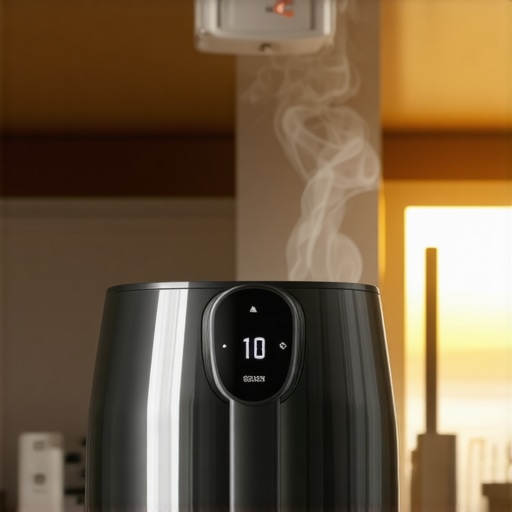
How to Stop Your Air Fryer from Setting Off the Smoke Alarm
A smoke alarm screaming during a salmon roast is not a kitchen quirk. It is a diagnostic signal of poor lipid management. Having engineered and serviced high-end kitchen appliances for over 15 years, I have seen every iteration of this failure. The stake is not just the annoyance of a piercing siren; it is the permanent carbonization of your expensive equipment. When grease hits a heating element, it undergoes rapid chemical transition. If you do not control this, you are not cooking; you are performing an uncontrolled chemical reaction. If you find that your air fryer smells like burnt toast, you are already dealing with residual carbon that will eventually trigger your sensors.
The Mechanics of Particulate Discharge
The engineering reality is straightforward. Air fryers rely on high-velocity convection. This airflow does not just move heat; it moves mass. When you cook high-fat proteins—think bacon or skin-on thighs—the centrifugal force of the fan strips liquid lipids from the food surface. These lipids become aerosolized. The result? Micron-sized droplets hitting a 400-degree heating coil. This is the flash point. This process generates particulate matter that exceeds the detection threshold of most modern photoelectric smoke alarms. Many top models that redefine healthy cooking have begun incorporating baffles, but the basic physics remains. You are essentially running a miniature oil refinery in your kitchen. According to the Association of Home Appliance Manufacturers (AHAM), improper maintenance of heating elements is a primary cause of performance degradation in countertop convection units.
Lipid Oxidation and Thermal Limits
Most home cooks ignore smoke points. They use extra virgin olive oil for everything. This is an operational error. At 400 degrees, low-smoke-point oils undergo rapid oxidation. They break down. They smoke. Use avocado oil or ghee instead. These have thermal stability. The cost-benefit is clear. Spending ten dollars more on stable fats saves the internal integrity of your machine. You avoid the sticky, polymerized residue that acts as a magnet for future grease. Safety protocols also prevent issues like when you need to stop your air fryer from blowing a fuse during peak load, as clean machines run more efficiently. The National Fire Protection Association (NFPA) notes that unattended cooking remains a leading risk, and a smoke-filled kitchen is the first step toward a hazardous event.
The Ventilation Design Flaw
The messy reality involves the placement of your unit. Most people shove their air fryer under a cabinet. This is a recipe for a localized heat pocket. The exhaust port, usually located at the rear, blasts hot, grease-laden air directly against your backsplash. The air has nowhere to go. It circles back into the intake. It concentrates. I once walked into a client’s kitchen where the underside of their custom maple cabinets was charred black. They didn’t understand why the alarm kept going off. The scent was acrid, like burnt plastic mixed with old frying oil. The solution was simple: move the unit under the range hood during operation. Use the industrial-grade suction of your professional hood to pull that particulate matter out of the building. The engineering truth? Countertop air fryers were never meant to be operated in stagnant air environments.
Future Integration Trends
Where is the industry going? In the next 24 months, we will see air fryers with integrated HEPA filtration systems. High-end brands are already experimenting with catalytic converters similar to those in self-cleaning ovens. We are moving toward a ‘smart’ kitchen where the appliance communicates with the HVAC system to increase air exchange when it detects aerosolized grease. Regulatory changes regarding indoor air quality will likely mandate these features in premium cookware soon. Second-order effects will include lower home insurance premiums for kitchens equipped with smart-sensing ventilation. The era of ‘dumb’ countertop appliances is ending.
Operational Protocol for High-Heat Cooking
My verdict is decisive. If you are serious about your luxury kitchen, treat the air fryer like the professional tool it is. First, verify the smoke point of every lubricant you use. Second, ensure the unit is positioned directly under an active vent hood. Third, clean the heating element—while cool—with a non-abrasive degreaser every five uses. If you are cooking high-fat items, add a tablespoon of water or a slice of bread to the bottom drawer. This catches the drippings and prevents them from splashing. The result? A quiet house and a perfectly seared meal. Stop treating your appliances like disposable toys and start managing the physics of your kitchen. It’s the only way to ensure the durability of your investment.
Frequently Asked Questions
Does the type of food affect the smoke alarm more than the temperature?
Yes. High-fat foods like bacon or sausages release more lipids which aerosolize and hit the element, causing smoke regardless of the temperature setting.
Can I use parchment paper to stop the smoke?
Parchment paper can help contain grease, but if it blocks airflow, it can cause the motor to overheat or the paper itself to catch fire if it touches the element.
Why does my air fryer smoke even when it is clean?
It is likely residual oil from a previous session that has polymerized on the heating coil. Even a thin, invisible film will smoke once it reaches its flash point.
Should I always run my range hood when air frying?
Absolutely. Even if you don’t see smoke, you are releasing fine particulates into your home’s air that can trigger sensitive alarms and degrade indoor air quality.