
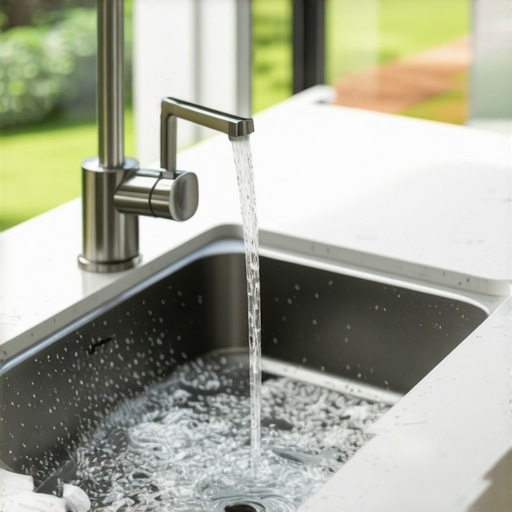
Why Your Kitchen Faucet Pressure Has Suddenly Dropped
Sudden pressure loss in a high-end kitchen is more than a minor annoyance; it is a mechanical failure in the plumbing delivery system that threatens the longevity of your high-investment fixtures. After fifteen years of diagnosing hydraulic failures in custom builds, the diagnosis is rarely a mystery. It is a measurable physics problem. If your faucet has transitioned from a powerful stream to a pathetic trickle, you are likely looking at debris intrusion or internal component degradation. Ignoring this does not just mean slow dishwashing. It indicates that sediment or mineral scale is migrating through your plumbing, potentially compromising your espresso machines or high-efficiency dishwashers.
The technical reality? Most pressure issues originate at the point of exit. The aerator, a precision-engineered manifold designed to mix air with water for a splash-free stream, acts as the primary filter for your entire home. When municipal work occurs or a water heater begins its slow death, sediment enters the lines. This grit hits the fine mesh of the aerator. The result? Immediate flow restriction. You can often feel the gritty resistance when you attempt to unscrew the housing. If the flow remains weak after cleaning the aerator, the problem has moved deeper into the cartridge or the diverter valve. This is the operational risk of modern, low-lead brass fixtures. Their tighter tolerances make them vastly more susceptible to microscopic particles than the wide-bore fixtures of the 1990s.
The Engineering Reality of Cartridge Failure
Internal valve cartridges are the heart of your faucet. In many premium cookware centric kitchens, we see ceramic disc cartridges fail due to thermal shock or calcification. When you turn the handle, these discs slide over one another to regulate flow. A single grain of sand can score the ceramic surface. This creates a bypass where water pressure drops as it escapes through unintended channels. Replacing a cartridge requires more than a wrench; it requires a surgical understanding of the specific brand’s geometry. For those invested in why solid brass kitchen faucets are worth the investment, maintaining these internal components is the only way to preserve that ROI. A failed cartridge is a binary event. It works, or it does not. There is no middle ground.
The Hidden Impact of Supply Line Constriction
Supply lines are the most overlooked failure point in the luxury kitchen. Modern braided stainless steel lines are durable, but their inner EPDM rubber liners can collapse. This usually happens when the water temperature is set too high or if there is a chemical reaction with city chloramines. The liner swells inward. On the outside, the hose looks perfect. On the inside, the diameter has shrunk by 50%. This creates a massive PSI drop before the water even reaches the faucet body. If you are struggling with how to fix a kitchen faucet that has low hot water pressure, this internal collapse is the likely culprit. You feel the heat, but the volume is gone. The physics of fluid dynamics dictates that as the aperture narrows, velocity might increase slightly, but total flow volume plummets.
The Diverter Valve Bottleneck
For faucets with pull-out sprayers, the diverter valve is a common choke point. This small spring-loaded mechanism directs water from the main spout to the wand. It relies on a delicate balance of pressure. Over time, the internal spring loses tension or becomes coated in calcium. The valve gets stuck in a halfway position. It is trying to feed both outlets simultaneously, which starves both of pressure. The tell-tale sign? A slight hissing sound coming from the base of the faucet when it is turned on. It is the sound of turbulent water fighting a narrowed passage. This is why we recommend checking the diverter before assuming the entire faucet is scrap. According to standards set by the IAPMO, these components must meet specific flow rates, but mineral buildup ignores the rulebook.
Market Corrections and Future Plumbing Standards
The industry is moving toward smarter, sensor-driven fixtures. In the next 18 months, we expect a shift in how stand mixers and other countertop appliances interact with integrated kitchen systems. However, as complexity increases, so does the failure rate of electronic solenoids. These valves are even more sensitive to pressure fluctuations. If your local municipality is prone to hard water, you are looking at a mandatory requirement for whole-home filtration to protect these smart valves. The regulatory shift toward lower GPM (Gallons Per Minute) means that any minor blockage now represents a much larger percentage of total flow loss than it did a decade ago. Precision is no longer optional; it is the baseline for functional design.
The Executive Verdict
Do not replace the entire fixture yet. Start at the aerator. If the screen is clear, inspect the supply lines for internal collapse. If the lines are open, pull the cartridge. My professional recommendation: If your faucet is over seven years old and experiencing a sudden drop, replace the cartridge and the supply lines simultaneously. This resets the clock on your fixture’s lifespan. Avoid generic parts. The tolerances in luxury kitchen brands like Dornbracht or Rohl do not tolerate the 1mm deviations found in big-box store replacements. For those who notice other issues, like the reason your quartz countertop feels gritty after cleaning, it might be time to investigate your home’s overall water quality and mineral content. Systemic issues require systemic solutions.
Frequently Asked Questions
Q: Can a failing water heater cause low pressure in the kitchen?
A: Absolutely. As the sacrificial anode rod in a water heater dissolves, it creates a sediment slurry at the bottom of the tank. If this sediment is pulled into the hot water lines, it will clog every aerator and cartridge in the house, starting with the highest-flow fixture, which is usually the kitchen faucet.
Q: Why does my pressure return to normal for a second then drop again?
A: This is a classic sign of a failing pressure regulator or a collapsing supply line. The pressure builds up while the faucet is off, but the restricted flow cannot sustain the volume once the valve is opened. The initial ‘burst’ is just the stored pressure dissipating.
Q: Is it safe to use vinegar to clean my faucet cartridge?
A: While vinegar dissolves calcium, it can also degrade certain rubber seals and lubricants inside the cartridge. Use it sparingly on the aerator, but for the cartridge itself, mechanical cleaning or replacement is always the superior technical choice.