
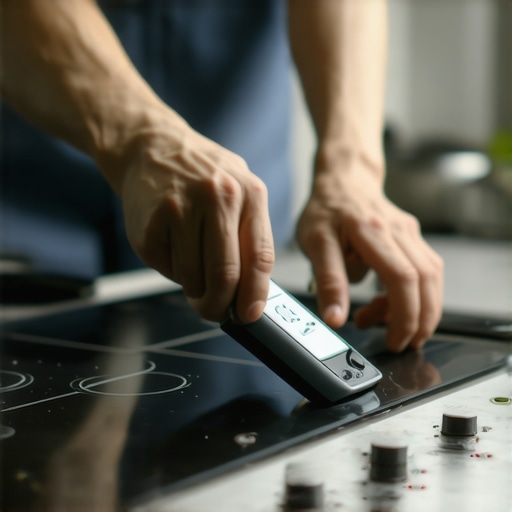
How to Level Your Induction Range for Even Oil Distribution
Gravity is the silent enemy of the home chef. If your induction range sits at even a half-degree tilt, your 5-ply pans become a source of frustration, pooling oil on one side and scorching the dry surface on the other. After fifteen years in the high-end appliance sector, I have seen thousand-dollar kitchen renovations undermined by a simple quarter-inch floor slope that no one bothered to check. Most installers merely eye the surface. They shouldn’t. A perfectly flat cooktop is the difference between a restaurant-quality sear and a soggy, uneven mess.
The Engineering Reality of Induction Surfaces
Induction heating relies on magnetic resonance. The surface stays cool, but the pan becomes the heating element. When oil pools due to an unlevel range, the thermal mass of the pan becomes unevenly distributed. This leads to hot spots where the oil is thin and cold spots where it is deep. Precision leveling is not just about the range itself; it is about the physics of the interaction between the ceramic glass top and your expensive stainless steel pans. You want that oil to shimmer in a perfect, uniform circle, not a lopsided crescent. The Association of Home Appliance Manufacturers (AHAM) specifies that performance testing for cooktops assumes a level surface within a 0.125-degree tolerance. Anything more, and you are fighting gravity every time you sauté.
The Mechanical Correction Process
To fix this, you need a high-quality 24-inch level. Do not trust a smartphone app; they lack the physical span to account for minor glass surface variations. Place the level front-to-back on the left side, then the right. Then go side-to-side across the front and rear. Use a 1/2-inch wrench or the manufacturer-provided tool to adjust the leveling legs. The goal? Zero deviation. If your floor is particularly problematic, you might need perfectly level cabinets on an uneven floor to provide a stable base for a slide-in unit. I have often seen pros skip the rear legs because they are hard to reach. That is a mistake that leads to vibrating noise and oil drift toward the backsplash.
Implementation Risks and The Messy Reality
Floors settle. Especially in older homes. You level the range today, but the weight of a 400-pound unit, combined with the heat it generates, can cause a slight shift in the subfloor over six months. I remember a client in a historic townhouse where every time the heavy-duty dishwasher ran, the vibration caused the range’s rear leveling leg to slowly unscrew itself. The result? Ruined omelets every Sunday. You must check the level after the first month of use. If you notice an E1 error on your induction cooktop, it might even be related to thermal sensors detecting uneven heat from a dry, unlevel pan surface. Sensory anchors help here: listen for the metallic click of the leveling leg locking into place and feel the weight of the unit as it settles. According to the National Kitchen & Bath Association (NKBA) floor load guidelines, a range requires a subfloor that does not deflect under its specific static load.
Strategic Foresight for the Modern Kitchen
Appliance design is moving toward thinner, more sensitive electronics. Leveling is no longer just about cooking; it is about protecting internal circuitry from uneven heat stress. In the next 24 months, I expect we will see high-end brands introducing self-leveling gyroscopic feet, but for now, we rely on the wrench. If you are renovating, ensure your contractor uses a self-leveling underlayment before the tile goes down. It is the only way to guarantee your luxury kitchen performs as advertised. Precision is a requirement, not a suggestion.
The Executive Verdict
If you own an induction range, buy a dedicated spirit level. Check the orientation twice a year. If you find your oil constantly drifting to the rear, do not adjust your technique—adjust your legs. This is a foundational mechanical fix that costs nothing but ten minutes of your time and saves hundreds in wasted ingredients. My recommendation: If the range is on a floating floor, use rubber leveling pads to prevent the legs from drifting due to vibration. Do it right, or do it twice.
Frequently Asked Questions
Can I use a leveling app on my phone?
No. Phone sensors are calibrated for screen rotation, not industrial precision. Use a physical 24-inch level for accuracy across the entire glass surface.
Does a slight tilt really affect cooking?
Yes. Oil has low viscosity when hot. Even a 1-degree tilt will cause oil to pool, leading to uneven browning and potential warping of high-end cookware over time.
What if my leveling legs are stuck?
Apply a small amount of silicone-based lubricant to the threads. Avoid heavy oils that can attract dust and grime under the range.
How often should I re-level my range?
Check it once every six months, or immediately if you notice oil pooling or if you have recently moved the unit for cleaning.