
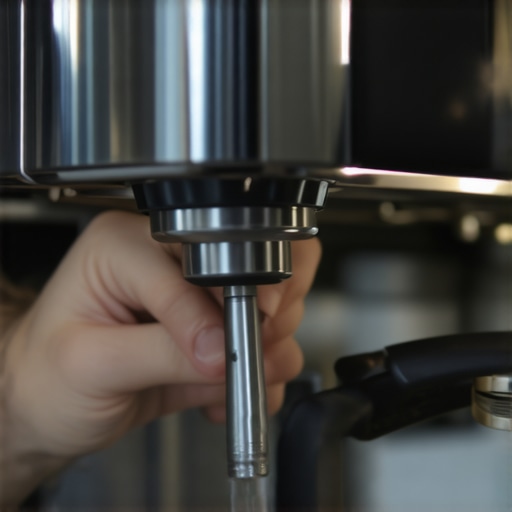
How to Fix the Leaking Steam Wand on Your Prosumer Coffee Machine
A leaking steam wand is more than a minor annoyance; it is a thermal parasite. In fifteen years of servicing high-end machinery, I have seen five-thousand-dollar dual-boilers reduced to erratic, sputtering messes because the owner ignored a persistent drip. The physics are simple. Steam is pressurized energy. When that pressure escapes via a compromised seal, your PID controller works overtime to compensate for the heat loss, eventually shortening the lifespan of your heating elements. The reality? You are not just losing water; you are losing the delicate temperature equilibrium required for the perfect shot. Most owners mistake a drip for a ‘bad gasket.’ Often, the problem lies deeper in the valve seat geometry or the spring tension of the actuator.
The Engineering Reality of Valve Fatigue
Prosumer machines typically utilize one of two designs: a compression valve or a non-compression ‘joystick’ style toggle. Compression valves, common on machines like the Rocket Mozzafiato or Profitec Pro 500, rely on a rubber gasket being physically pressed against a brass seat. Over-tightening is the primary killer here. When you crank that knob to stop a leak, you crush the Viton seal, creating a permanent indentation that ensures a future leak. The clank of the manifold when the metal hits metal is the sound of a repair bill. If you find the steam is also sputtering, you might need to check the fix for a clogged steam tip to ensure backpressure isn’t the culprit. Proper repair involves more than a swap. You must inspect the brass seat for pitting. If the brass itself is scored, no amount of new rubber will create a hermetic seal.
The True Cost of Scaling
Scale is the silent architect of mechanical failure. Calcium deposits act like sandpaper on your internal O-rings. When you engage the steam wand, these abrasive particles grind against the seals, creating microscopic channels for steam to bypass. Prosumer owners often struggle with how to fix the steam pressure on a dual boiler machine when the leak originates further back in the system, but the wand is where the symptoms manifest. According to standards set by the National Sanitation Foundation, water hardness must be strictly managed to prevent component degradation. If you see white crusting at the swivel joint of the wand, the internal Teflon gaskets have already failed. The weight of the industrial grade steel in these machines requires firm, smooth movement; grit destroys that tactile response. Regular maintenance involves knowing how to remove scale build up from your smart coffee machine internals before the wand fails completely.
Execution Risks and Brass Stress
Fixing a wand yourself carries inherent risks. The biggest? Stripping the threads on the valve body. Prosumer machines use soft yellow brass. One slip of the wrench and you have turned a twenty-dollar seal replacement into a three-hundred-dollar manifold replacement. The smell of hot copper and the hiss of escaping steam are warnings. Always use a flared-nut wrench, never a generic crescent wrench. You want maximum surface contact on those fittings. I once watched a client try to ‘de-scale’ a wand using industrial acid without removing the chrome-plated components. The result? Total delamination. The chrome flaked off into the milk pitcher. Disaster. Always disassemble the wand fully, lubricate the O-rings with food-grade Molykote 111, and check the spring’s free length. A tired spring cannot provide the necessary closing force, regardless of how new the seal is. This is the technical truth most YouTube tutorials ignore.
The Industry Shift Toward Modular Steam Systems
We are seeing a massive shift in how espresso machines are designed for the 2025 market. Manufacturers are moving away from proprietary valve assemblies toward modular, cartridge-based systems. This mimics the plumbing industry’s transition to ceramic discs. Why? Because it reduces the human error factor in maintenance. The Specialty Coffee Association technical reports suggest that modularity increases the ‘up-time’ of prosumer equipment in home environments. Within the next two years, expect to see steam wands that are entirely user-serviceable without tools, using bayonet-style fittings. For now, however, we deal with the reality of nuts, bolts, and gaskets.
The Executive Verdict
If your steam wand drips more than once every ten seconds, the ‘Buy’ decision is for a rebuild kit. If the leak is a constant stream, ‘Sell’ the idea of a quick fix and prepare for a full valve teardown. If you are in a hard-water area, do the gaskets every 12 months regardless of symptoms. It is cheaper than a new boiler.
Common Technical Queries
Can I use plumber’s tape on the wand threads?
No. Espresso machines use compression or BSPP fittings with gaskets. Tape can migrate into the valve and cause a permanent blockage.
Why does the wand only leak when the machine is cold?
Thermal contraction. As the metal cools, the gap between a worn seal and the seat widens. Once the machine reaches operating temperature, the components expand to ‘self-seal,’ but this is a sign of imminent failure.
Is it okay to leave the wand ‘on’ slightly to prevent vacuum?
Modern machines use a vacuum breaker valve to prevent milk being sucked back into the boiler. There is no need to crack the steam valve; doing so only wears out the seat faster.