
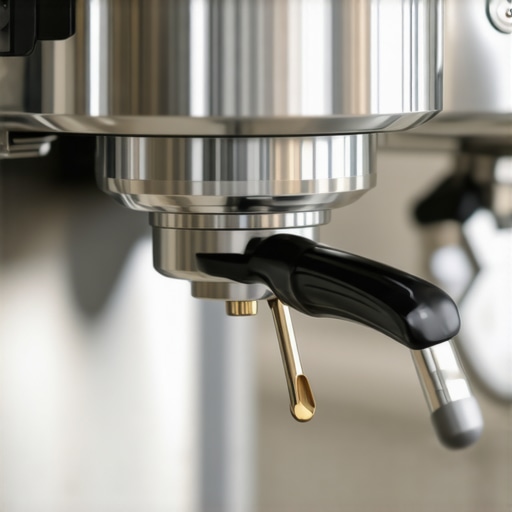
The Fix for a Clogged Steam Tip on Home Espresso Machines
Milk protein polymerization is a silent killer of prosumer espresso equipment. When you fail to purge your steam wand immediately after texturing milk, the residual liquid doesn’t just sit there. The drop in pressure creates a vacuum, drawing milk solids deep into the 0.8mm to 1.2mm apertures of the steam tip. Over fifteen years of servicing high-end Italian machines, I have seen more boiler contamination and heating element failures caused by steam wand negligence than by actual mechanical defects. The stake is not just a bad latte; it is a $400 repair bill for a back-siphoned boiler. This is the engineering reality of fluid dynamics in a pressurized system.
The Physics of Obstruction
To understand the fix, you must understand the failure. Steam tips function on a delicate balance of pressure and exit velocity. When even one hole in a four-hole tip becomes restricted, the internal backpressure increases, stressing the steam valve gaskets and the vacuum breaker. This often leads to a situation where the operator notices a steam wand that has lost all pressure entirely. The cost-benefit ratio of proactive maintenance is clear: five seconds of purging saves hours of teardown. The calcified milk acts as a heat-resistant ceramic, making simple wiping ineffective once it has baked onto the chrome-plated brass.
The Restoration Protocol
Step one is the mechanical clearance. Forget toothpicks or safety pins; they snap and lodge further into the tip. You need a dedicated stainless steel needle tool designed for the specific gauge of your steam holes. The feeling of the needle finally piercing through that hardened plug is unmistakable—a sharp, tactile snap. Once the physical blockage is breached, the chemical phase begins. I advocate for a deep soak in an alkaline-based milk cleaner. These solutions are specifically formulated to break down fats and proteins that standard descalers miss. While you are at it, ensure you know the proper way to descale a high-end automatic coffee center to maintain the entire thermal block. The smell of the reacting cleaner is acrid, almost like ozone, signifying the breakdown of the organic matter. If the blockage persists, the entire tip must be removed with a wrench—be careful not to mar the finish—and boiled in a concentrated solution.
Implementation Risks and Failure Points
The messy reality? Most owners wait too long. By the time you notice the steam is weak, the milk has often traveled past the tip and into the wand assembly itself. I once saw a machine where the wand was so clogged that the internal pressure caused the Teflon tubing to burst inside the case. The sound was like a gunshot, followed by the blinding hiss of escaping 250-degree steam. If you find that the tip is clear but flow is still restricted, you are likely looking at a clogged solenoid or a scaled-up boiler. In these cases, you must learn how to clean the steam boiler on a dual-boiler machine to prevent total system failure. The risk of ignoring this is a complete rebuild of the steam manifold.
The Industry Shift Toward Automation
We are seeing a massive shift in the prosumer market toward automated steam cycles. Machines are now incorporating thermal sensors that force a purge cycle. Within the next 24 months, I expect manual steam wands to be reserved only for the highest tier of “purist” machines. For everyone else, the secondary effect of this automation is a longer lifespan for the heating elements. If you are currently in the market, choosing espresso machines unveiled in recent cycles will give you better protection against these common user errors. For professional standards on equipment maintenance, the Specialty Coffee Association (SCA) provides rigorous guidelines on water quality and steam pressure management. Similarly, the Espresso Machine Technicians Guild offers data on the longevity of machines that undergo daily chemical purging versus those that do not.
The Executive Strategy
If your steam tip is currently clogged, do not force the steam valve open. This increases the risk of blowing the safety valve. Instead, remove the tip, soak it in a professional-grade surfactant for 30 minutes, and use a dedicated cleaning needle. Moving forward, adopt the ‘Purge-Wipe-Purge’ mantra. It is the only way to ensure the longevity of your investment. My final recommendation: buy a pack of 1.0mm cleaning needles today. They are cheap insurance against an expensive service call.
Common Questions on Steam Wand Maintenance
Can I use a paperclip to clean the tip? No. Paperclips are often too thick and can scratch the interior of the holes, creating a rough surface where milk will bond even faster next time.
How often should I soak the wand in cleaner? If you use the machine daily, a weekly soak is the industry standard for preventing protein buildup.
Why is my steam wand dripping after I clear the clog? The backpressure from the clog may have damaged the internal seat or gasket of the steam valve, requiring a seal replacement.