
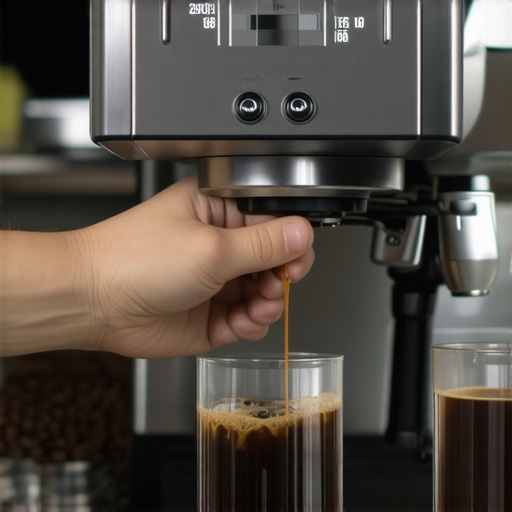
A drifting barista scale is more than a minor annoyance; it is a fundamental failure in the precision chain required for specialty extraction. When you are chasing a 1:2 ratio within a 30-second window, a 0.5-gram fluctuation represents a massive variance in TDS (Total Dissolved Solids) and extraction yield. Most home users assume the battery is dying. In my 15 years of servicing high-end kitchen equipment and high-volume cafes, I have found that the hardware is rarely the primary culprit. Instead, the environment is the enemy. Precision metrology in a high-heat, high-humidity kitchen environment is a constant battle against physics.
The Reason Your Barista Scale is Showing Weight Fluctuations
The core of every digital scale is the load cell, a piece of aluminum or steel designed to bend under pressure. This metal contains a strain gauge—an electrical circuit that changes resistance as the metal deforms. If your numbers are jumping while the scale is idle, you are likely experiencing electromagnetic interference (EMI) or thermal drift. Most people place their scales directly on the drip tray of their espresso machines. This is a technical mistake. The heat from the boiler radiates through the chassis, warming the load cell. As the metal expands, the resistance in the strain gauge shifts. The result? A weight reading that climbs or drops without a single gram being added.
The Impact of Atmospheric Pressure and Airflow
Load cells are incredibly sensitive. Even the downward force of an air conditioning vent or a nearby window draft can register as weight. If you see the decimal points flickering, check your surroundings. In professional settings, we often see drift caused by the sheer vibration of a rotary pump or even the proximity of a heavy-duty dedicated coffee scale to induction cooktops. Induction hubs generate magnetic fields that can wreak havoc on unshielded consumer electronics. If your luxury kitchen features high-powered appliances, the invisible electrical noise is likely messing with your sensors.
Hysteresis and Load Cell Creep
Technical performance declines over time due to a phenomenon called hysteresis. This occurs when the load cell fails to return to its exact original shape after a weight is removed. If you leave a heavy portafilter sitting on your scale for twenty minutes, you are inducing ‘creep.’ The metal stays slightly deformed, and the sensor begins to lose its zero-point accuracy. This is why professional workflows demand immediate removal of weight after the measurement is taken. For those using precision grinders for pour over, static electricity is another silent killer. Dry coffee chaff can build up a charge that exerts a small but measurable pull on the weighing platform.
The Reality of Steam and Humidity Ingress
Steam is the natural enemy of precision electronics. Most barista scales claim to be water-resistant, but few are truly steam-proof. Vapor molecules are smaller than water droplets and can penetrate even the tightest gaskets. Once moisture settles on the internal PCB (Printed Circuit Board), it creates micro-shorts that manifest as erratic weight fluctuations. I’ve seen hundreds of expensive scales ruined because they were kept too close to a clogged steam tip that was purging excess moisture. The smell of ozone or the faint scent of scorched electronics usually follows, marking the end of the scale’s life.
Strategic Metrology in the Modern Kitchen
The industry is moving toward fully integrated scales built into the espresso machine’s drip tray, but even these are not immune to the laws of thermodynamics. In the next 18 months, I expect to see more scales utilizing capacitive sensing rather than traditional strain gauges to mitigate the effects of humidity. However, for the current 2025 market, the best defense remains physical isolation. Use a silicone heat mat. Ensure your scale is leveled using a spirit level, as an uneven base forces the load cell to resolve vectors at an angle, leading to inconsistent readings. This isn’t just about coffee; it’s the same logic used in high-end lab settings. According to standards set by the National Institute of Standards and Technology (NIST) and the International Organization of Legal Metrology (OIML), environmental stability is the first requirement for any Class II or III weighing device.
The Executive Verdict
If your scale is drifting, stop looking for a ‘reset’ button and start looking at your bench setup. Move the scale away from the steam wand, check for drafts, and never store it with weight on the platform. If you are serious about consistency, invest in a 100g or 500g calibration weight and use it weekly. My recommendation: if your scale fluctuates by more than 0.2g regularly despite these fixes, the load cell has likely suffered permanent deformation or moisture ingress. At that point, it’s a ‘sell’—replace the unit and correct your placement strategy.
Frequently Asked Questions
Why does my scale jump when I turn on my espresso machine? This is usually caused by EMI (Electromagnetic Interference) from the machine’s pump or heating element. Try moving the scale 6 inches away to see if the reading stabilizes.
Can I use a phone charger to power my scale? Only if the voltage matches exactly. Using a high-wattage fast charger on a scale designed for low-current input can damage the internal voltage regulator, leading to erratic sensor data.
Does a silicone mat actually help? Yes. It acts as a thermal break, slowing the transfer of heat from the coffee cup or machine chassis to the sensitive load cell inside the scale.