
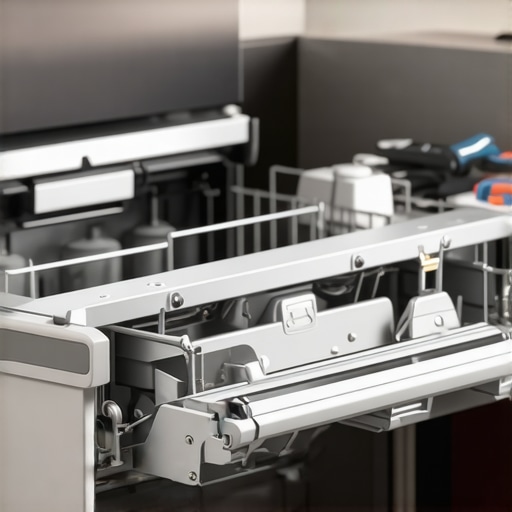
How to Adjust the Door Tension on an Integrated Dishwasher
Integrated dishwashers are the ghosts of the luxury kitchen. They disappear behind custom cabinetry, leaving only the sleek lines of a seamless design. But that invisibility relies on a precise mechanical balance. Most homeowners invest heavily in premium cookware and top-tier espresso machines, yet they overlook the physics of the dishwasher door. If that door falls too fast, it risks cracking the toe kick or damaging the custom panel. If it springs back too aggressively, it strains the hinges. The result? Avoidable failure. After fifteen years of diagnosing high-end kitchen failures, I can tell you that the tensioning system is the most neglected component of the modern appliance suite.
The Engineering Reality of Counterbalance
An integrated dishwasher door operates on a system of springs and nylon pulleys designed to offset the weight of your cabinetry. Unlike a standard stainless steel model, an integrated unit is an incomplete machine until the wood panel is mounted. A heavy oak panel requires significantly more torque from the springs than a light MDF facade. Most manufacturers, such as those verified by the Association of Home Appliance Manufacturers, ship these units with a medium tension setting. This rarely suffices. You are dealing with a kinetic equilibrium problem. When the door is at a 45-degree angle, it should stay put. If it moves, the tension is wrong. This is the same level of precision you expect when calibrating your high-end espresso machines or timing the convection in professional-grade air fryers.
Adjusting this requires access to the base of the machine. You will typically find adjustment screws located at the bottom front corners, behind the kickplate. Turning these screws clockwise increases the spring pull. Counter-clockwise releases it. It sounds simple. It is not. You must adjust both sides equally. An imbalanced door will eventually warp the frame. I have seen thousand-dollar custom panels ruined because one side was tighter than the other, causing a subtle twist every time the door opened. For those dealing with structural alignment, understanding the secret to perfectly level cabinets on an uneven floor is often the first step in ensuring the dishwasher frame sits square enough for the door to function.
The Weight of Custom Cladding
The messy reality of kitchen design is that aesthetic choices often conflict with mechanical limits. When architects specify heavy 3/4-inch stone veneers or solid walnut for the dishwasher front, they often exceed the spring capacity of standard luxury units. I once worked on a project where the client insisted on a marble-clad dishwasher door to match the island. The weight was nearly forty pounds. The stock springs couldn’t hold it. We had to source heavy-duty industrial tension kits. If you ignore the weight-to-tension ratio, the nylon cords inside the mechanism will eventually snap. It is a loud, violent sound—a metallic snap followed by the door crashing to the floor. This risk is why choosing the best material for a durable kitchen workspace includes considering the mechanical strain on your appliances.
Strategic Foresight for the Modern Kitchen
The luxury kitchen industry is moving toward even heavier integrated panels and handle-less designs with ‘push-to-open’ technology. This shifts the burden onto the motor and the tension system. Over the next 24 months, I expect more manufacturers to move toward electronic tensioning. Until then, manual calibration remains the gold standard. When you are planning your layout, avoid the most common mistake when installing shaker cabinets, which is failing to account for the clearance required for a fully tensioned dishwasher door to swing freely. According to the National Kitchen & Bath Association, proper appliance clearance is a primary factor in long-term kitchen durability.
The Executive Verdict
If your dishwasher door does not stay at the angle you leave it, fix it today. Do not wait for the hinges to scream or the panel to sag. This is a technical maintenance task that protects a five-figure investment. If you have the right tools and a steady hand, you can handle this in twenty minutes. If you value your time and the integrity of your cabinetry, call a professional who understands the specific torque requirements of your brand. Treat your dishwasher with the same technical respect you give your stand mixers and premium cookware.
FAQ
Q: Why does my dishwasher door feel heavier than it used to?
A: The springs or the nylon pulleys are likely wearing out. If the tension screw doesn’t fix it, the internal cord may be frayed and about to snap.
Q: Can I adjust the tension without removing the dishwasher?
A: Yes, most modern luxury units allow access through the bottom kickplate without pulling the entire carcass out of the cabinetry.
Q: Does the size of the handle affect the door tension?
A: Absolutely. An oversized, heavy brass handle adds significant weight to the top of the door, increasing the leverage and requiring more spring tension to compensate.