
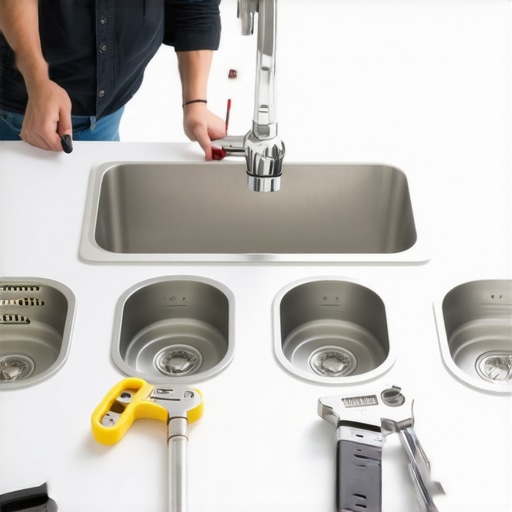
How to Choose the Right Size Undermount Sink for Your Prep Needs
Most luxury kitchen builds fail at the prep station. Homeowners focus on the six-burner range or the integrated refrigeration, yet they treat the prep sink as a decorative afterthought. This is a strategic error. After 15 years designing high-performance culinary spaces, I can tell you that an improperly sized prep sink creates a permanent bottleneck. If the basin is too small, you splash water across your custom walnut island. If it is too large, you sacrifice valuable counter space required for premium cookware organization. The physics of water flow and the ergonomics of vegetable prep demand a specific, technical approach to selection.
The Engineering of Basin Dimensions
The standard prep sink often measures 12 to 15 inches. For a serious cook, this is insufficient. A 12-inch basin cannot accommodate a colander and a large bunch of kale simultaneously. The technical sweet spot for a functional prep station is 15 to 18 inches in width. This allows for what I call the “Rotation Radius”—the ability to manipulate ingredients under a stream of water without hitting the sidewalls. Depth is equally vital. A 7-inch depth is the industry minimum, but for a dedicated prep sink, 9 inches is the gold standard. This depth manages the splatter of high-pressure faucets while providing enough clearance for deep stock pots. According to the National Kitchen & Bath Association (NKBA) guidelines, clearance around the sink is as important as the sink itself to maintain the work triangle’s efficiency.
Gauge and Material Density Realities
Weight defines quality. In the world of stainless steel undermount sinks, 16-gauge 304 stainless steel is the only acceptable specification for a luxury environment. 18-gauge is thinner, louder, and prone to vibration. When you drop a heavy knife or a cast iron pan into the basin, the sound should be a dull thud, not a metallic ring. High-density sound-dampening pads and a thick undercoating are non-negotiable. If you prefer fireclay or granite composites, density remains the primary metric. These materials offer superior thermal retention, keeping your ice baths colder for longer during vegetable blanching. However, they require reinforced cabinetry. The weight of a 20-pound fireclay basin plus 10 gallons of water exerts significant stress on the undermount clips and the stone adhesive.
The Offset Drain Advantage
Standard center-drain sinks are a design relic. A high-performance prep sink should utilize an offset drain, typically positioned in the back corner. Why? It maximizes the usable flat surface area of the basin floor. You can set a large bowl down without plugging the drain. Below the counter, the plumbing is tucked to the side, reclaiming the cabinet’s “dead space” for trash pull-outs or reverse osmosis systems. The International Association of Plumbing and Mechanical Officials (IAPMO) notes that drain placement significantly affects the drainage velocity, particularly when high-capacity garbage disposals are integrated into the system.
The Hidden Risk of Splatter Physics
The relationship between faucet height and basin depth is where most designs collapse. A high-arc professional faucet paired with a shallow sink results in a 360-degree spray zone. I have seen million-dollar islands ruined by water infiltrating the seams of stone countertops. To avoid this, seek deep basin workstation sinks that incorporate an internal ledge. This ledge allows you to drop in cutting boards and drying racks, effectively containing the mess within the sink’s perimeter. The result? A dry, functional workspace that survives the chaos of a three-course dinner party.
Strategic Foresight for the 2025 Market
The market is shifting toward “The Galley” style modularity. Sinks are no longer just basins; they are becoming integrated appliances. Within the next 18 months, I anticipate a regulatory push for more efficient drainage and integrated filtration as standard requirements. The second-order effect of this is the death of the “bar sink” in favor of the “workstation prep sink.” If you are planning a renovation, do not buy a sink that only holds water. Buy a sink that manages your workflow. Investing in 16-gauge steel with a PVD coating today will prevent the surface scratches that plague lower-end models by year three.
The Executive Verdict
If your island is over 8 feet long, a 15-inch minimum prep sink is mandatory. If you are working with a smaller footprint, prioritize depth over width to maintain functionality. Avoid 18-gauge stainless at all costs; it is the hallmark of a budget-cut project. Choose a rear-offset drain to preserve your under-cabinet storage. My recommendation: specify a 17-inch by 19-inch undermount workstation sink with a 10-inch depth. This configuration balances ergonomic comfort with professional-grade capacity. It is the strategy that separates a showroom kitchen from a working culinary laboratory.
Frequently Asked Questions
Q: Is a round prep sink better than a square one?
A: No. Square or rectangular sinks with tight-radius corners offer more usable volume. Round sinks look good but are inefficient for rectangular cutting boards and colanders.
Q: Do I need a garbage disposal in my prep sink?
A: Yes. Prep is where 80% of food waste is generated. Without a disposal, you are constantly carrying wet scraps across the floor to the main sink, increasing the risk of slips and floor damage.
Q: Can I install an undermount sink in a laminate countertop?
A: It is technically possible with specific mounting rings, but I advise against it. Water will eventually find the particle board core. Undermounting is best reserved for solid surfaces like granite, quartz, or marble.
Q: How do I prevent my prep sink from scratching?
A: Use a bottom grid. It keeps heavy pots off the stainless surface and allows water to flow freely under debris. It is the cheapest insurance for your sink’s finish.