
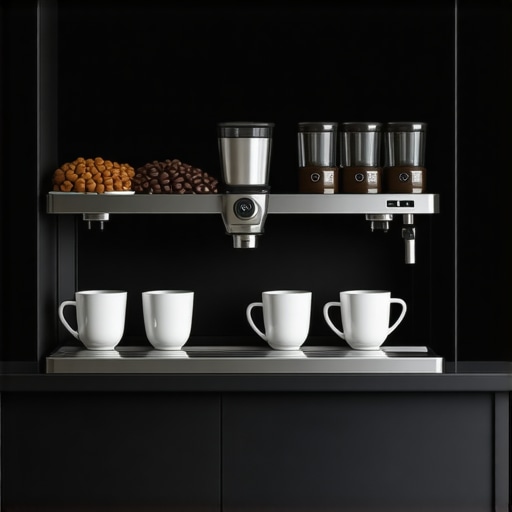
The Benefits of a Built-In Bean-to-Cup Coffee Station
A high-end kitchen is more than a collection of appliances; it is a machine for living. After fifteen years in the luxury kitchen design and installation sector, I have watched the evolution of home brewing from clunky countertop units to sophisticated, architectural integrations. The shift toward a built-in bean-to-cup coffee station represents a fundamental change in how we perceive domestic automation. It is not merely a convenience. It is a commitment to precision extraction and thermal stability, integrated directly into the home’s infrastructure. When you move beyond the limitations of standalone espresso machines, you enter a space where the technical specs of the brew group and the metallurgy of the burrs are as central as the cabinetry itself. The stake is simple: a poorly integrated system becomes an expensive, unserviceable relic within five years. A properly engineered station, however, anchors the kitchen’s utility and significantly impacts property desirability.
Engineering Precision and Thermal Management
The internal mechanics of a built-in station often surpass the capabilities of consumer-grade countertop units. Most homeowners fail to realize that the enemy of great coffee is heat fluctuation. In a built-in environment, thermal mass is your ally. High-end units utilize heavy-duty brass or stainless steel boilers with PID (Proportional-Integral-Derivative) controllers to maintain water temperature within a fraction of a degree. This isn’t just jargon. It’s the difference between a burnt, bitter shot and a syrupy, balanced extraction. The grind itself is another technical hurdle. While many stand mixers focus on planetary gear ratios, coffee grinders in these stations focus on RPM and heat dissipation. Ceramic burrs are often preferred for their lack of heat transfer to the beans during the grinding process. To get the most out of these units, you must stop buying pre-ground coffee and let the machine’s internal mill do the work. The tactile response of the touch interface and the smooth glide of the telescoping rails that allow for refilling are sensory indicators of the engineering under the hood.
The Plumbing Reality and Maintenance Risk
Luxury is often invisible. One of the primary advantages of these systems is the ability to plumb them directly into the water line. This eliminates the tedious task of refilling reservoirs, but it introduces a specific operational risk: mineral scaling. I have seen countless ten-thousand-dollar systems ruined because the owner ignored water filtration. You must understand how water hardness quietly destroys your espresso flavor and the internal copper piping of your machine. The Specialty Coffee Association (SCA) sets rigorous standards for water quality, and your home system should be no different. The maintenance burden is the messy reality. These machines have complex internal solenoids and brew groups that require regular degreasing. Neglect this, and you’ll smell the rancid coffee oils before you taste them. It is a technical truth that the more automated a machine is, the more points of failure it possesses. The internal milk circuits, if not purged with steam immediately after use, become breeding grounds for bacteria. The result? Total system failure.
Market Strategy and Long Term ROI
From a strategic consultant perspective, a built-in coffee station is a high-yield investment for modern luxury homes. The National Kitchen & Bath Association (NKBA) consistently reports that integrated beverage centers are a top-tier request among affluent buyers. These systems reclaim valuable counter space, allowing for a cleaner aesthetic that highlights premium cookware and minimalist surfaces. We are seeing a trend where homeowners are opting for a multi-boiler machine approach, even in built-in formats, to allow for simultaneous brewing and steaming. This reflects the move toward the kitchen as a site of professional-grade performance. Over the next 24 months, expect to see even more integration with home automation systems, allowing for remote pre-heating and personalized brew profiles via localized networks. This isn’t a gimmick; it’s the future of residential ergonomics.
The Executive Verdict
If you are designing a kitchen with a budget exceeding six figures, a built-in bean-to-cup station is a “Buy.” However, it must be a plumbed-in unit with an integrated filtration system. The standalone water tank models are a half-measure that lacks the true benefits of architectural integration. If you are not prepared for the monthly descaling and cleaning cycles, stick to a high-end countertop unit. For the serious homeowner, the built-in station is the definitive choice for both daily utility and long-term asset appreciation. Start by verifying your water hardness and ensuring your cabinet depth allows for proper ventilation of the internal heat exchangers. Don’t compromise on the grind quality—the burr set is the heart of the machine. Build it right, or don’t build it at all.
Frequently Asked Questions
Does a built-in coffee machine add value to my home? Yes, it is considered a high-end feature that significantly appeals to buyers looking for a lifestyle-ready kitchen, often returning its cost in home equity. How long do these machines typically last? With professional maintenance and proper water filtration, a high-end built-in unit can last 10 to 15 years. Can I install one myself? It is not recommended. These units require precise cabinet cutouts, electrical dedicated circuits, and often specialized plumbing work. Is the coffee quality as good as a commercial cafe? If the machine is calibrated correctly and high-quality beans are used, the results are indistinguishable from professional extractions.