The Best Way to Store Your Premium Cookware to Avoid Scratches
Buying high-performance kitchen assets represents a significant capital expenditure. Stacking a $500 copper-core sauté pan directly on top of a cast iron skillet is not just poor organization; it is a direct assault on the metallurgical integrity of your tools. After two decades of outfitting the most demanding culinary spaces, I have seen ‘luxury’ vanish under a web of micro-scratches. These abrasions do more than dull the shine. They compromise the non-reactive properties of the surface, leading to uneven heat distribution and sticking. Your goal is simple: zero metal-on-metal contact. The cost of failure is the eventual replacement of pieces that should have lasted a lifetime.
Mechanical Friction and Surface Tension
When two metallic surfaces slide against each other, the harder material wins. In a luxury kitchen, your collection likely includes varying grades of stainless steel, copper, and perhaps enameled cast iron. Even the smallest vibration—like a heavy-duty drawer closing—creates friction. This is why the truth about 5-ply stainless steel longevity and performance depends heavily on how the items sit when not in use. You must treat the finish with the same respect you show the internal heating elements of high-end espresso machines. Friction generates heat and wear at a microscopic level, slowly eroding the polished finish that prevents food from bonding to the metal.
The Engineering Reality of Vertical Storage
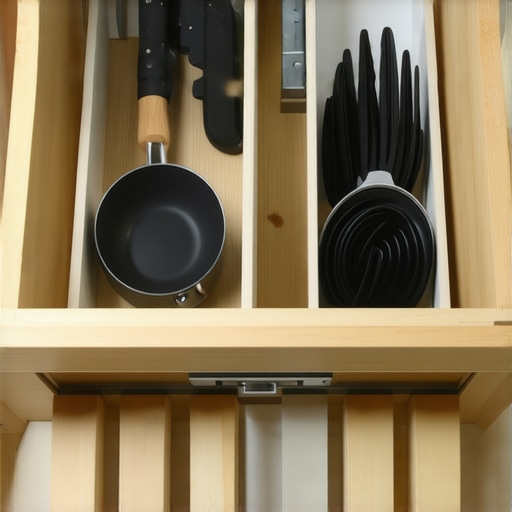
Verticality is the gold standard for preservation. Traditional stacking relies on the weight of the top pan to keep the bottom pan in place. This creates a pressure point. If you must stack, use heavy-duty felt liners or silicone dividers. Not paper towels. Paper towels retain moisture, which can lead to oxidation or pitting in carbon steel. According to the ASTM International standards for metal surface finishes, maintaining a low Ra (Roughness Average) is essential for hygiene and performance. Proper storage keeps that Ra value where it belongs. I recommend dedicated pull-out organizers with adjustable steel dividers coated in high-heat polymer. These systems isolate each piece, ensuring that the thermal mass of your heavy pans never works against their neighbors.
Operational Risks in Shared Kitchens
The smell of fresh adhesive on a new drawer liner is a signal of protection. However, the system only works if it is followed. In my experience, the biggest risk to premium cookware is a lack of defined zones. When air fryers and stand mixers compete for the same cabinet space as your pans, chaos ensues. I once saw a client’s bespoke copper set destroyed because a housekeeper tried to slide a heavy blender base over the lids. The result? Deep gouges that required professional resurfacing. Every item must have a specific, non-negotiable footprint. This is the same principle used by the Culinary Institute of America to maintain their industrial assets. If you cannot see the surface of each pan, you are storing them incorrectly.
Market Corrections and Future Proofing
We are seeing a shift toward integrated kitchen architecture where storage is baked into the cabinetry. Over the next 18 months, expect to see more magnetic suspension systems for lids and nested drawer inserts that utilize soft-close technology to eliminate inertial sliding. If you are renovating, prioritize deep drawers with peg-board bottoms. This allows for total customization. Avoid the cheap wire racks found in big-box stores. They are often made of harder steel than your cookware and will bite into your pans the moment they are loaded. Just as you wouldn’t use low-quality non-stick, don’t use low-quality storage. Invest in custom-fitted felt inserts or cork-lined dividers. Cork is naturally antimicrobial and provides a soft, grippy surface that prevents the ‘clank’ of metal hitting metal.
Executive Verdict
Protecting your investment requires a proactive stance. If you are currently stacking your pans, stop. If you lack the space for vertical dividers, buy a set of high-quality pan protectors immediately. My recommendation is a hybrid approach: hang what can be displayed on a heavy-duty brass or steel rack and use dedicated, lined drawers for the rest. Ensure that lids are stored separately on a dedicated rack to prevent the rims from chipping. This is not about being precious; it is about maintaining a professional-grade environment. Your cookware is the engine of your kitchen. Treat it with the same engineering rigor you would a high-end vehicle.
Frequently Asked Questions
Are silicone liners better than felt?
Silicone offers better grip and is waterproof, making it ideal for high-humidity environments. Felt is softer and better for highly polished copper surfaces where you want zero risk of ‘ghosting’ from the liner material.
How should I store heavy cast iron with stainless steel?
Never stack cast iron on top of stainless steel. The weight and texture of cast iron will act like sandpaper. Use a reinforced vertical rack that can handle the weight of the iron without bowing.
What is the best way to store lids?
Store lids in a separate slotted drawer or a magnetic wall rack. This prevents the glass or metal edges from clashing with the cooking surfaces of your pans, which is a common cause of chipping and scratching.