
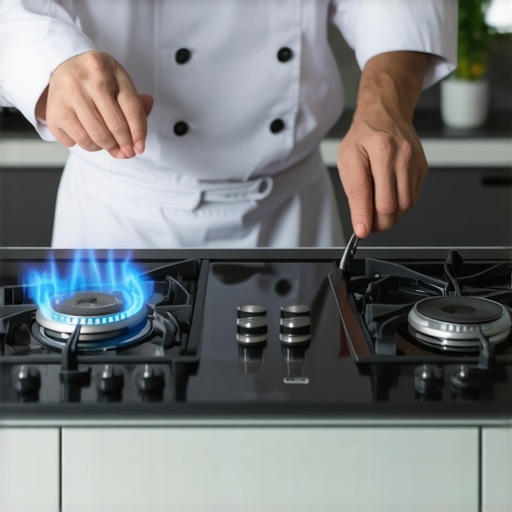
Why Professional Chefs Prefer Gas Cooktops Over Electric Models
Control is the only currency that matters in a high-stakes kitchen. After fifteen years designing and installing luxury kitchen systems, I have seen every trend cycle through. I have watched homeowners fall for the aesthetic of sleek, black glass radiant tops only to realize three months later they cannot execute a basic pan sauce. The reality? Professional chefs stick to gas because it is a physical, mechanical interaction with energy. An electric coil or a radiant element is a suggestion of heat; a blue flame is a command. When you turn the dial on a professional range, the thermal response is instantaneous. No lag. No residual heat bleeding into the next phase of the cook. This is not about nostalgia. It is about the physics of BTUs and the necessity of visual feedback.
The Thermal Response Gap
Electric cooktops operate on a duty cycle. They pulse. They cycle on and off to maintain a temperature that is merely an average of those pulses. For a chef, that is unacceptable. If you are working with heavy carbon steel skillets, you need a constant stream of energy to overcome the metal’s inertia. Gas provides a continuous flow. The air-to-fuel ratio in the venturi tube creates a flame that licks the sides of the pan, transferring heat not just to the base, but around the edges. This creates a three-dimensional heating environment. The result? Even sear. No cold spots. In contrast, electric elements rely on perfect contact. If your pan has even a microscopic warp, the efficiency drops. You lose the battle before the oil even shimmers.
Technical specifications tell the real story. A standard residential electric burner might output 1,500 to 3,000 watts, but a high-end gas burner pushes 18,000 to 25,000 BTUs. According to standards set by the American Society of Heating, Refrigerating and Air-Conditioning Engineers (ASHRAE), the management of this heat requires specific ventilation overhead because of the combustion byproducts. This is a trade-off pros make willingly. They want the raw power. They need the ability to charred peppers directly on the grate—a move impossible on a flat glass surface.
The Mechanical Reality of Wear and Failure
Glass cooktops are fragile. In a high-volume environment, the weight of a 12-quart stockpot being slid across the surface is a liability. Scratching is the least of your worries; thermal shock can shatter the entire surface. I’ve replaced dozens of glass tops because a heavy lid was dropped at the wrong angle. Gas ranges are built from cast iron and stainless steel. They are industrial machines. You can beat them up. You can scrub them with abrasive pads. You can spill a liter of stock and keep cooking. The maintenance is purely mechanical. You clear the burner ports with a pin, you degrease the grates, and you move on. Understanding the only way to clean burnt oil off the outside of your skillet is part of the job, and gas makes that maintenance predictable.
Implementation risks are real. The most common failure in a gas setup is the igniter. That rhythmic clicking you hear? It is a tiny ceramic component subjected to thousands of heat cycles. When it fails, you are stuck using a manual lighter. Yet, a manual lighter still gets the job done. If the control board on an electric induction or radiant cooktop fries, the entire appliance is a dead weight until a technician arrives with a proprietary part. In a professional setting, downtime is death. Gas is resilient. It works during power outages. It works when the sensors are covered in flour and grease.
The Hidden Cost of Precision
Many homeowners overlook the infrastructure requirements. Installing a professional gas range often necessitates a 1-inch gas line rather than the standard 1/2-inch to ensure pressure doesn’t drop when four burners and the oven are running simultaneously. Then there is the vent hood. You cannot run 60,000 total BTUs without a makeup air system to replace the oxygen being sucked out of the room. This is where the hidden cost of installing a pot filler behind your high-end stove often surfaces—it is an investment in a system, not just an appliance. Following NFPA 96 fire safety standards is non-negotiable here. The heat output is so intense that the surrounding cabinetry must be shielded or built from non-combustible materials. The weight of the equipment alone often requires floor joist reinforcement. Chefs accept these costs because they understand the thermal mass secret: you need energy to make energy.
Market Corrections and Future Outlook
The industry is at a crossroads. Municipalities in certain regions are pushing for full electrification, banning new gas hookups in residential builds. This is creating a secondary market for high-output induction, but it hasn’t won over the purists yet. Over the next 24 months, we will see a surge in dual-fuel configurations: gas burners for the stovetop and electric convection for the oven. This is the ultimate hedge. It provides the erratic, aggressive heat needed for searing and the stable, dry heat required for baking. For the local market, property values are already reflecting this. A kitchen without a gas line is increasingly viewed as a ‘lite’ kitchen, unsuitable for serious culinary work.
The Executive Verdict
If you prioritize ease of cleaning and a minimalist aesthetic, choose electric. If you prioritize the ability to cook, gas is the only option. My recommendation? Buy the highest BTU output your ventilation system can handle. Ensure your pans are compatible with open flames. Avoid thin-gauge aluminum which will warp under the intense concentrated heat of a professional burner. Gas is a tool; electric is an appliance. Choose the tool.
How do gas cooktops compare to induction for professional use? While induction is faster, it lacks the ability to heat the sides of the pan and requires specific magnetic cookware, making it less versatile for varied professional techniques. Why do chefs prefer gas if electric is more energy-efficient? Efficiency is not the goal in a professional kitchen; output and control are. The wasted heat of a gas flame provides ambient warmth and the ability to work with rounded pans like woks. Is gas more dangerous than electric? With modern flame-failure devices that shut off gas if the flame goes out, the risks are significantly mitigated, making it as safe as electric for an attentive cook.