
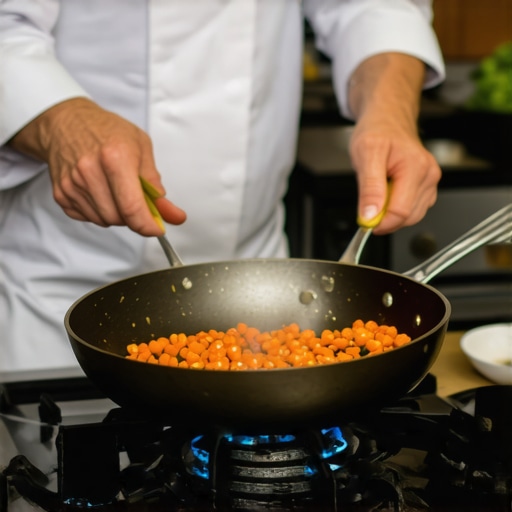
Why Pro Chefs Still Use Heavy Carbon Steel Skillets
Professional kitchens are brutal environments where efficiency and durability dictate the equipment list. After managing high-end kitchen outfitting for 15 years, I have seen every trend pass through the line. Many home cooks assume that premium cookware means expensive copper or heavy cast iron. They are wrong. The heavy carbon steel skillet remains the undisputed workhorse for anyone who understands the physics of heat. It is a thermal engine. If you miss the mark on your pan choice, you are wasting energy and ruining proteins. The mistake is costly. It costs you the Maillard reaction. It costs you consistency.
The Thermal Engine Argument
Carbon steel occupies the technical sweet spot between cast iron and stainless steel. It possesses a high carbon content, typically around 1% to 2%, which allows it to take a seasoning much like cast iron. However, the molecular density is different. It is forged, not cast. This means the pan is less brittle and can be shaped into thinner, more responsive profiles. Pro chefs opt for the heavy-gauge variants, usually 3mm or thicker. Why? Heat retention. A thin pan loses its temperature the moment a cold steak hits the surface. A 3mm carbon steel plate has the thermal mass to maintain a sear without the sluggishness of a cast iron beast. When you compare this to 5-ply premium cookware, you see the difference in specialized application. Stainless is for acids; steel is for fire.
The Engineering of the Sear
The secret lies in the patina. As you use the pan, oils polymerize on the surface, creating a natural non-stick layer. Unlike teflon, this surface thrives under high heat. You can push these pans past 600 degrees Fahrenheit without worrying about toxic fumes or coating failure. The result? Superior crust development. You hear the immediate, aggressive hiss. You smell the caramelization of the proteins. This is not just cooking; it is applied metallurgy. To verify your progress, many pros use the egg test to see if the seasoning has achieved true hydrophobicity. According to standards set by groups like NSF International, commercial equipment must withstand rigorous cleaning and heat cycles, and carbon steel excels where synthetic coatings fail.
Thermal Shock Risks
The reality is messy. I have seen line cooks ruin a $100 pan in seconds by quenching it in a prep sink while it was still glowing. The metal groans. It warps. The base becomes convex, making it useless on a flat-top range. This is the operational risk. Heavy carbon steel requires a disciplined hand. You must understand the cooling cycle. You must know that the best oil for the initial seasoning makes the difference between a lifetime tool and a rusted scrap of iron. I remember a local bistro that went through twelve pans in a month because they used flaxseed oil at too high a temperature. The seasoning flaked like dry skin. Avoidable failure.
The Shift Toward Induction Stability
The industry is moving. As the case for induction technology grows stronger in professional and luxury residential spaces, carbon steel is actually gaining ground. It is natively ferromagnetic. Unlike some high-end alloys that require a bonded base, the entire body of a carbon steel pan reacts to the magnetic field. This creates a highly efficient energy transfer. In the next 24 months, I expect more local health regulations to push for induction to reduce ambient kitchen heat, making carbon steel the primary choice for searing stations. ASM International reports show that 1020 carbon steel has a thermal conductivity rate that beats out most multi-clad stainless options in direct heat applications.
The Executive Verdict
If you are building a serious kitchen, skip the 12-piece sets. Buy one heavy-duty 3mm carbon steel skillet for your proteins. Reserve your stainless for deglazing and acidic sauces. If you find yourself in a high-volume environment, the durability of steel is an ROI play. It lasts decades. Treat it with high-smoke-point fats. Never let it sit in water. The reward is a pan that gets better as you get older. High-end air fryers and espresso machines have their place, but the skillet is where the soul of the meal is forged. If you want professional results, use the professional tool.
FAQ
Is carbon steel better than cast iron?
It depends on the goal. For responsiveness and weight management, yes. For slow baking or campfire use, cast iron wins. Carbon steel is the precision instrument.
Will it work on my glass stove?
Yes, provided the pan has a flat base. Be careful not to slide it, as the raw metal can scratch glass if debris is trapped underneath.
Why is my pan turning black?
That is the goal. A black pan is a seasoned pan. It signifies that the carbonized oils have formed a protective, non-stick barrier.
Can I cook tomatoes in carbon steel?
Avoid it. High acidity will strip the seasoning and give your food a metallic taste. Use stainless steel for tomato-based sauces.