
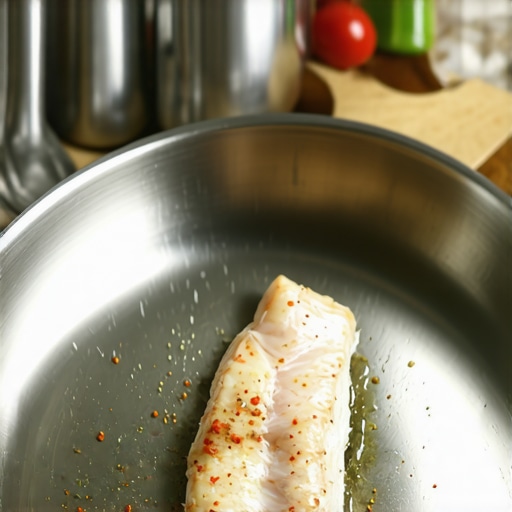
The Reason Your Pan-Fried Fish Always Sticks to Stainless Steel
You believe your pan is defective. It is not. After fifteen years of diagnosing kitchen failures and testing the engineering limits of luxury kitchen gear, I can confirm the issue is a thermodynamic mismatch. Stainless steel pans are not the smooth, impenetrable surfaces they appear to be to the naked eye. At a microscopic level, the surface is a series of jagged peaks and valleys. When these pores are cold, they act like tiny mechanical clamps on the delicate proteins of a piece of sea bass or snapper. The bond is instantaneous. The result? Avoidable failure and a ruined dinner. Understanding the physics of 304-grade steel is the only path to a perfect sear.
The mechanics of the kitchen demand respect for the Leidenfrost effect. This phenomenon occurs when a liquid comes into contact with a surface significantly hotter than its boiling point. When you preheat 3-ply and 5-ply premium cookware, the metal expands, effectively smoothing out those microscopic jagged pores. A gas cushion of steam forms beneath the fish, lifting it off the metal. If the pan temperature is insufficient, that steam never forms. Instead, the raw protein seeps into the metal grain and fuses. This is why professional chefs insist on high-grade alloys that meet ASTM International quality standards for thermal consistency. A cheap, thin pan develops cold spots that invite sticking, whereas a high-mass base maintains the energy required for the kinetic release.
The Physics of Pore Expansion
Heat acts as a structural modifier for steel. As energy enters the pan, the lattice structure of the chromium-nickel alloy expands. This expansion is what creates the ‘non-stick’ environment everyone seeks but few achieve. You must achieve a specific thermal threshold before the oil even touches the surface. If you see rainbow stains on your metal later, it often indicates you have pushed the temperature into the range of oxidation, yet sticking still happens if the timing is off. The thermal mass of the fish itself is a variable. A cold fillet dropped into a marginal pan will instantly drop the surface temperature below the required threshold, causing the metal pores to snap shut on the flesh. It is a mechanical trap built by physics.
The moisture barrier is the second point of failure. Many home cooks fail to dry the skin of the fish. Water is the enemy of the sear. If there is surface moisture, the energy of the pan is wasted on evaporating that water rather than browning the protein. This delay allows the temperature to dip, the pores to contract, and the adhesion to begin. I have stood in commercial kitchens where a line cook was fired for not patting down a scallop. The weight of the industrial grade steel counts for nothing if the surface chemistry is sabotaged by a few drops of water. You need a dry surface, a hot pan, and the right fat. Fats with high smoke points are necessary because the temperatures required for a clean release often exceed the breakdown point of butter or unrefined oils.
The Risk of Impatience
The sensory anchors of a perfect sear are unmistakable. There is the specific high-pitched hiss as the fish hits the oil. There is the smell of caramelizing amino acids, not burning carbon. If you try to flip the fish and it resists, leave it alone. The fish will tell you when it is ready to move. This is called ‘autonomous release.’ As the Maillard reaction completes, the protein structure hardens and physically detaches from the pan. Forcing it with a spatula is a rookie move that leads to shredded fillets and a charred pan. I once watched a client try to ‘save’ a piece of salmon by scraping it with a metal spoon, ruining a five-hundred-dollar pan’s finish and the meal simultaneously. Total lack of technical discipline.
The Industry Shift Toward Steel
We are seeing a massive market correction away from PFAS and other non-stick coatings. Regulatory bodies like the FDA are under increasing pressure to monitor forever chemicals. High-end homeowners are pivoting back to heirloom-quality stainless steel and carbon steel. They want tools that last decades, not eighteen months. However, this shift requires a re-education of the user. You cannot treat a 5-ply luxury pan like a disposable plastic-coated skillet. The learning curve is steep but the ROI is found in the flavor and the durability. In the next 24 months, I expect to see even more focus on induction-compatible high-mass cookware that offers precision temperature control to solve this sticking problem through technology rather than chemicals.
The Technical Recommendation
If you are struggling with adhesion, buy a high-mass 5-ply pan and learn the water droplet test. This is a hard ‘buy’ for anyone serious about their kitchen. Avoid thin, single-ply pans that offer no thermal storage. Before cooking, use the egg test or the water drop method to ensure you have reached the Leidenfrost point. If the water sizzles and evaporates, it is too cold. If it beads up and dances like mercury, you are ready. Pat the fish bone-dry. Use a high-smoke-point oil. Place the fish away from you to avoid splatter. Then, wait. Do not touch it until the edges show a distinct golden rim. That is the physics of the kitchen working for you, not against you.
Frequently Asked Questions
Why does my oil smoke before I even add the fish?
Your pan is too hot or you are using an oil with a low smoke point. Stainless steel holds heat much better than aluminum. You must find the sweet spot where the water beads dance but the oil stays stable. Switch to avocado oil or refined grapeseed oil for better results.
Can I fix a pan that has fish stuck to it?
Do not scrub it while it is hot. Deglaze the pan with a little wine or water while it is still on the heat. The steam will help lift the stuck proteins. For the stubborn bits, a soak with baking soda is better than using a metal scouring pad which can mar the finish of high-end steel.
Is 5-ply actually better than 3-ply for fish?
Yes. The extra layers of aluminum or copper core provide a more even heat distribution and better thermal retention. This prevents the pan temperature from crashing when you add a cold piece of fish, which is the primary cause of sticking in the first place.
Should I salt the fish before it hits the pan?
Only immediately before. Salting too early draws moisture to the surface via osmosis. This moisture creates steam that prevents a crust from forming and increases the likelihood of the fish fusing to the metal grain.