
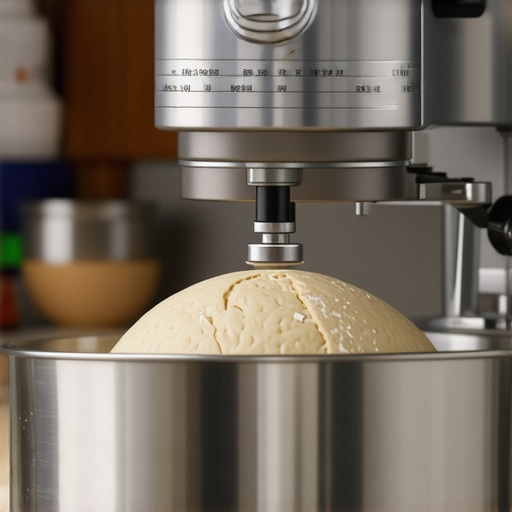
Why Some Stand Mixers Overheat When Making Bread
Smelling burning electrical insulation at seven in the morning while preping a sourdough batch is a five-hundred-dollar mistake. After fifteen years of diagnosing gear failures and motor burnouts in luxury kitchens, I can tell you that most consumer appliances are built for cookies, not crust. Bread dough is a non-Newtonian fluid. It resists. It fights back. When your mixer struggles, it is not just working hard; it is undergoing a thermal death march because of poor torque management and inadequate cooling. The result? Avoidable failure.
The Engineering Reality of Torque and Resistance
Torque is the only metric that matters for bread. Most people look at the wattage on the box, but wattage is often just a measure of how much electricity the motor consumes, not how much force it delivers to the dough hook. High-hydration doughs create immense drag. In a standard AC motor, this resistance causes the motor to slow down, which increases the current draw. This excess current generates heat within the copper windings. Without a high-efficiency AC vs DC motor comparison to guide your purchase, you likely have a machine that lacks the low-end grunt needed to keep the hook moving without melting the internals. Low-quality manufacturers use thin-gauge wire in these windings. They save pennies; you lose a motor. The heat builds until the thermal overload switch trips, or worse, the plastic housing begins to warp.
Thermal Dissipation and Transmission Friction
Heat does not just come from the motor. It comes from the transmission. If your mixer uses nylon gears to save on production costs, those gears act as insulators. They trap heat. Conversely, all-metal gears dissipate heat into the head of the mixer, acting as a secondary heat sink. However, metal gears require precise lubrication. When a mixer is pushed beyond its duty cycle—the time it can safely run under load—the grease thins out. Metal-on-metal friction spikes. You will hear a rhythmic clicking or a high-pitched whine. That is the sound of your investment grinding itself into metal shavings. According to the Association of Home Appliance Manufacturers (AHAM), continuous heavy loads require specific airflow patterns that most sleek, aesthetic-focused mixers simply do not have.
The Weight of Industrial Grade Steel
I remember a client in a high-end loft who insisted on using a lightweight, tilt-head mixer for daily bagels. Within a month, the pin holding the head was sheared. The motor smelled like a burnt circuit board. The machine simply did not have the mass to stay stable. A mixer that moves across the counter is converting energy that should be kneading dough into kinetic motion. This is why professional-grade units weigh thirty pounds or more. They use the weight of the cast iron or die-cast zinc body to absorb vibration and stay put. If you find your machine migrating, you are likely overloading the motor’s capacity, leading to rapid heat accumulation. You might need one of the specific mixers that don’t strip when faced with heavy bagel or pizza dough. Stability is not just about convenience; it is a sign of mechanical integrity.
Market Corrections and the Shift to DC
The industry is moving toward brushless DC motors in the premium segment. These motors maintain constant torque regardless of speed. They run cooler. They are more efficient. Over the next twenty-four months, expect a regulatory shift as energy efficiency standards for small appliances tighten. Machines that rely on brute-force AC motors and high-speed cooling fans will become relics. For the serious baker, the second-order effect is clear: older, cheaper tech will be phased out for smarter, sensor-driven units that throttle power to prevent overheating. This is not a luxury; it is a necessary evolution for tools meant to handle high-density proteins.
The Executive Verdict
If you bake bread once a month, a standard consumer mixer is fine. If you bake twice a week, you are currently killing your appliance. Buy a machine with a DC motor and a bowl-lift design. Avoid tilt-heads for heavy doughs; the hinge is a structural weak point. If the machine feels hot to the touch, stop. Give it twenty minutes. Your bread can wait; your wallet shouldn’t have to. Check the leveling of your stand mixer to ensure internal oil stays where it belongs, lubricating the gears rather than pooling in a corner. Invest in gear once, or repair it forever.
Frequently Asked Questions
Why does my mixer smell like smoke when making pizza dough?
That is ozone and burning motor brushes. Your dough is too dry or too heavy for the motor’s current torque rating. Stop immediately and reduce the batch size.
Can I fix a mixer that has already overheated?
If the thermal fuse tripped, it might reset after cooling. If the gears stripped, they must be replaced. Refer to UL Standard 982 for safety guidelines regarding DIY motor repairs.
Is it better to use a lower speed for bread?
Yes. Most manufacturers recommend speed 2. High speed increases friction and heat exponentially without improving gluten development.
Does the bowl size affect overheating?
Indirectly. A larger bowl allows for larger batches, which people often overestimate. Stay within the recommended flour weight limits provided by the manufacturer.