
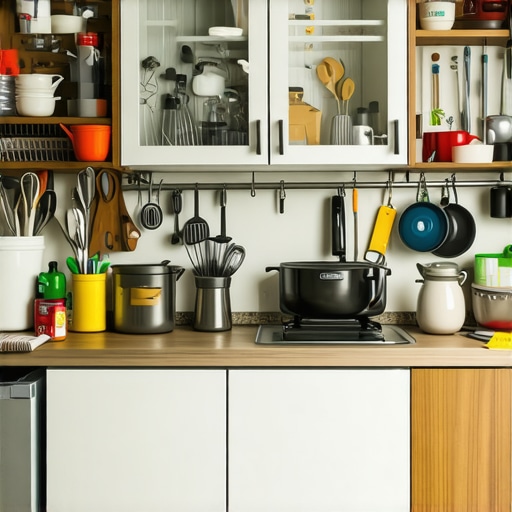
The Real Reason Your New Kitchen Feels Cluttered
Clutter is rarely a matter of having too many spoons; it is a fundamental failure of technical integration. After fifteen years of tearing down high-end kitchens and rebuilding them, I can tell you that the friction you feel every morning is an engineering mismatch. You spent sixty thousand dollars on cabinetry and yet you find yourself moving a ten-pound air fryer just to reach the coffee beans. This is the operational tax of the ‘standalone’ era. We see clients buy the best espresso machines, stand mixers, and premium cookware, then treat them like temporary guests on their quartz counters. The result? Avoidable failure. Real efficiency requires a spatial audit of every motor and heating element in your arsenal.
The Engineering Reality of Workflow Friction
Designers often focus on the ‘triangle rule,’ but from a purist’s perspective, that is outdated. The modern bottleneck is ‘Appliance Density.’ When you place a high-torque stand mixer next to a dual-boiler espresso machine, you aren’t just losing space; you are creating a heat and vibration hazard that complicates maintenance. Most people do not realize that the hidden scullery layouts for a clutter-free countertop are the only way to isolate these heavy-duty tools. A technical kitchen is like a machine shop. If the tools are not positioned based on their frequency of use and the electrical load they draw, the system breaks. I have seen 20-amp circuits trip because a luxury kitchen was designed for looks rather than the simultaneous draw of an air fryer and a high-end grinder. You must treat your kitchen as a high-performance lab.
[IMAGE_PLACEHOLDER]
The Operational Risk of Feature Creep
Every additional gadget adds a layer of complexity to the cleaning cycle. Consider the ‘static’ problem. You buy a top-tier grinder, but if the environment isn’t controlled, you end up with grounds everywhere. There is the only way to stop your grinder from creating static, and it involves more than just buying a different bean. It is about the grounding of the machine itself. The same logic applies to your cabinetry. If you are not using the modular kitchen trend where fixed cabinets are replaced by adaptable work zones, you are locked into a stagnant workflow. I’ve watched homeowners struggle with bread dough climbing the hook simply because the mixer was at the wrong ergonomic height for the user to apply proper tension. These are not minor inconveniences; they are signs that your hardware and your architecture are at war.
The Technical Truth of Thermal Mass
The weight of industrial-grade steel and the smell of fresh adhesive in a new install often mask the underlying issues of thermal management. Luxury appliances generate significant heat. If your high-end air fryer is tucked under a cabinet with poor clearance, you are shortening the life of the cabinet finish and the electronics of the fryer itself. According to the National Kitchen & Bath Association, improper ventilation is a leading cause of premature cabinetry failure in prosumer-grade kitchens. You need to account for the BTU output of your gear. High-end cookware like copper or 5-ply stainless requires specific storage that allows for air circulation to prevent the buildup of oils that eventually turn into a tacky, dust-attracting film. This film is the ‘clutter’ you can’t see but can always feel.
Market Corrections and the Future of Kitchen Design
Over the next 24 months, we are seeing a shift toward ‘Appliance Garages’ that are actually plumbed and wired. The days of dragging your stand mixer out of a deep corner cabinet are ending. We are moving toward a standard where the stand mixer attachment you will actually use every week is always at the ready, but never in the way. This is not about minimalist aesthetics; it is about reducing the ‘time-to-task’ ratio. If it takes more than 30 seconds to start a process, the tool is a liability. Regulatory changes regarding indoor air quality and electric load are also forcing a move toward induction and integrated ventilation, which naturally reduces the visual noise of the kitchen. If you are planning a renovation, ignore the trends and look at the gear ratios and the amp requirements. That is where the real value lies.
The Executive Verdict
If you feel crowded, stop buying organizers and start auditing your workflow. My recommendation is a ‘Hard Reset.’ Remove everything from the counters that does not have a daily ‘Engine Start’ requirement. If you aren’t pulling a shot every morning, that espresso machine belongs in a dedicated station, not next to the toaster. Strategic placement is the only path to a high-utility environment. Buy tools with all-metal gears, place them on vibration-dampening surfaces, and ensure your workflow follows a linear path from prep to cook to clean. Anything else is just expensive noise.
Frequently Asked Questions
Why does my kitchen still feel messy even when the counters are clear?
It is likely due to ‘Visual Weight.’ Even if the counters are empty, poor lighting or mismatched appliance finishes create a sense of chaos. Integrated solutions solve this by hiding the technical components behind unified facades.
Should I prioritize a larger pantry or more counter space?
Counter space is for action; pantries are for storage. If you are a high-volume cook, counter space with built-in power hubs is always the superior investment. A pantry cannot help you knead dough.
Is the ‘Triangle Rule’ completely dead?
For a basic home, no. For a luxury kitchen with professional appliances, yes. You should instead focus on ‘Work Zones’—independent stations for coffee, baking, and primary cooking that do not overlap.
How do I know if an appliance is a clutter risk?
If it has more than three plastic components in its drivetrain or if it serves only one specific purpose (like a dedicated egg cooker), it is a clutter risk. Stick to multi-functional, high-durability machines.