
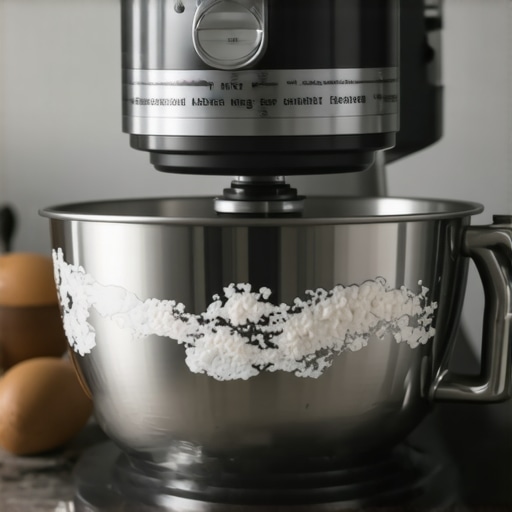
Why Your Stand Mixer Is Not Mixing Ingredients at the Bottom
The persistent pocket of dry flour sitting at the base of your stainless steel bowl is not a minor inconvenience. It is a symptom of mechanical misalignment. Most owners treat their stand mixers like indestructible buckets of force, but these machines are precision-engineered tools where a 2-millimeter gap makes the difference between a homogeneous emulsion and a failed bake. After managing kitchen hardware logistics for fifteen years, I have seen hundreds of high-end mixers returned for ‘defective motors’ when the actual culprit was a simple clearance drift. If your whisk or paddle isn’t reaching the bottom, your motor is working twice as hard to move half the mass. That leads to heat. It leads to wear. It leads to the eventual death of the gearbox.
The Engineering Reality
Modern planetary action mixers rely on a specific orbital path. The attachment must come within a fraction of an inch of the bowl wall without making physical contact. This is the ‘sweet spot.’ When this gap widens—often due to the vibration of heavy sourdough batches or a loose hinge pin—the centrifugal force fails to pull the densest ingredients into the vortex. The result? Avoidable failure. You end up with a ‘dead zone’ where gravity wins over mechanical agitation. High-quality planetary action systems are designed to minimize this, but even the best hardware requires calibration. We aren’t just talking about aesthetic perfection here; we are talking about torque efficiency. A mixer that misses the bottom forces the user to stop the machine, scrape the bowl, and restart, which breaks the development of gluten and interrupts the aeration of fats. This is why why DC motors are saving heavy sourdough batches from overheating; they provide the consistent low-end torque needed to move through that bottom-heavy sludge without stalling.
The Cost of Poor Clearance
Ignoring a poorly adjusted beater is an expensive gamble. I remember a client in a high-volume residential kitchen who burned through three gearsets in a single year. The smell of hot ozone and scorched grease was unmistakable. They were using a professional-grade machine to mix stiff pasta dough, but the paddle sat nearly a quarter-inch too high. The top of the dough was being worked, while the bottom remained a dry, sandy anchor. The motor struggled against the drag of the unmixed mass, eventually stripping the sacrificial nylon gear. If they had performed a simple ‘Dime Test,’ they would have saved $600 in repairs. This isn’t just about the mix; it’s about protecting the investment. You must understand that the clearance isn’t static. Metal expands with heat, and the weight of five pounds of flour can slightly deflect the bowl-lift arms. You need to account for these variables. If you see the whisk attachment hitting the bowl side, your alignment is skewed horizontally as well as vertically.
Market Corrections and Modern Standards
The industry is shifting. We are seeing a move away from the traditional AC universal motors toward high-torque brushless systems that can detect resistance and adjust power output. However, the physical geometry of the bowl hasn’t changed in fifty years. According to the Association of Home Appliance Manufacturers (AHAM), consumer dissatisfaction often stems from a lack of user-level calibration. In the next 24 months, I expect more ‘smart’ mixers to include optical sensors to detect unmixed ingredients, but until then, the manual adjustment screw remains your best defense. You also have to consider the attachment itself. Using the wrong tool, like a standard paddle for a task that requires the one hook attachment that stops bread dough from climbing, creates uneven pressure that can knock your bowl height out of spec over time. Standardized testing by groups like ASTM International emphasizes that material thickness in the bowl also plays a role; thinner bowls flex more under load, exacerbating the mixing gap.
The Executive Verdict
If you find flour at the bottom of your bowl, do not ignore it. It is a signal of mechanical inefficiency. My recommendation is a ‘Buy’ on high-quality calibration tools and a ‘Hold’ on replacing the machine itself. Most mixers have a concealed adjustment screw located in the neck or hinge. Turning this screw just a quarter-turn can drop the head enough to eliminate the dead zone. Perform the ‘Dime Test’: drop a coin into the bowl and run the mixer on low. The beater should move the coin roughly half an inch with every pass. If it doesn’t touch the coin, it’s too high. If it drags the coin around the bowl, it’s too low. Fix the gap, and you fix the motor strain. Strategy: adjust once every six months if you bake bread, or once a year for light pastry work. Precision is the only way to ensure your luxury kitchen equipment survives the next decade.
Common Questions Regarding Mixer Performance
Q: Does the type of bowl material affect mixing clearance?
A: Yes. Glass bowls often have a thicker base and different tolerances than stainless steel. If you switch bowl types, you must recalibrate the height screw to avoid cracking the glass or scratching the metal.
Q: Is it normal for the mixer head to bounce slightly?
A: A small amount of movement is expected under heavy loads, but excessive bouncing indicates either too much dough for the motor’s capacity or a height setting that is too low, causing the attachment to strike the bowl base.
Q: Can a bent beater cause bottom-mixing issues?
A: Absolutely. If the beater has been dropped or stressed by frozen butter, it can warp. Even if the machine is calibrated, a bent attachment will leave ‘islands’ of unmixed ingredients.