
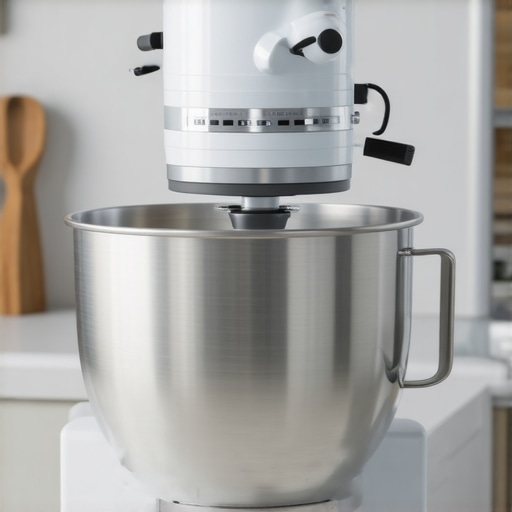
Why Your Stand Mixer Is Leaking Oil Into the Bowl
Finding a pool of amber fluid in your pristine sourdough starter is more than a culinary nuisance; it is a sign of thermal breakdown within the planetary gear housing. After fifteen years of diagnosing high-performance kitchen machinery, I can tell you that most owners mistake this for a terminal motor failure. It isn’t. The real stake is the contamination of your ingredients and the eventual friction-induced destruction of the transmission. You paid for industrial-grade torque, yet you are neglecting the fundamental chemistry that allows those gears to mesh without screaming.
The Engineering Reality of Grease Separation
Inside that heavy zinc casting, a mixture of food-grade grease keeps the gears moving. This isn’t just oil. It is a complex emulsion where a liquid lubricant is trapped within a solid thickener. When a mixer sits idle for months in a climate-controlled kitchen, or worse, runs at high speeds for extended periods, the oil begins to bleed out of the thickener. This process, known as syneresis, is the same reason natural peanut oil separates in the jar. High-performance machines require exacting gear maintenance to prevent this liquid from bypassing the shaft seal. If you are noticing a whine, check the reason your stand mixer whines before the gear teeth strip entirely. Proper lubrication management is what separates a legacy heirloom from a piece of scrap metal.
Implementation Risks and Mechanical Fatigue
Ignoring a leak invites catastrophic failure. The grease loses its viscosity, leading to metal-on-metal contact. I have seen gearboxes where the heat became so intense the plastic sacrificial gear melted into a black sludge. The smell? Burnt sugar mixed with industrial ozone. Most users try to wipe it away and keep going, but the lack of lubrication creates a feedback loop of rising temperatures. If you’re pushing heavy dough, you really need to understand the value of a high-torque DC motor which handles the load with less thermal buildup than standard AC units. To keep the gears healthy, you might even need to deep clean your stand mixer gears and repack them entirely. According to standards established by the American Society of Mechanical Engineers (ASME), mechanical systems under heavy load must maintain specific lubrication thresholds to avoid premature fatigue. This isn’t a suggestion; it’s physics.
The Market Shift Toward Brushless Systems
We are seeing a pivot in the industry. Over the next two years, the reliance on heavy-packed grease will diminish as more premium brands adopt sealed, brushless DC motors with synthetic long-life lubricants. These units run cooler. Cooler operation means the oil stays suspended in the thickener longer. Regulatory bodies like the National Sanitation Foundation (NSF) are also tightening the H1 classification for incidental food contact lubricants, forcing manufacturers to innovate. For now, your legacy AC-motor workhorse remains a mechanical masterpiece, provided you don’t let it bleed out on the counter. The result? Avoidable failure.
The Technical Verdict
If your mixer is leaking, do not trash it. The solution is a full gearbox repacking with high-temp food-grade grease. Run the mixer on a high speed for two minutes once a week even when not in use to keep the grease agitated and prevent separation. If the leak persists, the seal is likely compromised. Stop. Service it. Rebuild. My professional recommendation: Hold your current machine, perform the maintenance, and avoid the cost of a full replacement. Actionable strategy: If the oil is grey, the gears are already wearing; if it is clear, you just need a repack. FAQs: Is the oil safe if it drops in my food? Yes, manufacturers use NSF-H1 food-grade grease, but it will ruin the texture and flavor of your bake. How often should I run my mixer to prevent this? At least once a week for 90 seconds to redistribute the lubricant. Can I fix this by just adding more oil? No. You must remove the separated oil and old grease, then repack it with fresh food-grade lubricant.