Why Your Stainless Pans Turn Blue and How to Brighten Them
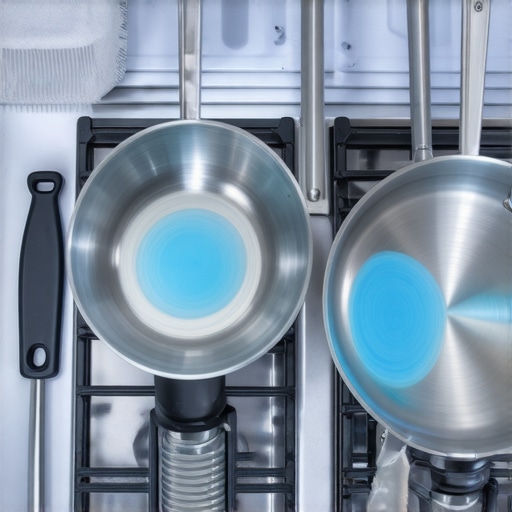
The iridescent, oil-slick sheen on your professional-grade skillet isn’t a manufacturing flaw. It’s a thermal signature. After fifteen years in the high-end kitchen trade, I’ve seen thousands of dollars of 5-ply steel retired early because owners mistake a harmless chemical reaction for a fatal surface failure. If you ignore the science, you end up buying new pans every three years. The blue isn’t a stain. It’s a breach of the material’s equilibrium. This phenomenon is a matter of light interference rather than physical grime. Your cookware is signaling that it has been pushed beyond its standard thermal operating range. The result? Avoidable failure for those who lack the technical patience to manage heat.
The Physics of Chromium Oxidation
Stainless steel relies on a microscopic layer of chromium oxide to resist corrosion. When you subject the pan to temperatures exceeding 400 degrees Fahrenheit, this layer thickens through a process called tempering. Light waves hitting this thickened layer refract differently than they do on a fresh, thin layer. The result is a spectral display of colors that varies based on the exact temperature reached. At lower peaks, you see straw yellow; at higher peaks, you get the deep royal blue. This isn’t damage to the alloy itself. It is a surface-level optical effect. However, if you are seeing this consistently, your heat management is fundamentally flawed. Modern high-end kitchens often utilize 5-ply pans specifically designed to mitigate these hotspots, but even the best metallurgy can’t outrun basic thermodynamics. The metal isn’t burning. It is breathing. It is reacting to an oxygen-rich environment at high kinetic energy levels.
Thermal Stress and Structural Integrity
The real danger isn’t the color change. It’s the physical deformation of the vessel. I once consulted for a local bistro where the chef had ‘rainbowed’ every skillet in the house. The problem wasn’t the aesthetic; it was the warping. When you push a pan into the blue-tint zone, you are flirting with the limits of the bonded metal’s expansion coefficient. Aluminum expands faster than steel. In a multi-ply pan, this creates internal tension. If you quench that hot blue pan in cold water, you risk permanent bowing. This is why understanding how to prevent your expensive stainless steel pans from warping is far more critical than worrying about the aesthetics of the finish. The blue tint is merely an early warning system for a pan that is being driven too hard. A warped pan loses its efficiency. It creates cold spots. It makes your induction range hum with the vibration of poor contact.
Restoration Protocols for Professional Grade Steel
Restoration isn’t about scrubbing harder; it’s about targeted chemistry. You need to dissolve the thickened oxide layer without abrading the steel beneath. Acidic solutions are the industry standard. Simple white vinegar or a paste made from lemon juice will often lift the tint with minimal effort. For deeper, more stubborn blues, I recommend oxalic acid-based cleaners like Bar Keepers Friend. Avoid using steel wool or harsh scouring pads that can create micro-scratches. These scratches are where food starts to stick. If you notice other issues, like white spots on your new skillet, those are typically mineral deposits from hard water—a different beast entirely, though also easily fixed with an acid wash. Proper maintenance ensures that the heat distribution remains uniform across the cooking surface. It preserves the industrial-grade steel for the decades of service it was designed to provide.
The Future of Controlled Heat Conductivity
Looking at the next 24 months, the local kitchen industry is shifting toward precision-controlled induction interfaces. We are seeing manufacturers integrate thermal sensors directly into the pan’s core. These systems prevent the metal from ever reaching the 450-degree threshold where chromium oxidation accelerates. For the local homeowner, this means fewer ruined pans and more consistent Maillard reactions. According to reports from the Specialty Steel Industry of North America, the demand for high-nickel alloys is increasing as consumers seek more resilient cookware that can withstand the rapid heat cycles of modern induction ranges. We are also seeing a resurgence in the use of specialized techniques like restaurant-quality sears on induction, which requires a deep understanding of when to pull the pan back from the edge of overheating. The regulatory landscape is also tightening around PFAS, leading many to return to raw stainless as the safest long-term bet.
The Executive Verdict
The iridescent blue is a cosmetic badge of a pan that has worked hard. If the pan remains flat on your cooktop, keep using it. If the color bothers you, use a mild acid to reset the surface. My recommendation? Buy 5-ply stainless for its thermal mass, use lower heat than you think you need, and never quench a hot pan in the sink. If you’re seeing blue after every meal, your burner is too high and your oil is likely smoking, which ruins the flavor profile anyway. Invest in a digital infrared thermometer to monitor your surface temps until you develop a feel for the metal’s limits. Sharp technical execution beats expensive equipment every time.
Frequently Asked Questions
Does the blue tint affect the safety of my food? No. It is simply a thicker layer of chromium oxide. It is non-toxic and does not leach chemicals into your meal. Will a blue pan eventually rust? Actually, the thicker oxide layer provides slightly better corrosion resistance, though it looks less polished. Can I prevent the blue tint entirely? Yes, by keeping surface temperatures below 400°F and using oils with high smoke points that signal heat levels before they reach the oxidation threshold. Is the blue tint covered under manufacturer warranties? Almost never. Most high-end brands consider heat tint a matter of normal wear or user error. Does the tint happen on all types of stainless? It is most common in 300-series stainless, like 18/10, because of the high chromium content required for that premium shine.