
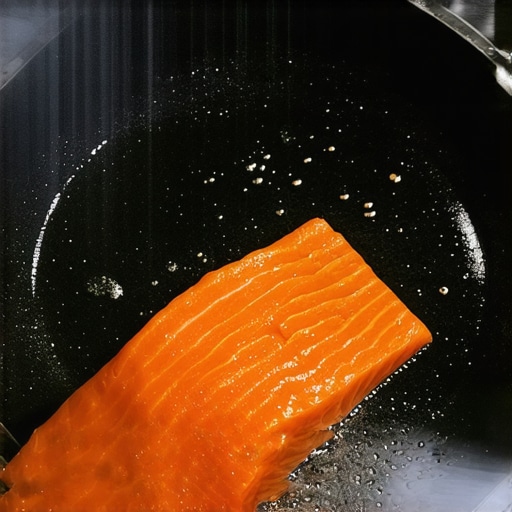
A non-stick skillet emitting a fishy odor when heated is not a culinary fluke; it is a sign of acute polymer degradation. When consumers reach for a luxury kitchen setup, they expect chemical stability, yet many are met with an acrid, briny stench that signals the irreversible breakdown of the pan’s surface. Having audited cookware manufacturing processes for over fifteen years, I have seen how heat interacts with low-grade fluoropolymers to create this exact failure. The smell is a warning. It indicates that the coating is no longer inert. This is not about a dirty pan. It is about the fundamental integrity of the materials you are using to feed your family.
Why Your Non-Stick Skillet Smells Like Fish When It Gets Hot
The primary culprit behind that distinct fishy aroma is the thermal decomposition of the non-stick coating, typically Polytetrafluoroethylene (PTFE). While PTFE is stable at standard cooking temperatures, exceeding 500°F (260°C) triggers pyrolysis. During this process, the polymer chains begin to fragment, releasing volatile organic compounds (VOCs). In many cheaper or aging pans, impurities in the resin or the presence of amines used during the manufacturing of the bonding agents react with high heat. The result? A chemical signature that the human nose interprets as rotting fish. It is a biological response to a synthetic failure.
The Science of Polymer Outgassing
At a molecular level, the heat-induced vibration of the polymer chains becomes so violent that the carbon-fluorine bonds begin to fail. If you are using a pan where the coating has already begun to thin, the underlying adhesive layers are exposed to direct heat. These adhesives often contain nitrogen-based compounds. When these compounds oxidize, they produce trimethylamine-like odors. This is why why your ceramic frying pan loses its non-stick properties so fast once the initial seal is compromised; the chemistry of the pan is shifting from a solid state to a gaseous one. According to the Environmental Working Group, these fumes can be toxic to birds and cause flu-like symptoms in humans, a condition known as polymer fume fever.
The Risk of Thermal Shock and Thin Gauges
Many homeowners overlook the role of the metal substrate. A thin aluminum pan heats unevenly, creating localized hot spots that can easily exceed the safety threshold of the coating even while the rest of the pan is relatively cool. This is the danger of high-heat searing on non-stick surfaces. I recall a client who invested in a high-end range but kept using