
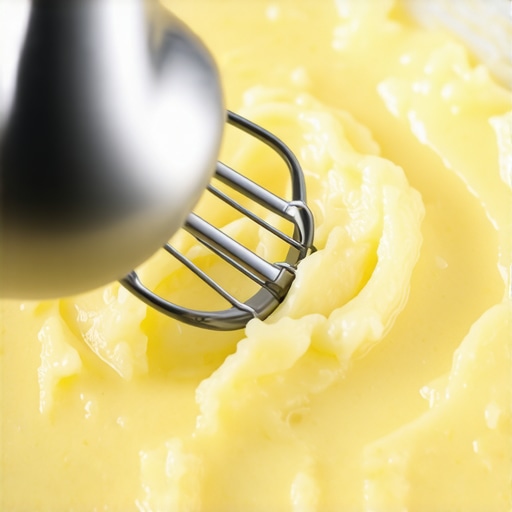
The Secret to Getting Silky Smooth Mashed Potatoes with a Mixer
The pursuit of the perfect mash is not a culinary whim; it is a rigorous exercise in starch management and mechanical shear. Most home kitchens treat mashed potatoes as a simple side, but after fifteen years of evaluating high-end culinary equipment and the engineering behind food processing, I see it differently. You are managing a delicate cellular structure. Treat it with too much aggression, and you transform a potential masterpiece into a polymer-heavy glue. The stakes are high because a ruined mash at a dinner party is more than a bad dish; it is a failure of technical execution in a space designed for precision.
The common error lies in the misunderstanding of potato starch. When you boil a potato, the starch granules swell. If you burst those cells too violently, they release amylose, the substance that creates that dreaded gummy texture. A stand mixer is a powerful tool, often capable of high torque, but its power is its greatest liability in this specific application. To achieve a silky result, you must respect the gear ratios and the attachment geometry.
The Science of Mechanical Agitation
Success depends on the choice of potato and the temperature of the fat. I always recommend high-starch varieties like Russets for their dry, fluffy cell structure. The mechanical process begins with the flat beater. Do not use a wire whip. The whip introduces too much air and moves too fast, which leads to cell rupture. The flat beater, however, mimics the traditional folding motion of a spatula but with the consistent force of a high-torque motor. Understanding why high-torque motors are essential helps you grasp how a mixer maintains low RPM under the heavy load of dense tubers without stalling or overheating. If the motor struggles, the heat transfer from the machine can even begin to affect the potato temperature, a subtle but real risk in long-running sessions.
Temperature control is the next technical hurdle. If you add cold cream or butter to hot potatoes, you shock the starches. The fats must be at a near-boiling point before they touch the potato. This creates an emulsion rather than a simple mixture. In my experience, the thermal mass of a heavy-duty stainless steel bowl is your ally here. It retains the heat of the potatoes, allowing the fat to integrate before the temperature drops into the danger zone where starches begin to set and harden. If you notice your equipment acting up during this process, specifically the stability of the machine, you might need to look into how to fix the wobbly bowl on your tilt-head stand mixer to ensure even distribution of the paddle.
The Engineering Reality of Over-Processing
There is a specific window of time—usually between 60 and 90 seconds—where the potatoes transition from chunky to smooth. Beyond that, you are moving into the realm of structural collapse. I’ve seen countless professional-grade mixers pushed to their limits by users who believe more speed equals more smoothness. It doesn’t. It equals friction. Friction generates heat. Heat breaks the starch bonds too quickly. This is why I caution against letting the mixer run unattended. You must watch for the change in light reflection on the surface of the mash; once it develops a slight sheen, the emulsion is complete. Stop immediately. If you notice the machine housing getting warm, you are likely overworking the motor, a common issue discussed in my guide on why your stand mixer is getting too hot to touch.
[IMAGE_PLACEHOLDER]
I remember a project in a high-end residential kitchen where the client insisted on using a food processor for potatoes. The result? A translucent, sticky paste that resembled wallpaper glue more than food. It was an expensive lesson in shear force. Food processors use blades that slice cells; mixers use paddles that crush and fold. This distinction is the difference between a five-star texture and a culinary disaster. According to the Institute of Food Technologists, the mechanical damage to starch granules is the primary factor in viscosity changes during food preparation. You want low-shear, high-efficiency movement.
Market Shifts and Technical Evolution
Looking at the next 12 to 24 months, we are seeing a shift toward more specialized attachments in the ultimate guide to stand mixers. Manufacturers are finally catching on to the home chef’s desire for professional-grade results. We expect to see more silicone-edged beaters that scrape the bowl walls, reducing the need for manual intervention and ensuring that no cold pockets of potato remain. This technological progression is a direct response to the demand for precision in high-end domestic environments. Local kitchen designs are also evolving to accommodate these high-output appliances, with dedicated power circuits becoming the standard for modern culinary hubs.
The Executive Verdict
The strategy for the perfect mash is simple: Buy high-starch potatoes, hold the mixer at its lowest speed setting, and sell the idea that hand-mashing is superior. Hand-mashing is inconsistent; a properly used stand mixer provides the uniformity required for luxury dining. If you are using a premium mixer, let the machine do the work, but keep your hand on the speed control. The secret isn’t a hidden ingredient. It is the disciplined application of mechanical force. Chemistry dictates the outcome; you merely manage the tools.
Frequently Asked Questions
Can I use the whisk attachment if I want fluffier potatoes?
No. The whisk introduces air but also increases the risk of over-processing the starch through high-speed impact. Stick to the flat beater for a silky, dense, and professional finish.
Why did my potatoes turn out sticky even though I used a mixer?
You likely ran the mixer too long or at too high a speed. This ruptured the starch cells, releasing amylose. Once this happens, it cannot be reversed.
Should I peel the potatoes before or after boiling?
Peel them before. Boiling with skins on can lead to uneven starch hydration, making it harder for the mixer to achieve a uniform consistency without over-working the batch.
Does the bowl material matter?
Yes. Stainless steel or ceramic bowls are preferred for their heat retention. Cold bowls will cause the fats to solidify too quickly, preventing a smooth emulsion.