
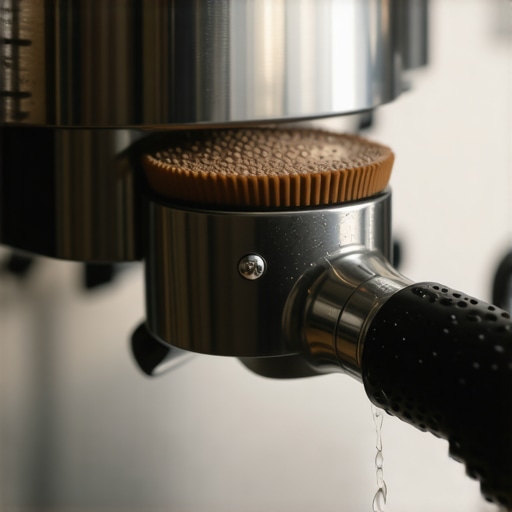
Why Your Espresso Puck Sticks to the Group Head Every Time
Peeling a wet, muddy puck off your dispersion screen is more than a nuisance; it is a sign of mechanical misalignment within your brewing ritual. After fifteen years of tearing down high-end espresso machines and calibrating systems for the most demanding luxury kitchen environments, I’ve found that this phenomenon, often called the ‘vacuum effect,’ stems from a failure to manage the headspace between the coffee bed and the group head. It is physics, not bad luck. When you engage the three-way solenoid valve to terminate the shot, a sudden drop in pressure occurs. If your coffee dose is too high or your grind too fine, that vacuum literally sucks the puck upward. The result? Messy cleanup and uneven extraction.
The Mechanics of Headspace and Expansion
Coffee is organic material. It swells. When water hits that dry bed of grounds under nine bars of pressure, the cellulose fibers expand significantly. If you haven’t left enough ‘deck height’—the physical gap between the dry puck and the shower screen—the expanding coffee has nowhere to go but against the steel. This creates a seal. When the solenoid opens to exhaust the pressure, the puck is held by suction against the screen. I see this constantly in homes where owners treat their portafilters like buckets. Precision is the only cure. Using a dedicated coffee scale to ensure you aren’t exceeding the basket’s rated capacity is the first step toward a clean release. A 18-gram basket is not a suggestion; it is a hard limit defined by the volume of the metal.
[image_placeholder]
The three-way solenoid valve is the unsung hero of the modern espresso machine. Its job is to divert the remaining water and pressure into the drip tray the moment the pump stops. If this valve is partially blocked by scale or old coffee oils, the pressure release is sluggish. This lingering pressure keeps the puck hydrated and sticky. I’ve repaired countless machines where the owner complained of sticking pucks, only to find a valve caked in residue. Regular backflushing with a specialized detergent is the maintenance standard that separates the amateurs from the pros. It is the same discipline required to keep premium cookware or high-end air fryers functioning at peak efficiency.
The Solenoid Stress Test
Imagine the force of nine bars of pressure suddenly redirected. It is violent. If your grind is too fine, the puck becomes an impermeable mud pie. The water cannot pass through, and the air cannot return. This creates a persistent suction. In my years on the floor, I’ve watched baristas struggle with ‘puck suction’ simply because they were chasing a shot time without respect for the bean’s density. Lighter roasts are denser and require different headspace than dark, oily roasts. The oilier the bean, the more it acts like an adhesive. You might be getting thick crema, but you are also creating a glue that binds the puck to your screen. The tactile reality of a sticky puck is a warning of impending channel formation.
Strategic Foresight for the Home Barista
The industry is moving toward higher precision and away from the ‘eyeball’ method of dosing. Over the next 24 months, expect to see more espresso machines integrated with real-time headspace sensors. Until then, we rely on the ‘nickel test.’ Place a coin on top of your tamped puck, lock the portafilter, then remove it. If the coin is pressed into the coffee, you have zero headspace. You are overfilling. This lack of space prevents the shower screen from dispersing water evenly, leading to bitter, over-extracted shots. It’s the same logic as overcrowding stand mixers; when you push the machine past its volumetric capacity, the output suffers. The Specialty Coffee Association (SCA) often cites proper basket prep as the primary variable in consistency.
The Executive Verdict
If you are tired of digging coffee out of your group head, stop the guesswork. Buy the right tools. Ensure your machine is descaled and your solenoid is clear. If you find yourself in a situation where every shot sticks, reduce your dose by 0.5 grams immediately. This isn’t a suggestion; it is a technical requirement for fluid flow. Use a bottomless portafilter to see exactly how the water interacts with the screen during the first three seconds of pre-infusion. If the screen is dirty, or if you have a clogged steam tip, your entire thermal block is likely compromised by scale. Clean the machine. Respect the physics. Enjoy better coffee.
Frequently Asked Questions
Does the type of basket matter? Yes. Precision baskets like those from VST or IMS have stricter tolerances and smoother internal surfaces, which help reduce the ‘stick’ factor significantly compared to stock baskets.
Is a wet puck always a bad sign? Not necessarily. A wet puck often indicates a lack of a three-way solenoid valve or a very light dose. However, a puck that sticks to the screen is always a sign of a headspace or maintenance issue.
How often should I backflush? For a home user, a water-only backflush should be done daily. A chemical backflush with coffee detergent should occur every 30 to 50 shots to keep the solenoid path clear.