
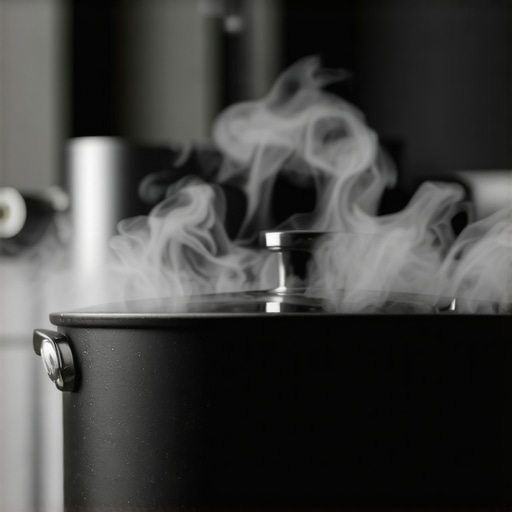
Why Your Dutch Oven Lid Doesn’t Sit Flush and the Steam Fix
A Dutch oven lid that wobbles is a fundamental betrayal of the vessel’s engineering. You buy cast iron for its thermal mass and its ability to create a hermetic-like seal for braising. When that lid doesn’t sit flush, you aren’t just losing steam; you are losing the pressure required to break down tough connective tissues in high-end cuts of meat. After fifteen years of diagnosing kitchen equipment failures and seeing the ‘operational scars’ of high-volume kitchens, I can tell you that a rocking lid is rarely a user error. It is a metallurgical reality. The stake here is high. A 2-millimeter gap can result in a 20% moisture loss over a three-hour braise. The result? Dry short ribs and a wasted $100 investment in premium protein.
The Metallurgy of Thermal Warpage
Cast iron is poured at temperatures exceeding 2,200 degrees Fahrenheit. As the iron cools in the sand mold, it undergoes significant physical stress. If the cooling rate isn’t perfectly uniform, the metal pulls at itself. This creates a microscopic ‘twist’ in the rim of the pot or the lid. Most manufacturers rely on the weight of the lid to overcome minor irregularities. However, if the pot rim and the lid flange both have high spots that align, you get the dreaded ‘teeter-totter’ effect. This is why some luxury kitchen upgrades fail to meet expectations right out of the box. The physics don’t care about the brand name. They care about the ASTM A48 standards for gray iron castings. Precision matters. A lid that sits flat at room temperature might even warp slightly when heated to 450 degrees due to uneven thickness in the casting.
[image_placeholder_1]
Vapor Pressure and Heat Transfer Mechanics
The Dutch oven operates on the principle of a closed-loop thermal cycle. Steam rises, hits the cooler lid, condenses, and drips back down. This is the ‘self-basting’ cycle. When the lid doesn’t sit flush, the internal pressure drops to atmospheric levels. You lose the ‘heavy steam’ advantage. This is a similar technical failure to when stainless steel cookware is pitting; it’s a degradation of the tool’s core function. In my experience, a ‘loose’ lid increases energy consumption by nearly 15% as the oven works harder to maintain the internal liquid temperature. It’s an economic drain disguised as a minor annoyance. You can measure this yourself. Use a feeler gauge. Anything over 0.005 inches is a manufacturing defect in my book.
The Reality of the Foil Fix
I’ve seen home cooks try to fix this with a layer of aluminum foil. While this creates a temporary seal, it’s a band-aid on a bullet wound. The foil eventually compresses or tears, and it interferes with the lid’s seating over time. I recall a client in a high-end residential kitchen who insisted on using an heirloom pot with a significant wobble. After four hours, the braise had gone completely dry and scorched the enamel. The smell of burnt carbonized sugar is unmistakable. It sticks to the walls. It ruins the afternoon. If you are dealing with a permanent warp, you have two real choices: grind the high spots or replace the unit. Do not accept mediocrity in a vessel designed for 50 years of service. It’s much like how ceramic pans lose non-stick properties; once the structural integrity of the cooking environment is compromised, the tool is broken.
The 2025 Market Shift in Cookware Construction
The industry is moving toward CNC-machined rims. Traditional raw-sand casting is becoming the entry-level standard, while the high-end is shifting toward post-cast machining. This process involves a computer-controlled lathe that shaves the rim of both the pot and the lid to a tolerance of microns. Within the next 24 months, I expect ‘Machined Sealing Surfaces’ to become the primary marketing hook for premium Dutch ovens. We are seeing a regulatory push toward more energy-efficient cooking methods, and a perfectly sealed pot is the easiest way to hit those targets. If you are buying new, look for the silver, un-enameled ring on the rim. That’s usually a sign of precision grinding. Also, consider the seasoning of these surfaces; using the best oil for seasoning carbon steel can also help create a microscopic gasket on raw iron rims.
The Executive Verdict
If your lid wobbles more than 1mm, return it. It is a defect. If you are past the return window, use the ‘Three-Point Check.’ Rotate the lid 90 degrees. Often, the warp is asymmetrical, and you can find a ‘sweet spot’ where it sits flat. If the wobble persists in all positions, the pot itself is out of round. My actionable strategy: stop using the foil hack and invest in a brand that guarantees a machined fit. Precision is not a luxury; it’s a requirement for consistent results.
FAQ
Q: Is a small amount of steam escaping normal?
A: Yes. No Dutch oven is a pressure cooker. However, the lid should not rattle or move during the simmer. If it clangs, the fit is poor.
Q: Can I fix a warped lid at home?
A: Not easily. You would need a flat reference plate and valve grinding compound. For most, it’s safer to contact the manufacturer’s warranty department.
Q: Does the weight of the lid matter for the seal?
A: Heavily. A heavy lid uses gravity to compensate for minor steam pressure. If the lid is light, even a small warp will cause it to lift and ‘chatter’ during cooking.
Q: Should I buy a lid with spikes on the bottom?
A: Those are for condensation distribution, not sealing. They don’t help a wobbly lid, but they do improve the basting cycle if the seal is already tight.
“, “image”: { “imagePrompt”: “A close-up, high-detail shot of a matte black cast iron Dutch oven on a professional marble countertop. The lid is slightly askew, showing a visible 2mm gap between the rim and the lid flange with a faint wisp of steam escaping. The lighting is dramatic, highlighting the texture of the cast iron and the precision of the kitchen setting.”, “imageTitle”: “Dutch Oven Lid Gap Analysis”, “imageAlt”: “A close up of a Dutch oven lid showing a gap where steam escapes due to a flush-fit failure.” }, “categoryId”: 0, “postTime”: “” }