
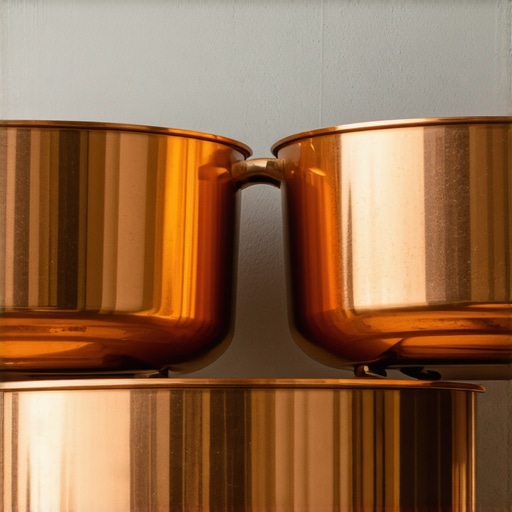
Why Your Copper Cookware is Spotting and How to Fix It
Copper is a high-performance thermal engine. If you invested in 2.5mm solid copper for your luxury kitchen, you bought the 390 W/m·K thermal conductivity, not just a shiny trophy. After fifteen years managing the maintenance of professional-grade kitchens, I can tell you that spotting is rarely a manufacturing defect. It is a chemical signal. When you see dark rings or white hazy clouds on your pans, the metal is communicating its environment. Neglect these signals, and you risk compromising the surface integrity of the most responsive cooking material on earth. The stakes? Uneven heat distribution and the eventual degradation of the expensive tin or stainless steel lining. Most home cooks treat copper like stainless steel. That is a tactical error. Copper is a living material, prone to rapid ionic exchange with the atmosphere and your water supply. Understanding the molecular reality of these spots is the only way to protect the investment you made in premium cookware.
Thermal Dynamics and Surface Integrity
The immediate problem with spotting is thermal impedance. While a few mineral deposits might seem aesthetic, they represent a localized change in surface density. In the world of high-torque cooking, even minor buildup matters. I have seen amateur enthusiasts destroy a thousand-dollar set by using abrasive pads that create micro-scratches, which then act as nurseries for further oxidation. Copper reacts to sulfur, oxygen, and moisture. The result is often a layer of copper oxide or copper carbonate. If you want to know why hammered copper is better than smooth for heat control, it often comes down to how the surface handles these environmental stressors. Hammering increases surface area and structural rigidity, but it also creates valleys where minerals can hide. The weight of industrial-grade steel or the ring of a heavy copper lid hitting a countertop serves as a reminder: this is professional equipment. It requires a professional maintenance mindset. If your espresso machines or air fryers are the brains of the kitchen, your copper is the heart. You don’t let the heart get clogged.
The Chemistry of Mineral Adhesion
Most spotting originates from your water. Hard water contains calcium and magnesium ions that precipitate out during evaporation. When you wash your pan and leave it to air dry, those ions bond to the copper surface. It’s a similar mechanism to how to prevent white spots on your enameled cookware, but on copper, the reaction is accelerated by the metal’s high reactivity. The chemistry is simple: CO2 and moisture create a weak carbonic acid that interacts with the metal. You might notice a metallic tang in the air when cleaning; that is the smell of the reaction. Many high-end users are moving toward specific alloys to mitigate this. For instance, we have frequently discussed why we switched to tinned copper for saucemaking because the tin provides a non-reactive barrier that handles high-acid foods without the leaching common in lower-quality pots. The cost-benefit matrix here is clear: spend fifteen minutes on maintenance now, or spend hundreds on professional retinning later. Ignoring spots leads to pitting. Pitting leads to failure.
Operational Risks of Abrasive Cleaning
I once watched a client use a heavy-duty scouring pad on a limited-edition jam pan. The sound was like nails on a chalkboard. The result? Avoidable failure. They stripped the microscopic layer of the metal, ensuring that future spots would bond even deeper. The sensory experience of copper maintenance should be gentle. You should feel the grit of the polish, not the scrape of the steel. If the spot is green, you are looking at verdigris—a toxic acetate that must be removed immediately. If the spot is white and powdery, it is likely mineral scale. The implementation risk here is that people over-correct. They use harsh acids like undiluted vinegar or industrial descalers meant for espresso machines. This is overkill. You need a pH-balanced approach. I’ve seen 25-year-old pots that look brand new because the owners understood the “Technical Truth”: copper prefers a consistent, thin patina or a professionally applied polish, nothing in between. For those working with specialized tools, knowing how to restore the luster of a copper jam pan is a required skill for the modern culinary veteran.
Future Trends in High Performance Metallurgy
The industry is shifting. In the next 12 to 24 months, we will see a surge in copper-stainless bimetal technology that uses vacuum bonding to prevent delamination. This is a market correction for the high maintenance requirements of traditional tinned copper. However, the purist will always stick to tinned surfaces for the superior release properties. Regulatory changes regarding PFOA and PTFE are also pushing more consumers toward natural metals like copper and carbon steel. We are seeing a second-order effect where the demand for specialized cleaning agents is skyrocketing. If you are using stand mixers and high-wattage air fryers, your kitchen is already an industrial environment. Your cookware needs to keep up. The technical engineering under the hood of a modern kitchen requires a baseline of metallurgical knowledge. You can’t just cook; you have to curate.
The Executive Verdict
My recommendation is a