
Why Your Coffee Tastes Like Paper and How to Fix It
The scent of a $3,000 espresso machine should be pure, unadulterated bean profile. Instead, you get wet cardboard. It is the silent killer of luxury kitchen coffee programs. After fifteen years of calibrating high-end extraction systems, I can tell you that most owners blame the roast or the grinder when the culprit is actually the cellulose structure of their filtration media. You are pouring liquid gold through a filter that was never properly neutralized. It is a fundamental error in fluid dynamics. Getting this wrong means wasting premium beans and compromising the internal components of your espresso machines.
The Engineering Reality of Cellulose Interaction
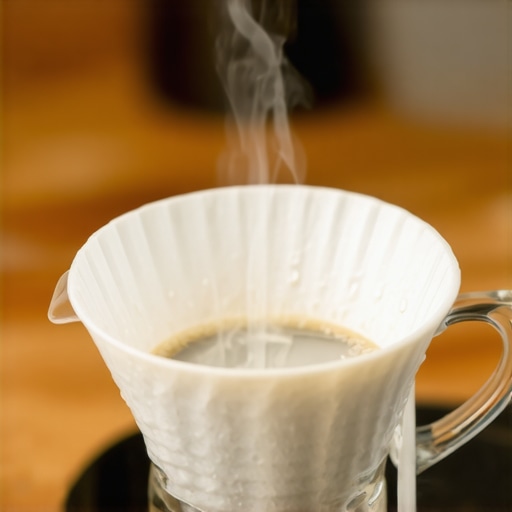
Paper filters are essentially a mesh of organic fibers. These fibers hold residual lignins and processing chemicals from the manufacturing plant. When 200-degree water hits a dry paper filter, it instantly dissolves these compounds into your cup. This is not just a flavor issue; it is a chemistry problem. I have seen enthusiasts spend thousands on avoiding pressurized portafilters only to ruin the shot with a cheap, unrinsed paper circle. The solution is the ‘Flash Rinse.’ You must saturate the filter with near-boiling water before the coffee ever touches it. This expands the fibers and flushes out the ‘paper-mache’ notes that distract from the delicate acidity of a high-altitude bean.
[image_placeholder_1]
The Cost of Low Thermal Inertia
Many home baristas assume that any paper filter will do. They are wrong. Standard grocery store filters often use chlorine bleaching, which leaves a metallic sharp edge on the tongue. If you notice a strange tang, it might not be the beans. I’ve often recommended clients check their maintenance routines, especially if they are already dealing with issues like clogged filters on their espresso machine. A technical truth most people miss: the thickness of the paper dictates the contact time. Thicker paper creates a higher resistance, leading to over-extraction. You want oxygen-bleached, high-density paper that allows for a fast flow rate while capturing the fines. The result? Clarity.
Operational Risks in the Luxury Kitchen
The smell of fresh adhesive or the weight of industrial-grade steel won’t save a cup brewed with poor water chemistry. If your water is too soft, it aggressively leaches the flavor from the paper itself. I remember a client in a high-rise who couldn’t figure out why his shots tasted like a stationery store. It turned out his reverse osmosis system was so efficient it made the water ‘hungry’ for minerals, and it found them in the filter fibers. We had to re-mineralize the water to balance the extraction. This is the same level of precision required when using premium cookware or calibrating stand mixers for high-hydration doughs. Details are not optional. Sometimes, even after fixing the filter, users find their espresso tastes metallic, which usually points back to a failure in the descaling protocol rather than the paper itself.
Market Corrections and the Shift to Metal
We are seeing a massive shift toward stainless steel permanent filters in the luxury kitchen sector. The environmental push is real, but the flavor profile is the true driver. Metal filters allow oils to pass through, creating a heavier mouthfeel. However, they require a level of cleanliness most people aren’t ready for. If you don’t scrub that mesh, those oils go rancid. It’s a trade-off between the clean, tea-like clarity of paper and the robust body of metal. In the next 12 months, expect to see more hybrid filtration systems that attempt to mimic the ‘Executive Rhythm’ of a professional café. If you are serious about your output, you might even consider learning how to get commercial-grade microfoam to complement your now-perfectly-filtered brew.
The Executive Verdict
If you are using paper, buy oxygen-bleached. Rinse it with at least 100ml of hot water before brewing. If you prefer a heavier body, transition to a laser-cut stainless steel mesh. Stop buying generic filters. They are the weakest link in your high-end culinary chain. Invest in your water quality as much as your beans. According to the Specialty Coffee Association (SCA) standards, water quality is the primary variable often ignored by home users. Failure to address this is a failure of the entire investment.
Common Extraction Questions
Does the color of the paper matter? Yes. Brown, unbleached paper has the highest concentration of ‘woody’ flavors and requires double the rinsing time of white, oxygen-bleached filters.
Can I reuse paper filters? Technically yes, but the pore structure collapses after one use. It is a strategy for mediocrity, not excellence.
Why does my coffee still taste bad after rinsing? Check your water temperature. If you are brewing too cold, you aren’t extracting the coffee solids, leaving only the paper and water notes behind.