
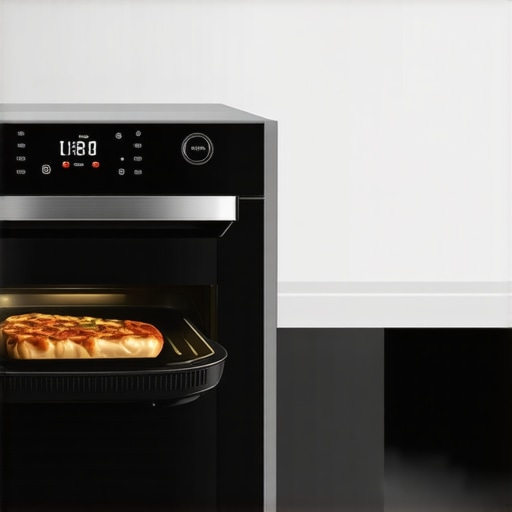
Why Your Air Fryer Takes Twice as Long to Cook as the Recipe Says
Most air fryer recipes are written under laboratory conditions that bear zero resemblance to your actual kitchen. After fifteen years of diagnosing thermal failures in luxury appliances, I have seen the same story. A user buys a high-end unit, follows a 15-minute chicken wing recipe, and 30 minutes later, the meat is still translucent at the bone. The failure isn’t the recipe writer’s incompetence. It is a fundamental misunderstanding of convective heat transfer and electrical throughput. Your machine is fighting the physics of your home’s wiring and your own habits. The result? Frustration and uneven results.
The Thermodynamic Reality of Boundary Layers
Air frying is not frying. It is high-velocity convection. The secret to that crispy exterior lies in the destruction of the boundary layer—the thin skin of stagnant, cool air that clings to the surface of cold food. If the air isn’t moving fast enough, that layer stays put. Your food steams instead of browning. This usually happens because the fan motor is struggling with internal resistance or the basket is too crowded. When you pack a basket tight, you create dead zones. No air movement means no heat transfer. You can find more on this in the technical breakdown of why your air fryer fries are always limp. It is a matter of fluid dynamics, not magic.
Voltage drop is another silent killer. In many residential kitchens, especially during peak hours, the actual voltage at the outlet can dip below 110V. Most luxury air fryers are rated for 120V to hit their peak wattage. A 10% drop in voltage leads to a significantly larger drop in heat output because of how resistive heating elements operate. Your 1700-watt machine might only be putting out 1400 watts. You hear the fan spinning. You see the lights on. But the heating coil never reaches the cherry-red glow required to maintain the set temperature against the cooling effect of the circulating air.
The Engineering Failure of Advertised Temperatures
Most consumer-grade sensors are calibrated for the center of an empty basket. The moment you introduce four pounds of cold protein, the thermal mass of the food sucks the heat out of the air. Cheap sensors take minutes to realize the temperature has plummeted. By the time the heating element kicks back in, the recipe’s timer has already ticked halfway down. This lag is why most air fryers don’t reach their advertised temperature in a timely manner. You are effectively cooking at 325 degrees when the dial says 400. Real-world performance requires a machine with high watt-density elements and PID controllers that react in milliseconds, not minutes.
[image_placeholder]
The Crowded Basket and Thermal Bridging
Think about the sound of your machine. The high-pitched whine of a high-RPM fan is necessary for crisping. If that sound changes to a muffled thud, you have blocked the intake or the exhaust. I have seen clients tuck their air fryers into tight corners or under low cabinets, which causes the machine to ingest its own hot exhaust. This triggers a thermal safety cutoff or causes the motherboard to throttle the power to prevent a meltdown. It is a safety feature that ruins your dinner. According to the National Fire Protection Association, proper clearance around heat-producing appliances is a safety standard that also ensures operational efficiency. Without a fresh supply of cool air for the intake, the cooling fan for the electronics and the main convection fan can’t perform their jobs.
Regulatory Shifts and the 2025 Efficiency Pivot
We are seeing a massive shift in how these appliances are engineered. New 2025 energy standards are forcing manufacturers to reduce peak power draw. This sounds good for your utility bill, but it is a disaster for cooking speed. Newer machines may use pulsed power cycles to stay under energy caps, meaning they spend more time in a ‘rest’ state than an ‘active’ heating state. For the end user, this means the ’20-minute’ meal of 2022 now takes 35 minutes in a 2025-compliant model. You need to understand the ‘operational scars’ of these new designs before you blame the recipe. We are moving toward a market where precision beats raw power, but only if the user knows how to manage the load.
The Executive Verdict
Stop treating the ‘Start’ button like a guarantee. If you want results that match the glossy photos, you must adapt to the physical limitations of your specific kitchen environment. Pre-heating is not optional; it is the only way to combat initial thermal mass shock. If your circuit is shared with a refrigerator or a luxury espresso machine, your air fryer is likely starving for current. Check the circuit load or how to stop your air fryer from blowing a fuse for better power management. The buy-and-hold strategy for air fryers in 2025 is to invest in units with thick, ceramic-coated baskets and high-output fans that can withstand the heat cycles without warping.
Frequently Asked Questions
Does the type of basket material affect cooking time?
Absolutely. Heavy-gauge metal or ceramic-coated baskets retain more latent heat, helping the unit recover faster after you open the drawer. Thin, wire-mesh baskets lose heat almost instantly.
Why does my air fryer take longer in the winter?
The ambient temperature of your kitchen and the initial temperature of your food matter. If your chicken is 34 degrees from a cold fridge and your kitchen is 65 degrees, the machine has to work significantly harder than on a humid 80-degree summer day.
Is it okay to use parchment paper?
Use it sparingly. Parchment paper is a literal wall for airflow. If you cover more than 50% of the basket floor, you are effectively turning a convection oven into a very slow toaster oven.
How do I know if my fan is failing?
Listen for a rhythmic clicking or a drop in pitch. If the air coming out of the exhaust feels ‘lazy’ rather than a sharp blast, the fan motor or the capacitor is likely reaching its end of life.