
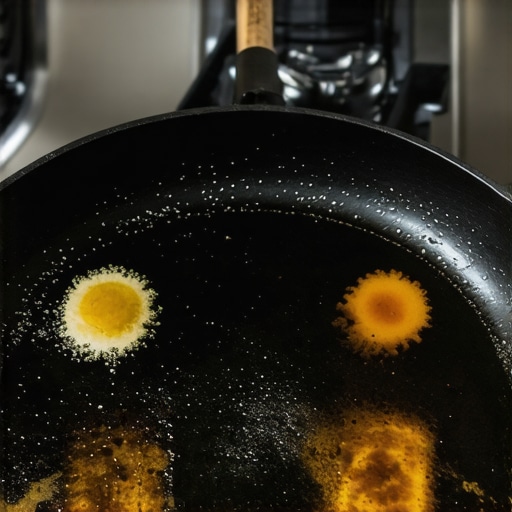
The Reason Your Non-Stick Pan is Suddenly Sticking in the Middle
Your high-end cookware is not failing because of a manufacturing defect. It is failing because of physics. After fifteen years in the luxury kitchen industry, I have diagnosed thousands of kitchenware failures. The sudden transition from a slippery surface to a tacky, carbonized mess in the center of your pan is the inevitable result of thermal mismanagement. You bought the expensive set. You expected it to last. Instead, you are scraping eggs off a surface that was marketed as bulletproof. This isn’t just an inconvenience; it is the destruction of a precision tool. Most homeowners assume the coating has simply ‘worn off,’ but the technical reality is far more complex. The middle of the pan is the epicenter of heat transfer, and it is where the battle between molecular stability and carbonized fats is lost.
The Physics of Thermal Crowning
Every piece of metal possesses a specific coefficient of thermal expansion. When you place a pan over a concentrated heat source—be it a gas flame or an induction coil—the center expands faster than the edges. This creates a phenomenon known as crowning. The metal bows upward. Consequently, your cooking fats migrate to the cooler perimeter, leaving the hottest part of the pan dry. This is why why your 3-ply cookware is warping on high heat even if it claims to be warp-resistant. Once the oil leaves the center, the PTFE or ceramic coating is exposed to direct, unbuffered heat. The result? Rapid degradation. The coating doesn’t just disappear; it changes chemically. For more on high-end materials, you can check the real non-stick ceramic coating test to see how different surfaces handle this stress.
Polymerized Oil Is The Silent Killer
We need to talk about invisible residue. You think the pan is clean because it looks shiny, but microscopic layers of fat remain. When these fats are heated past their smoke point in the center of the pan, they undergo polymerization. They turn into a plastic-like varnish. This is the same process used to season cast iron, but on a non-stick surface, it is a death sentence. This sticky film acts like glue. This explains why your premium cookware is sticking even with butter. The butter isn’t the problem; the microscopic layer of burnt olive oil from last Tuesday is the culprit. You can’t see it, but you can feel it. The texture changes from silky to slightly ‘draggy.’ This is where standard cleaning fails. You need a chemical intervention, not just a soft sponge.
The Luxury Kitchen Performance Matrix
High-performance kitchens require more than just expensive tools; they require an understanding of thermal mass. Whether you are using air fryers for rapid convection or espresso machines that require precise bar pressure, heat management is the through-line. In cookware, the ‘middle-sticking’ issue is often exacerbated by the high-BTU output of professional-grade ranges. These burners are designed for heavy cast iron or copper, but they often overwhelm the delicate coatings of non-stick pans. Even the most advanced stand mixers won’t help you if your base proteins are bonding to the pan. According to the Cookware Manufacturers Association, exceeding 500 degrees Fahrenheit on a PTFE surface initiates a breakdown process that is irreversible. It is a one-way street.
2025 Regulatory Shifts and Coating Integrity
The industry is moving away from traditional PFOA and certain PFAS chemicals due to tightening environmental regulations. This means the non-stick pans you buy today behave differently than the ones from a decade ago. Modern coatings are often harder but more brittle. They handle abrasion better but are more sensitive to thermal shock. When you take a hot pan and put it under a cold faucet, you are causing a microscopic fracture in the bond between the coating and the substrate. If you want to restore the luster of your stockpot or save your skillets, you must respect the cooling phase. The National Institute of Standards and Technology (NIST) has documented that rapid temperature fluctuations in multi-clad metals lead to delamination over time. It is a slow, silent failure.
The Technical Verdict
Stop using aerosol cooking sprays immediately. They contain lecithin, which bonds to non-stick surfaces at low temperatures and creates the very sticking you are trying to avoid. Heat your pan slowly. Use a fat with a high smoke point, like avocado oil or clarified butter. If the center is already sticking, a paste of baking soda and a tiny amount of water can sometimes lift the polymerized oils without destroying the coating. If that fails, the pan has reached its end of life. My recommendation for 2025? Invest in heavy-gauge hard-anodized aluminum for your non-stick needs; it distributes heat more evenly and resists center-crowning better than thin-gauge steel. Move your high-heat searing to carbon steel or cast iron. Save the non-stick for eggs and delicate fish. That is the only way to ensure your investment lasts.
Frequently Asked Questions
Can I fix a pan that is already sticking in the middle?
Only if the sticking is caused by oil buildup. A deep clean with a non-abrasive paste can help. If the coating is discolored or pitted, the PTFE has likely degraded, and the pan should be replaced.
Why does my induction cooktop make center-sticking worse?
Induction heats the metal directly and very rapidly. If the pan’s magnetic base is smaller than the coil, it creates an intense hot spot in the center before the heat can conduct to the edges, causing immediate crowning.
Are ceramic pans better at resisting center sticking?
Ceramic coatings are more heat-resistant than PTFE, but they are also more prone to losing their ‘release’ properties if they aren’t cleaned perfectly after every use. They don’t handle polymerized oil any better than traditional coatings.
Does the quality of my stove matter?
Absolutely. Inexpensive burners often have ‘dead zones’ or ‘hot spots’ that focus energy in a tight circle. Professional ranges with star-shaped burners or large induction zones provide the even distribution necessary to prevent center-sticking.