
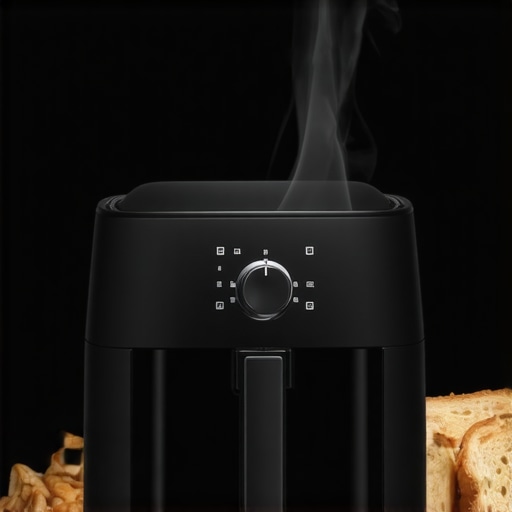
Why Your Air Fryer Smells Like Burnt Toast Every Time
That acrid, throat-stinging scent drifting from your luxury kitchen isn’t just a culinary mishap. It is a symptom of mechanical neglect. After fifteen years of diagnosing high-end kitchen appliances and witnessing the rise of convection technology, I can tell you that a burnt toast smell—when no toast is present—signals a breakdown in the thermal hygiene of your machine. It is an operational failure. You aren’t just smelling old food; you are smelling the carbonization of lipids and the potential degradation of the appliance’s internal insulation. Ignoring this doesn’t just ruin your dinner. It risks a permanent foul-odor infusion into your cabinetry and, in extreme cases, a localized electrical event.
The Physics of Carbonized Residue
Air fryers operate on the principle of high-velocity thermal transfer. Unlike a traditional oven, where radiant heat dominates, these machines rely on a powerful fan to move air across a calrod-style heating element. This element reaches temperatures far exceeding the air temperature readout. When you cook, microscopic droplets of fat become airborne. They are sucked upward. They hit the red-hot heating element. They bake on instantly. Over time, these layers of grease undergo a chemical transition into pure carbon. The result? A persistent, scorched smell that activates every time the element glows. If you find your unit isn’t performing as expected, you might want to investigate why most air fryers don’t reach their advertised temperature because that buildup acts as an insulator, dampening heat output while increasing the smell.
The Fan Guard and Hidden Grease Traps
Most owners focus on the basket. They scrub the non-stick coating until it shines. They miss the real culprit hidden behind the fan shroud. In many premium units, the fan is positioned directly above the food, protected by a wire mesh guard. This mesh is a magnet for splattered oils. Once these oils bridge the gaps in the mesh, airflow is restricted. The fan works harder. The motor heats up. Sometimes, the smell of burnt toast is actually the smell of a struggling motor winding or plastic components beginning to off-gas under thermal stress. To fix this, you must learn how to clean the fan inside your air fryer without taking it apart to ensure the convection cycle remains unobstructed. According to standards set by organizations like Underwriters Laboratories, maintaining clear airflow is essential for the longevity of high-wattage countertop appliances.
Sensory Anchors and the Reality of Failure
I remember a client in a high-rise penthouse who complained of a persistent ‘industrial’ burnt smell. Their air fryer looked pristine. But when I flipped it over and removed the baseplate, the smell was overwhelming—the metallic tang of scorched aluminum mixed with the cloying scent of rancid oil. A small piece of parchment paper had been sucked into the fan assembly months prior. It was slowly disintegrating, one charred flake at a time. This is the messy reality. These machines are compact, meaning there is nowhere for debris to hide. If your device is making strange sounds alongside the smell, check why your air fryer fan is hitting the guard, as physical contact between the fan and grease-laden guards creates friction heat that intensifies the odor. Even the high-quality materials in premium cookware cannot save a meal if the air circulating around it is tainted by months of accumulated residue.
The Evolution of Kitchen Air Quality
We are seeing a shift in the industry toward better filtration systems. In the next 12 to 24 months, I expect more luxury manufacturers to integrate replaceable HEPA or carbon filters into the exhaust ports of these machines. This is a response to the growing awareness of indoor air quality and the second-order effects of high-heat frying. Regulatory bodies are starting to look closer at the volatile organic compounds (VOCs) released during residential high-heat cooking. For now, the responsibility lies with the user. If you are noticing a lingering plastic-like odor even after cleaning, you should follow the steps on how to get the old oil smell out of a plastic air fryer basket before the scent becomes permanent.
The Executive Verdict
If your air fryer smells like burnt toast, do not use it again until you have inspected the heating element. A simple wipe-down isn’t enough. You need a degreaser and a soft brush to remove the carbonized layers from the calrod. If the smell persists after a deep clean of the element and the fan, the unit is likely suffering from internal component failure. My recommendation: if the machine is over three years old and the smell is ‘metallic’ or ‘plastic’ rather than ‘food-based,’ decommission it. The cost of a new high-end unit is negligible compared to the risk of a kitchen fire or the permanent degradation of your home’s air quality. For those looking to optimize their results, using the air fryer attachment you actually need for better roast chicken can help minimize splatter and keep your machine cleaner for longer. Keep the airflow path clear, keep the elements bare, and keep your kitchen smelling like what you are actually cooking.
Frequently Asked Questions
Is the burnt toast smell dangerous?
If it is caused by food residue, it is a nuisance and an indoor air pollutant. If it is caused by melting plastic or electrical components, it is a fire hazard. Always unplug the unit and inspect the heating element immediately.
Can I use oven cleaner on my air fryer element?
No. Oven cleaners are often too caustic for the aluminum or light-gauge steel used in air fryers. Use a paste of baking soda and water or a specialized appliance degreaser applied with a soft sponge.
Why does the smell return every few weeks?
You are likely cooking high-fat foods without proper ventilation or failing to clean the ‘ceiling’ of the air fryer. The fan pulls grease upward, so regular maintenance of the upper interior is required to prevent re-carbonization.
Does using parchment paper help?
Yes, but only if weighted down. If the paper is sucked into the fan or touches the heating element, it will char instantly and create that exact burnt toast smell you are trying to avoid.
“