
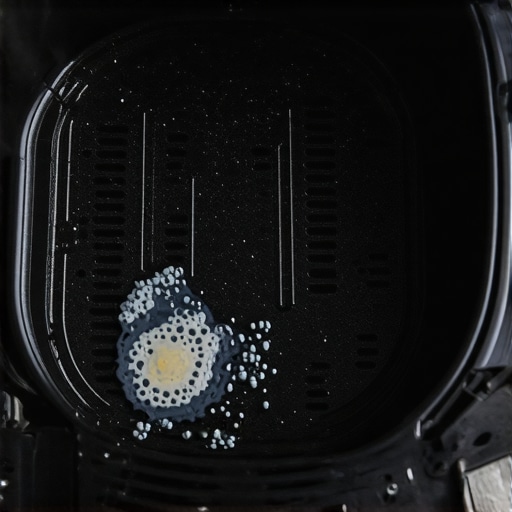
Why Your Air Fryer Basket Sticks Even When Greased
The non-stick promise of modern kitchen appliances is often a chemical illusion that collapses under the high-velocity heat of a luxury air fryer. Most users assume that more oil equals less friction. They are wrong. In my fifteen years of consulting for high-end kitchen installations, I have seen more baskets ruined by ‘preventative’ greasing than by actual cooking. The stickiness you are fighting isn’t a lack of lubricant; it is the presence of polymerized lipids. When you spray a cold basket with a low-smoke-point oil, the intense convection fan creates a microscopic layer of organic glue. The result? Avoidable failure.
The Engineering Reality of Thermal Polymerization
Every oil has a thermal threshold. When you subject common vegetable oils or aerosol sprays to the 400-degree environment of a high-performance air fryer, the fatty acids undergo a process called polymerization. They essentially turn into a plastic-like resin. This is the same process used to season a cast-iron skillet, but on a basket designed for airflow, it becomes a nightmare. The rapid air movement oxidizes the oil faster than a traditional oven ever could. You aren’t just greasing the pan; you are varnishing it. This varnish binds to the protein in your food, creating a bond stronger than the non-stick coating itself. I have watched $400 appliances become glorified paperweights because the owner thought a heavy coat of canola oil was ‘insurance’ against sticking.
Understanding why some air fryer baskets peel requires looking at the interface between the coating and the residue. If you use aerosol sprays containing lecithin, you are doomed from the start. Lecithin is a surfactant that, when heated, bonds permanently to PTFE and ceramic coatings. It creates a tacky surface that refuses to release. According to the American Chemical Society, lipid oxidation at high temperatures creates complex monomers that eventually form cross-linked polymers. This isn’t just theory; it is the reason your salmon skin is currently fused to the metal grate. You can find detailed research on lipid degradation in the reports from the American Chemical Society.
The Airflow Paradox and Oil Migration
The physics of an air fryer differ fundamentally from a skillet. In a pan, oil sits. In a basket, oil migrates. The high-RPM fan pulls liquid fats toward the edges and into the perforations. This leaves the center dry while the edges accumulate a thick, gummy residue. If you are using a light-duty basket, this heat concentration can actually warp the metal slightly, creating microscopic ‘valleys’ where food gets trapped. I often tell my clients that the best defense is a dry surface until the very last second. While most air fryer liners are a waste of money because they block essential airflow, they do illustrate the desperation people feel when their ‘premium’ coating fails.
Market Corrections and the Shift to Ceramic
The industry is moving away from traditional PTFE (Teflon) toward reinforced ceramic composites. Why? Because ceramic handles the thermal shock of rapid air cooling much better. However, even these ‘modern’ solutions aren’t foolproof. The grit you feel on the basket after a ‘deep clean’ is often carbonized protein. If you don’t remove every atom of that carbon, the next batch of food will use it as an anchor. Identifying the most durable non-toxic coating for daily fry pans and appliances is becoming a primary concern for the health-conscious luxury buyer. We are seeing a trend where users prefer 304-grade stainless steel baskets, accepting some sticking in exchange for the ability to use aggressive mechanical cleaning methods.
Strategic Execution for the Home Chef
If your basket is already sticking, you need a technical reset. This isn’t about soap; it is about chemical de-bonding. Use a paste of baking soda and a tiny amount of water to gently lift the polymerized oil without stripping the base coating. For the future, adopt the ‘High-Heat, High-Smoke’ rule. Only use oils with smoke points above 450°F, like avocado oil or refined light olive oil. Better yet, oil the food, not the basket. By applying the lipid directly to the protein, you ensure the oil stays where it is needed instead of coating the structural elements of the machine. If you find the smell of previous meals lingering, the trick to getting odors out of your air fryer basket involves a steam-cleaning cycle with lemon and vinegar, which also helps soften any remaining grease traps. According to safety standards by the Association of Home Appliance Manufacturers, maintaining a clean heating element and basket is vital for preventing fire hazards and ensuring consistent thermal output.
The Executive Verdict
Hold your current basket if the coating is intact but sticky. Perform a deep chemical de-greasing. Buy a replacement only if the substrate is visible. In the next 24 months, expect to see ‘induction-heated’ air fryer baskets that eliminate the need for fans to move quite so much air, potentially reducing the oxidation rates of oils. For now, stop the aerosol sprays immediately. Switch to a high-quality oil mister or nothing at all. The engineering truth is that a hot, clean basket is more ‘non-stick’ than a cold, greased one.
Frequently Asked Questions
Can I use PAM in my luxury air fryer?
No. The lecithin in aerosol sprays will permanently damage the non-stick coating by creating a sticky film that cannot be removed without abrasive scrubbing.
Why does the sticking get worse over time?
This is due to the accumulation of microscopic carbonized layers. Each time you cook, a new layer of oil ‘varnish’ bonds to the previous one, creating a rougher surface for food to grab onto.
Is a stainless steel basket better than a non-stick one?
For durability, yes. For ease of use, no. Stainless requires a specific thermal technique to prevent sticking, but it will last decades longer than any coated basket.
Does preheating help with sticking?
Yes. A preheated basket allows for the Leidenfrost effect to occur, where a small amount of moisture in the food evaporates instantly, creating a temporary steam barrier between the food and the metal.