
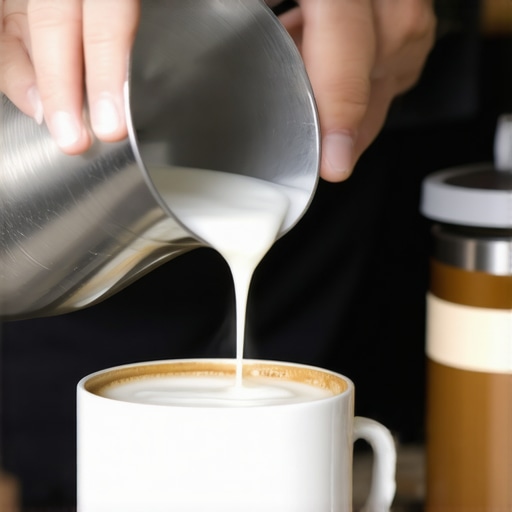
Why You Should Switch to a Precision Milk Pitcher
Most home baristas blame their machine for poor latte art. They are wrong. The real culprit is the thin-walled pitcher that came in the box, a tool designed for manufacturing volume rather than the specific fluid dynamics required for microfoam. After fifteen years of diagnosing extraction failures and milk texture inconsistencies in high-end kitchens, I have realized that thermal conductivity and spout geometry dictate success more than any tutorial ever could. The stakes are high; using inferior tools results in uneven protein denaturation. This creates a soapy, unstable foam that collapses before the first sip. If you have invested in luxury espresso machines, clinging to a generic pitcher is a strategic error. Precision is the baseline.
Thermal Mass Realities
Steel grade affects everything. Standard pitchers often use 0.5mm 200-series stainless steel which lacks the heat capacity to buffer the intensity of a high-pressure steam wand. A precision pitcher utilizes 1.0mm 304-grade stainless steel. This thickness provides a thermal buffer. It allows for a longer stretching phase before the milk reaches the 140-degree threshold. When the steam wand introduces high-pressure vapor, the specific curvature of the pitcher base determines whether that air incorporates into microfoam or remains as large, unstable bubbles. If you struggle with consistency, check your steam pressure on a dual boiler machine to ensure your hardware matches your tool’s capacity. Thin steel transmits heat too fast. The result? Scalded milk and flat foam. Heavy steel absorbs the initial shock. This thermal inertia gives you the three to five extra seconds needed to refine the texture. I have seen countless baristas fix their ‘technique’ simply by switching to a heavier vessel. The weight of the industrial grade steel in your hand is not just for show; it is a heat sink.
[IMAGE_PLACEHOLDER]
Fluid Dynamics of the Spout
The spout is where the physics of the pour meets the surface tension of the milk. Generic pitchers have wide, shallow lips that encourage turbulent flow. You want laminar flow. Precision pitchers feature elongated, sharp spouts designed for high-resolution pouring. This geometry narrows the stream. It allows for a higher ‘entry velocity’ into the crema without breaking the surface too early. When you are aiming for complex patterns, the spout acts as a needle. Sharp spouts are for high-detail work like rosettas. Round spouts are better for high-contrast tulips. Without the right taper, the milk just globs out. This causes a messy, undefined blob on top of your drink. Proper maintenance of your equipment, including cleaning your steam tips, ensures that the air injection is as precise as the pitcher’s shape. I once worked with a client who spent thousands on beans but could not pour a heart. We changed the pitcher. The sharp spout immediately stabilized his pour. It was not magic; it was math.
The Mechanical Failure of Cheap Welds
Standard pitchers use spot-welded handles that eventually fail under the stress of daily thermal expansion. Precision models often feature laser-welded handles or ergonomic ‘handleless’ designs with silicone grips. The handle position is also a factor. A handle that is too close to the body limits your range of motion. It forces a stiff wrist. A precision-engineered handle is offset to balance the weight when full. This reduces fatigue. Sensory markers matter here: the cold weight of surgical steel, the hiss of dry steam, and the vibration of the vortex against the pitcher wall. If your pitcher feels light or ‘tinny,’ it is vibrating too much. This vibration breaks the micro-bubbles you are trying to create. A heavy-duty pitcher dampens this energy. It keeps the foam tight. Poor quality tools also risk leaching metallic tastes into the milk over time. High-grade 304 steel is non-reactive. It keeps the flavor of the milk pure. This is essential when you have achieved thick crema and do not want to ruin the profile with a metallic aftertaste.
The Next Cycle of Barista Tech
The industry is moving toward specialized coatings. We are seeing Teflon-lined and electroplated finishes that prevent milk residue from sticking. This is not just for aesthetics. It improves workflow speed. In the next 12 months, expect to see pitchers with integrated digital thermal sensors in the base. This will remove the guesswork of the ‘hand-feel’ method. Regulatory standards for food-grade metals are tightening. Many low-end pitchers imported from unverified factories will likely fail these new safety audits. Professional kitchens are already moving to competition-grade gear. The home market is following. The gap between ‘prosumer’ and ‘professional’ is closing fast. Owners of high-end equipment are no longer satisfied with ‘good enough.’ They want the exact tools used on the world stage.
The Executive Verdict
If you are serious about your espresso, the generic pitcher is dead weight. Sell it or use it for watering plants. Buy a 15oz or 20oz precision pitcher with a minimum 1.0mm wall thickness. Look for 304 stainless steel and a sharp spout if you want to master detail. The ROI on this $50 to $80 investment is higher than any other accessory in your kit. If you have the machine, get the pitcher. Stop fighting the physics of thin steel.
Frequently Asked Questions
Does the color of the pitcher affect the milk?
Only indirectly. Painted pitchers can sometimes have different thermal properties than raw steel. Some coatings are more slippery, which can slightly alter the vortex speed during steaming.
Is 15oz or 20oz better for home use?
A 15oz pitcher is generally better for 6oz to 8oz drinks like cappuccinos. A 20oz pitcher is necessary for larger lattes to allow enough room for the milk to expand without overflowing.
Can I put a precision pitcher in the dishwasher?
Raw stainless steel is fine. However, if the pitcher has a Teflon coating or a special electroplated finish, hand washing is better. High-heat dishwasher cycles can degrade the finish over time.
Why does the spout shape matter for beginners?
A round spout is actually easier for beginners. It is more forgiving. It allows for a steady flow that helps you learn the ‘push’ technique for tulips before moving to the ‘wiggle’ technique required for sharp-spouted rosettas.