
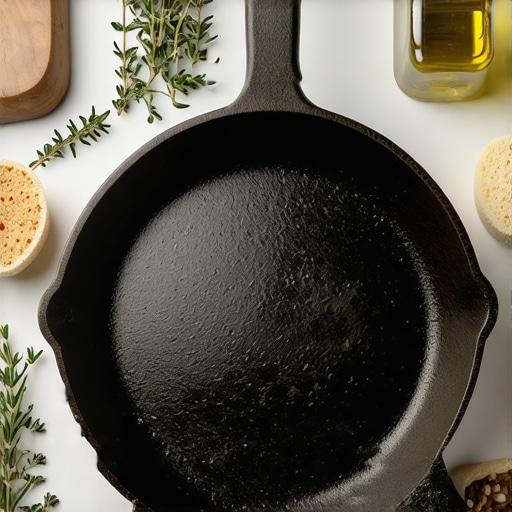
Why You Should Stop Using Harsh Detergents on Your Seasoned Pans
Modern kitchen culture has a fundamental misunderstanding of chemical interaction. You invest in high-end cast iron or carbon steel, then treat it like a cheap non-stick skillet. This is a strategic error. After fifteen years managing professional-grade kitchens and sourcing the world’s most elite culinary tools, I have seen more heirloom iron ruined by ‘deep cleaning’ than by actual misuse. The seasoning on your pan is not a layer of grease. It is a polymer. When you introduce heavy surfactants found in modern dish soaps, you are effectively performing a chemical strip of a protective molecular bond. This isn’t just about food sticking; it’s about the structural integrity of your cooking surface and the long-term ROI of your luxury kitchen investment.
The Science of Polymerization and Chemical Failure
Seasoning is the result of fats reaching their smoke point and undergoing a transformation. This process, known as polymerization, creates a hard, plastic-like substance that bonds to the metal pores. It involves cross-linking fatty acid chains into a complex matrix. Standard detergents are designed to emulsify fats and oils. They utilize high-pH surfactants that do not distinguish between the loose grease of a ribeye and the hardened carbonized seasoning layer. According to the American Chemical Society, high-alkalinity environments accelerate the hydrolysis of esters within the oil matrix, weakening the bond to the substrate. Once this bond is compromised, the surface becomes porous. Moisture enters. Rust follows. The transition from a non-stick miracle to a rusted hunk of iron happens faster than most homeowners realize.
The Engineering Reality of Thermal Bonding
Professional cooking requires consistent heat transfer. A well-seasoned pan offers superior emissivity compared to raw or poorly maintained steel. When you strip the seasoning with harsh chemicals, you create microscopic pits. These irregularities cause uneven thermal distribution. I’ve watched clients struggle with hot spots on $500 ranges, blaming the appliance when the fault lies with the stripped high-end cookware surface. The physics of the ‘Leidenfrost effect’ rely on a smooth, seasoned surface to create that perfect sear. Without it, you are just burning protein onto metal. The cost of this failure is not just the price of the soap; it is the degradation of every meal you prepare. A purist understands that the pan is a living tool, not a disposable vessel.
The ROI of Minimalist Maintenance
Strategic kitchen management focuses on longevity. While some manufacturers claim their soaps are ‘gentle,’ most contain sodium lauryl sulfate—a known enemy of polymerized oils. The alternative? Hot water and mechanical force. Using a chainmail scrubber or a stiff brush provides the necessary friction without the chemical assault. This preserves the patina. The financial logic is sound. A properly maintained hand-forged carbon steel skillet will outlast three generations of non-stick alternatives. You are buying time. You are buying flavor. The ‘smell of fresh adhesive’ or the ‘clank of the manifold’ in a workshop has its culinary equivalent: the deep, obsidian sheen of a pan that has never seen a drop of degreaser. If you must use soap, it should be a mild, lye-free formula, used sparingly and immediately followed by a heat-drying cycle and a fresh oil rub.
Market Corrections and Future Trends
We are seeing a shift in the 2025 luxury market toward ‘forever tools.’ Homeowners are rejecting the planned obsolescence of PTFE-coated pans. As this trend matures, the demand for knowledge on traditional maintenance will skyrocket. Regulatory changes regarding PFOA and similar chemicals are already pushing consumers back to raw metal. This creates a secondary market for ‘pre-seasoned’ vintage iron. If you can maintain your seasoning now, you are preserving the value of an asset that appreciates in performance. The second-order effect? Less waste in landfills and more consistent results in the kitchen. The industry is moving toward technical transparency, and the truth is that soap is often the enemy of the expert chef.
Executive Verdict on Cookware Care
My recommendation is decisive. If you own seasoned cookware, treat it with the same technical respect you would a high-precision espresso machine or a luxury vehicle. Stop the chemical warfare. The action plan is simple: rinse with hot water immediately after use, scrub with a non-chemical abrasive if necessary, and re-oil every time. If your seasoning looks dull or feels sticky, you have already failed the maintenance test. The result? Total stripping and re-seasoning—a laborious process that could have been avoided with better operational discipline. Hold your standards high and your detergent usage low.
Technical FAQ
Does a little soap really hurt? A single drop of mild soap won’t destroy a pan, but consistent use of high-strength degreasers will gradually dissolve the polymer layers, leading to a dull, sticky surface.
What should I use for stubborn burnt-on food? Use a mechanical cleaning method like a chainmail scrubber or coarse salt with a paper towel. This removes the debris without compromising the chemical bond of the seasoning.
Why does my pan smell like old oil? This is usually a sign of ‘rancidity’ rather than seasoning. It happens when excess oil is left on the pan without being heated to its smoke point. Wash it with hot water, dry it, and heat it until it smokes to lock in the new layer.