
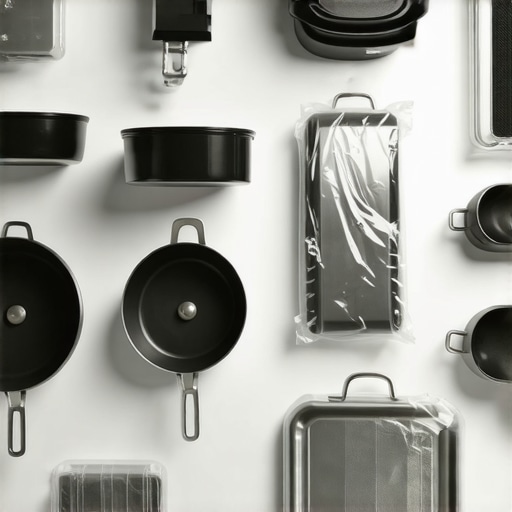
Why You Should Avoid Buying Pre-Packaged Cookware Sets
The allure of a shimmering 12-piece stainless steel set is a marketing trap designed for convenience, not culinary precision. After fifteen years in the high-end kitchen industry, I have seen thousands of homeowners drop four figures on a box of pots, only to realize half of them are functionally useless for their specific cooking style. Buying a pre-packaged set is the fastest way to clutter your custom cabinetry with expensive dead weight. Most of these sets are built to a price point, not a performance standard. The manufacturer averages out the quality of the materials to hit a retail target. This means you might get one decent skillet paired with a stockpot that has a base so thin it scorches your fond in seconds. It is a fundamental mismatch of engineering and intent.
The Thermal Dynamics of Mismatched Metals
Every cooking task requires a different thermal response. A 12-quart stockpot used for boiling water does not need the same metallurgical composition as a 10-inch fry pan intended for high-heat searing. When you buy a set, you usually get uniform cladding throughout the entire line. This is a mistake. For instance, the difference between bonded and layered cookware metals dictates how heat travels from your induction hob or gas flame to the food. A set forces you into a compromise. You end up with a stockpot that is unnecessarily heavy and slow to heat, or a skillet that lacks the thermal mass to maintain a sear when a cold steak hits the surface. The result? Grey, steamed meat instead of a Maillard-rich crust. In a luxury kitchen, precision is the only metric that matters.
[image_placeholder_1]
The ROI of Individual Selection
Economically, the ‘set discount’ is an illusion. You are paying for a 1 quart saucepan and a tiny omelet pan you will never use. If you took that same budget and invested it into four high-performance pieces, your ROI in the kitchen would triple. You need a heavy-bottomed 3-ply or 5-ply stainless steel skillet, a high-walled sauté pan, a heavy enameled cast iron Dutch oven, and a specialized pot for liquids. When you select pieces individually, you can ensure the metal choice that prevents pitting in your soup pots is exactly what is under the hood of your stockpot. This bespoke approach allows for targeted technical specs. Professional kitchens do not buy sets. They buy tools that fit the heat source and the ingredient.
Operational Risks of Uniform Cladding
I have stood in kitchens where a client’s $2,000 cookware set began to warp within six months because the base thickness was insufficient for the high-BTU output of their professional-grade range. The ‘set’ mentality ignores the specific heat capacity required for different volumes. A thin-walled pan on a high-output burner is a recipe for catastrophic failure. You will hear the metal groan as it expands unevenly. I’ve seen bases bow, creating a ‘spinner’ that won’t sit flat on a glass induction top. This isn’t just an annoyance; it is a safety hazard and a waste of energy. Furthermore, many sets include non-stick pieces that have a finite lifespan. When that coating fails, the entire aesthetic of your set is ruined. It is far better to understand the most durable non-toxic coating for daily fry pans and buy that piece as a standalone item that can be replaced without breaking the visual harmony of your collection.
Market Corrections and the Rise of Specialized Gear
The next 24 months will see a massive shift toward induction-specific metallurgy. Many legacy cookware sets are technically ‘induction compatible’ but lack the high magnetic permeability required for efficient energy transfer. They hum, they vibrate, and they waste electricity. As kitchen technology evolves, the one-size-fits-all set becomes a relic. Smart consumers are now looking for pieces that bridge the gap between technical utility and design. This means opting for why 3-ply cookware is better for most home cooks than 7-ply depending on their specific stove’s wattage. The industry is moving toward a ‘capsule collection’ model where every piece is a workhorse, not a filler.
Executive Verdict
Stop buying boxes. Start buying tools. If you are currently outfitting a luxury kitchen, my recommendation is a ‘Sell’ on the pre-packaged set. Instead, ‘Buy’ into a curated selection of individual pieces from manufacturers that specialize in specific materials—copper for saucemaking, cast iron for slow braises, and multi-ply stainless for general sautéing. Your cabinets will be lighter, your food will be better, and your investment will actually last a lifetime. According to the Cookware Manufacturers Association, the failure rate of high-end sets usually stems from improper heat-to-mass ratios. Avoid this by building your collection one technical win at a time.
Frequently Asked Questions
Is it more expensive to buy pots and pans individually?
Initially, the per-unit cost is higher. However, since you avoid paying for 3-4 pieces you won’t use, the total spend for a functional kitchen is often lower or equal to a high-end set.
How do I know which pieces I actually need?
Audit your cooking for one week. Note the volume and the heat levels you use most. Most households only truly need 4-5 high-quality pieces to handle 90% of recipes.
Will my kitchen look cluttered if the pans don’t match?
A curated kitchen with a mix of copper, steel, and cast iron looks like a professional workspace. A matching set looks like a showroom floor. Real luxury is found in performance, not uniformity.
Should I still avoid sets from top-tier brands?
Yes. Even premium brands use sets to move inventory of less popular sizes. You are almost always better off cherry-picking their best-performing individual models.