
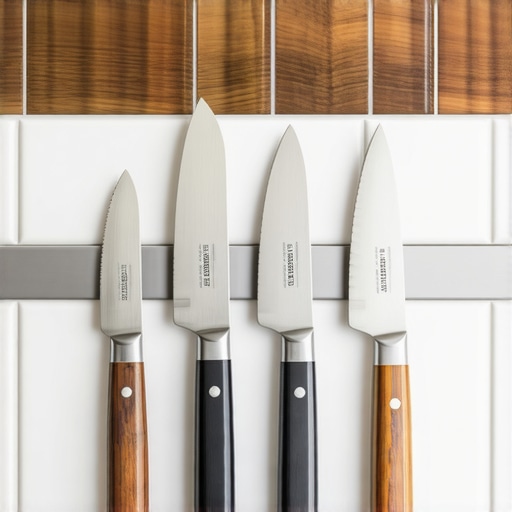
Why You Need a Magnetic Knife Strip Instead of a Block
Every time I enter a client’s home and see a collection of hand-forged Japanese steel shoved into a generic oak block, I recognize a preservation crisis. Blocks are where elite edges go to die. This is not about aesthetics or counter space. It is a matter of metallurgical integrity. For 15 years, I have outfitted professional-grade residential kitchens, and the data is clear: knife blocks are an insult to precision engineering. They trap moisture. They hide filth. Most importantly, they dull the very apex of your blade every time you slide it across that rough wooden slot. The result? Avoidable failure. If you have invested in luxury kitchen upgrades, your storage method must match the quality of your tools. Transitioning to a magnetic strip is the only logical path for anyone serious about maintenance.
The Bacteria Reservoir Problem
The dark, deep slots of a traditional knife block are a sanctuary for microbial growth. Think about the mechanics of a busy kitchen. You wash a knife, perhaps you don’t dry it perfectly, and you slide it into a block. That moisture is now trapped in a space that never sees sunlight or airflow. According to sanitation standards set by NSF International, porous surfaces that harbor moisture are high-risk zones for Pseudomonas and other contaminants. You cannot effectively clean the bottom of a knife slot. A magnetic strip, by contrast, is an open-air solution. It is a flat surface. You wipe it. It is done. The hygiene gap between these two methods is wide enough to dictate a total change in kitchen protocol.
Preserving Edge Geometry and Temper
When you use a knife block, the blade’s edge—the microscopic teeth that do the actual cutting—drags against the wood or plastic every time you retrieve or store it. This repeated friction causes edge roll. For a high-carbon steel blade with a 15-degree grind, this is catastrophic. A magnetic strip eliminates this contact entirely. You place the spine of the knife against the strip first, then roll the edge toward the magnet. No dragging. No friction. This preservation of the edge geometry means you spend less time on the whetstone and more time prepping. It is also why you should stop putting your global knives in the dishwasher; heat and chemicals are one threat, but mechanical abrasion in storage is the silent killer of sharpness.
The Engineering Behind Magnet Strength
Not all strips are equal. A cheap magnet is more dangerous than a block. You need Neodymium magnets with a specific Gauss rating sufficient to hold a heavy Western chef’s knife without it sliding. The technical truth? Metal-on-metal strips can actually scratch the finish of high-polish blades. The Purist choice is a wood-faced magnetic strip. The magnets are embedded behind a thin veneer of walnut or maple. This provides the grip without the risk of metal-to-metal clashing. If you are using espresso machines or high-end appliances nearby, you also want a strip that is shielded to prevent magnetic interference with sensitive electronics, though this is rarely an issue with static magnets.
Structural Risks of Backsplash Mounting
The messiest reality of the magnetic strip is the installation. Most luxury kitchens feature porcelain, marble, or tiled backsplashes. Drilling into these materials is a high-stakes operation. One wrong move with a masonry bit and you have a hairline crack running through a $5,000 slab of Calacatta marble. I have seen contractors ruin entire kitchen walls because they didn’t understand the tension of the material. Knowing how to mount a heavy knife strip on a tiled backsplash is as vital as the knives themselves. You must use diamond-tipped bits and constant lubrication to prevent thermal shock. If you aren’t prepared for the technical demands of the install, the strip will eventually sag, or worse, fall, sending three pounds of sharpened steel toward your feet.
The Evolution of Tool Accessibility
Market shifts show a move toward the ‘Visible Kitchen.’ Chefs want their tools reachable within a single ergonomic motion. The knife block forces you to hunt and peck for the right handle. The strip offers immediate visual identification. As we look at the next 24 months, I predict the total disappearance of the countertop block in high-end design. It consumes valuable real estate near your prep area, often interfering with the countertop height that prevents back pain while prepping. By moving knives to the wall, you clear the field for more dynamic workflow. This is a macro trend driven by the professionalization of the home cook.
Executive Verdict
Buy the strip. It is the superior tool for sanitation, edge longevity, and kitchen efficiency. If you own knives that cost more than $100 each, a block is a liability you can no longer afford. Choose a wood-faced Neodymium strip, hire a professional for the backsplash mount, and enjoy the immediate improvement in your culinary workflow. The decision is binary: you either care about your steel or you don’t.
FAQ
Q: Can the magnets magnetize my knives?
A: Yes, slight residual magnetism can occur over years, but it has zero effect on the cutting performance or the steel’s temper. It may actually help keep metal shavings away from the food if you were using a low-quality sharpener.
Q: Is it safe for houses with children?
A: Only if mounted high enough. The strip actually keeps knives out of reach better than a block, which sits on the counter where a toddler can reach up and pull a handle.
Q: What is the maximum weight a strip can hold?
A: A high-quality wood-faced strip can usually hold 2-3 pounds per linear foot. A heavy cleaver might require a specific heavy-duty strip or two points of contact.
Q: Do magnets damage the ‘ Damascus’ pattern?
A: Only metal-on-metal strips might cause surface scratches. Wood-faced strips are safe for all decorative finishes.